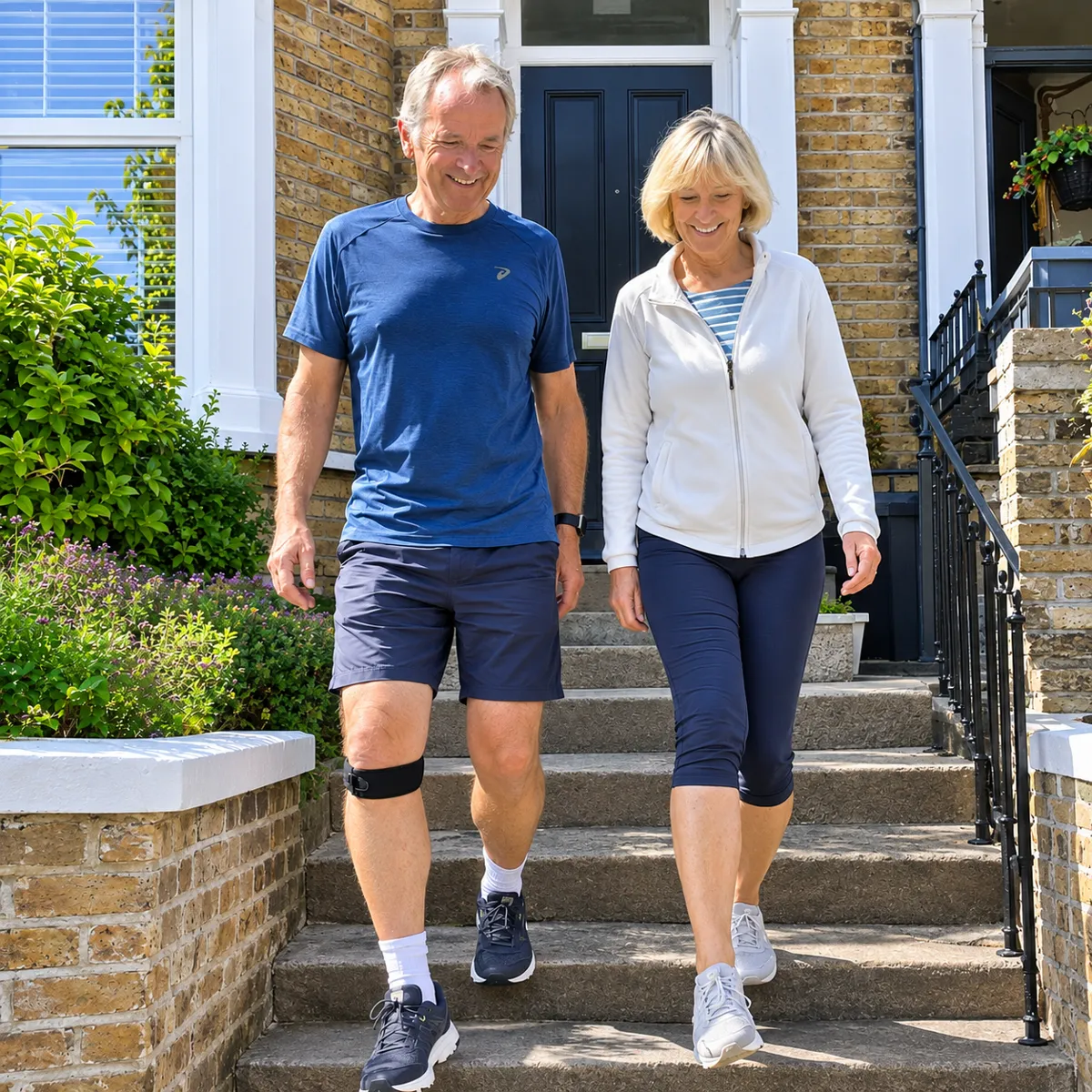
Runner's knee strap: support below the kneecap for every run
A light strap that sits under the kneecap and stays put mile after mile.
By the StepBrake team · sources checkedUpdated
Quick answer
A runners knee strap is a narrow band worn below the kneecap, rather than a sleeve covering the whole joint. It offers local support, not a diagnosis or a treatment for runner’s knee. Choose it for fit and comfort, and seek advice if running pain persists or changes your stride.
Key points
- • Lighter and cooler than a sleeve
- • Targets the tendon under the kneecap
- • Fit snug, not tight
A runners knee strap can look like a simple answer when the front of your knee feels uncomfortable during a run. The important distinction is between choosing an accessory and understanding a symptom. A patella strap offers support in a small area; it does not establish why your knee hurts or make continuing through pain safe.
This guide is for recreational runners who want a realistic starting point, whether you run between walking breaks or follow a regular weekly route. We will look at what the name means, how to judge the fit and when a different conversation matters more than buying a band.
What a runners knee strap can and cannot tell you
“Runner’s knee” is a familiar description, but it should not become a diagnosis you give yourself from a shopping page. The NHS guide to running injuries describes knee pain around the kneecap and advises against running with knee pain. The location of discomfort is useful information for a clinician, not proof that you need a particular product.
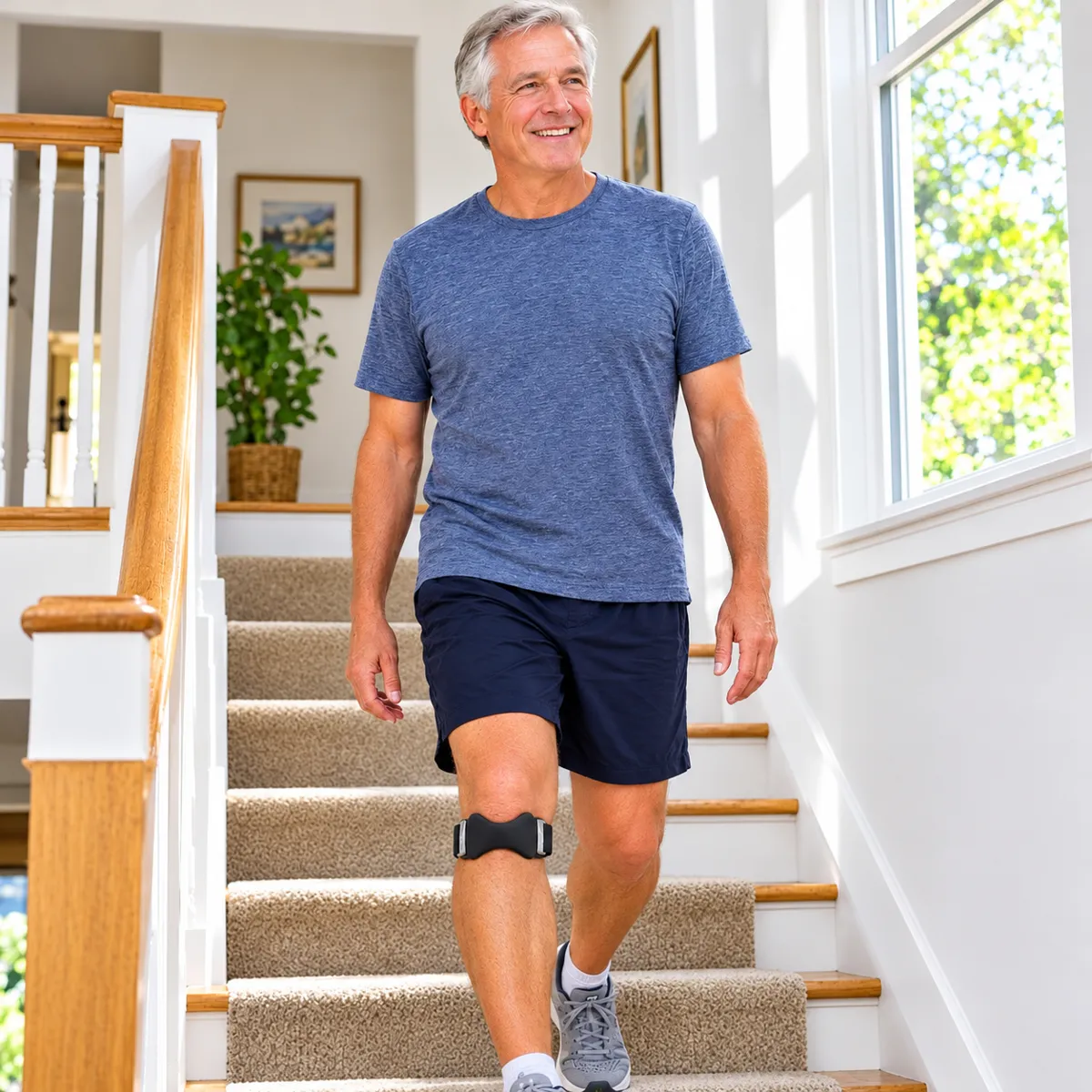
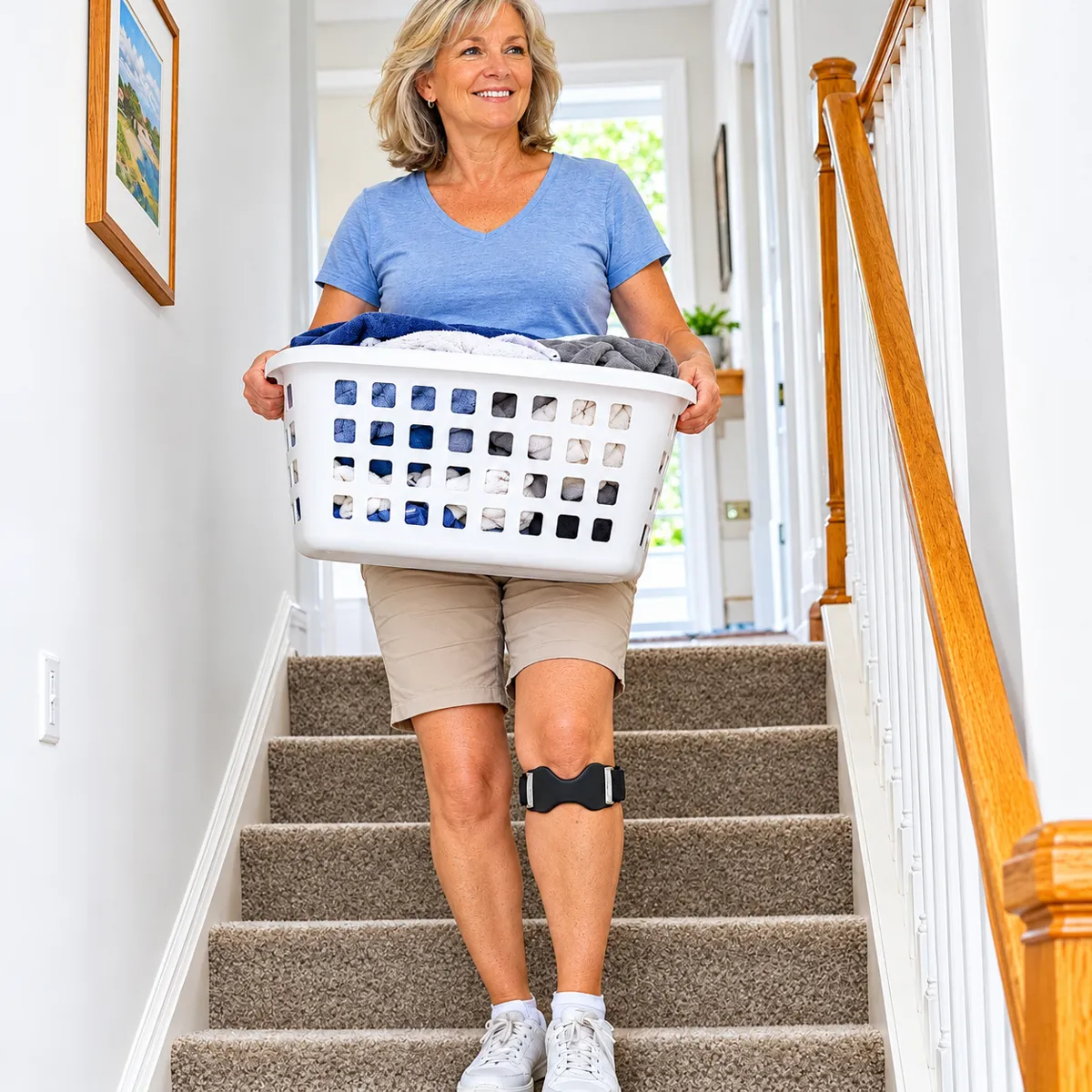
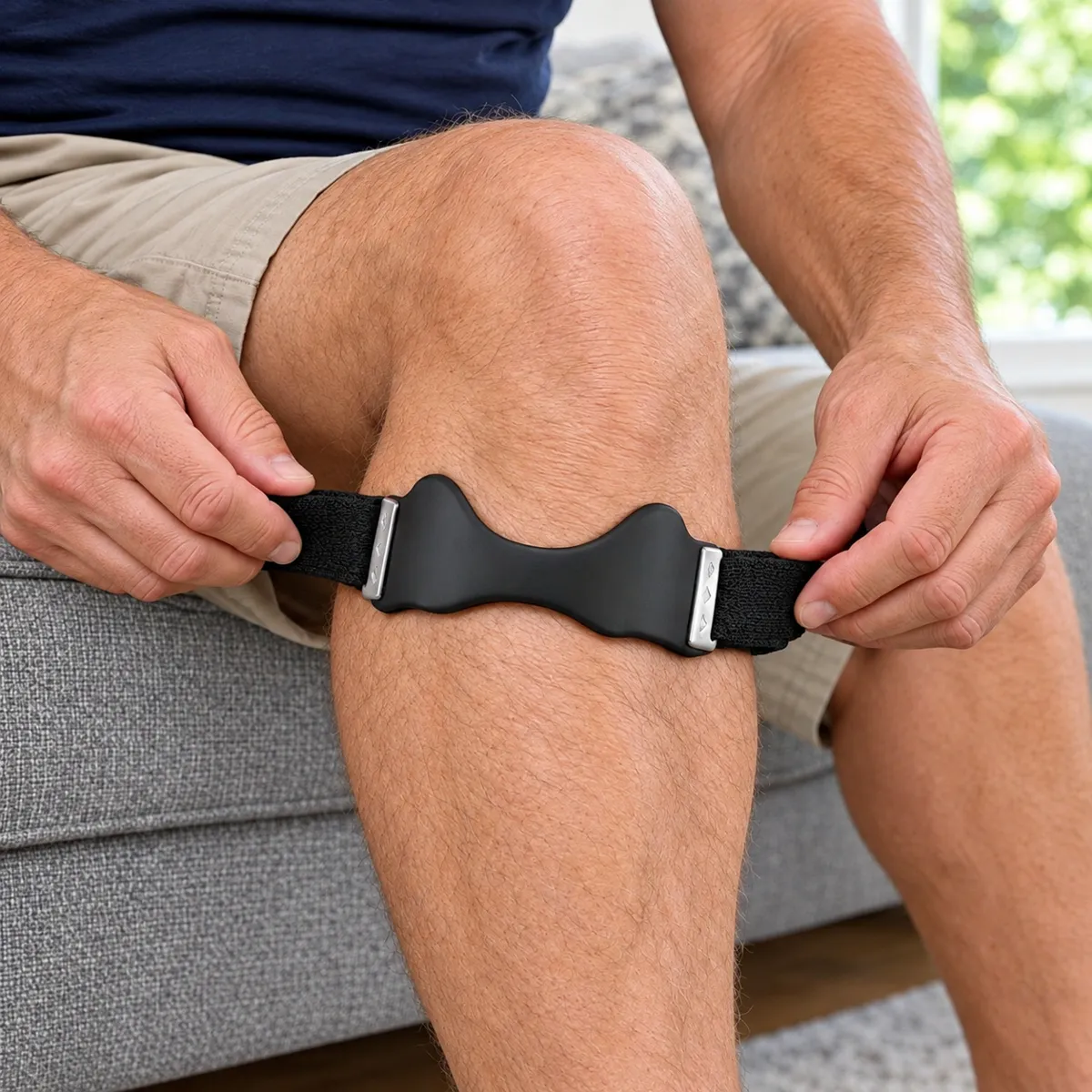
A narrow knee support strap sits below the kneecap. Unlike a sleeve, it does not surround a large section of your leg; unlike a structured brace, it does not provide a frame around the joint. Its small footprint may appeal if you dislike bulky kit, but small does not automatically mean suitable.
Try to separate three questions: what you are feeling, whether you should be running, and whether you like wearing a strap. Buying something addresses only the last question. If you are uncertain about the first two, a GP or physiotherapist is a better starting point than a product comparison.
Choosing a runners knee strap by fit, not promises
Look for a clear description of where the pad belongs, how the band adjusts and what happens if it does not suit you. Avoid interpreting phrases such as “sports support” as evidence that a product prevents injury. A comfortable fitting session also cannot predict how your knee will respond to training.
| Question before purchase | Useful information | Reason to pause |
|---|---|---|
| Where does it sit? | Below the kneecap, following the maker’s instructions | The product description is unclear |
| Can I adjust it? | A fastening you can manage without strain | You need excessive tightness to keep it in place |
| What is covered? | A small, local area | You expect whole-joint stability |
| Can I return it? | Clear timing and a named contact | You are relying on an unqualified performance promise |
Check the design against your actual routine. Someone using walk-run intervals may value a band that is straightforward to remove during a break. Someone wearing fitted winter running tights may want to think carefully about access to the fastening. Neither preference tells you whether a strap is medically appropriate.
Where StepBrake fits into that choice
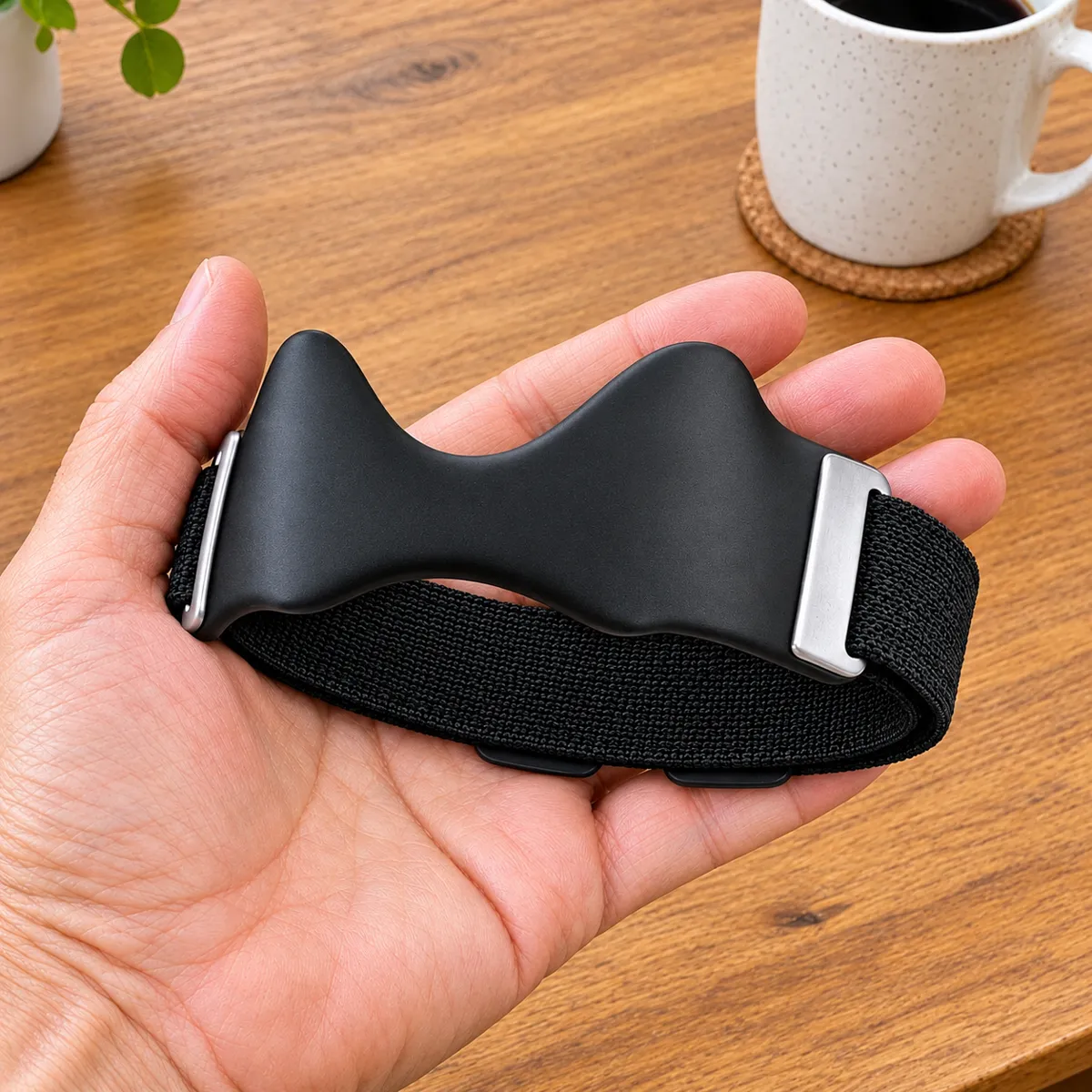
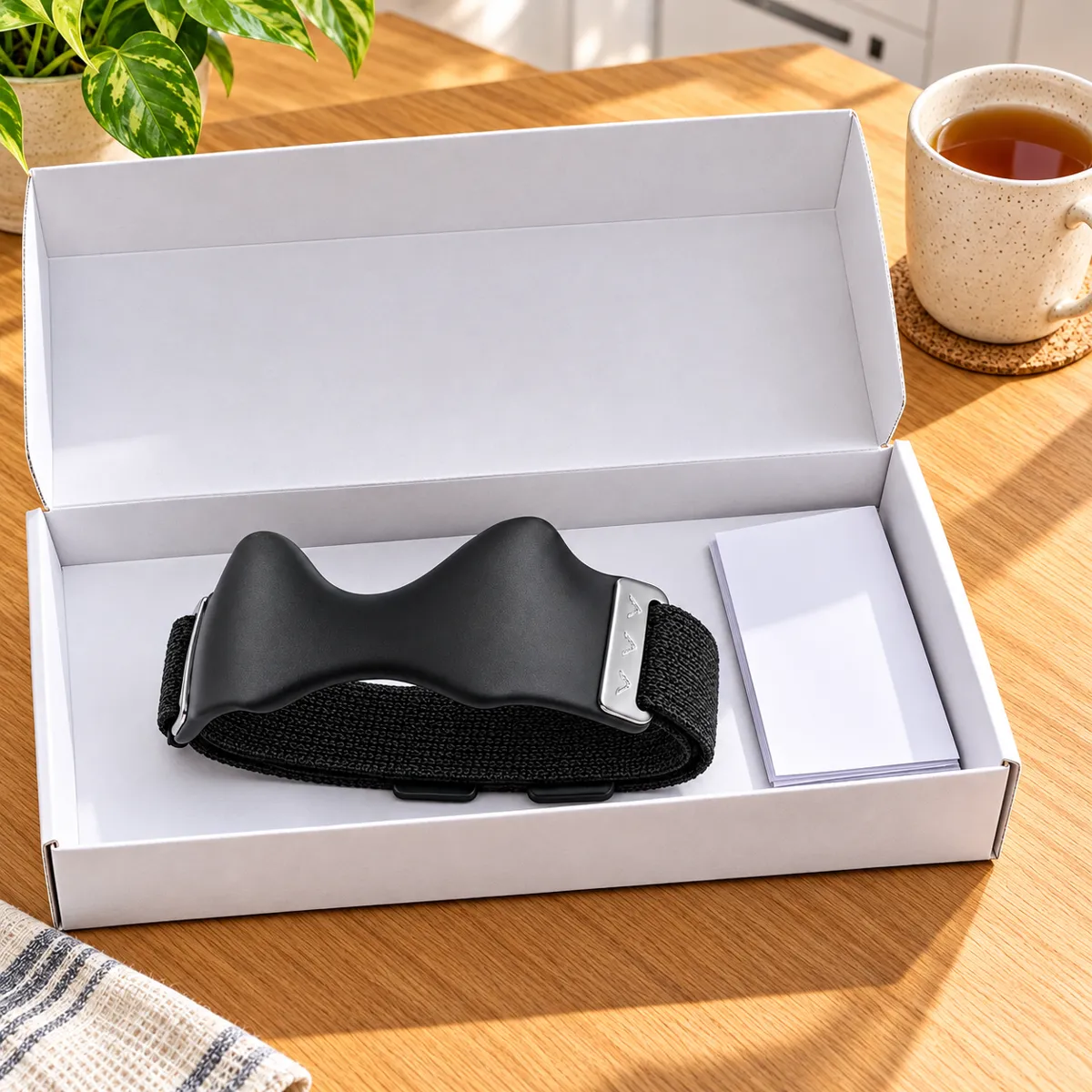
StepBrake Strap is a slim, adjustable, one-size patellar tendon strap for most adult knees. Its rigid contoured black pad has two raised lobes and sits about 2 cm below the kneecap on the patellar tendon. A soft knitted black elastic band and silver end plates complete the design; it fits either the left or right knee.
It is designed to fit in under a minute and is slim enough to sit under trousers. Those are practical features, not evidence that it treats runner’s knee. It is not a hinged brace, and it should not be bought as a substitute for an assessment when the knee feels unstable or keeps hurting.
Our patella strap fitting guide explains placement, while the size guide is useful before choosing a one-size design. “Most adult knees” does not mean every knee. If the fit is awkward or the pad will not stay comfortably positioned, that matters more than the label.
A calm first fitting away from training
Choose a quiet moment at home rather than the start line or the middle of a painful run. Read the fitting instructions and identify the kneecap before positioning the pad below it. Adjust the band gently; tightening as much as possible is not a useful test of support.
- Put the strap on while you can comfortably see and reach the fastening.
- Stand and take a few easy steps somewhere safe.
- Check for rubbing, pinching, numbness or a change in skin colour.
- Remove it if it feels wrong, rather than repeatedly increasing the pressure.
- Do not use a successful fitting as permission to run through pain.
A first fitting is about handling and comfort, not an exercise challenge. You do not need to add stairs, deep bends or extra mileage to “prove” the purchase. If movement is already painful, stop and get advice instead of creating a harder test at home.
Keep a useful record for your next conversation
Write down when the problem began, whether it followed an injury and where you notice it. Include changes to your usual route, pace or weekly routine without assuming those changes explain everything. A short factual note is more useful than deciding in advance that one structure must be at fault.
You could record whether discomfort appears during activity, afterwards or during everyday tasks. Note swelling, locking or giving way separately rather than grouping everything under “sore”. The NHS knee-pain page explains why some accompanying symptoms need more urgent attention.
If you are comparing equipment rather than deciding what the symptom means, our running support comparison sets out straps, sleeves and braces. Changing equipment and training at the same time can also make your own observations harder to interpret. Keep your notes descriptive rather than treating them as an experiment that proves a benefit.
Buying without a performance promise
A single StepBrake Strap costs £29, previously £49. Two cost £44, three cost £59 and four cost £89. Choose quantity around a genuine need, not the idea that wearing more support must be better. One strap can fit either knee, although that does not mean both knees need one.
Orders are for UK addresses only, with free Royal Mail Tracked 48 delivery. Dispatch is within one working day and delivery usually takes two to four working days. If you need something before a particular event, do not treat the usual delivery window as a guaranteed arrival date.
The 30-day money-back guarantee requires an email within 30 days of delivery, followed by posting the strap back for a full refund. Read shipping and returns before ordering. The optional £4.95 Secure Delivery + Lifetime Warranty add-on covers replacement if lost, stolen or damaged in the post and lifetime cover for manufacturing defects.
StepBrake is a new brand without customer reviews or ratings. There are no testimonials to use as a shortcut for your decision. You can order the StepBrake Strap from the official website, its only sales channel; base the choice on the stated design, practical fit and return terms.
Look after the band and your expectations
Hand wash the strap and let it air dry. Allow for that drying time when planning kit, rather than assuming it can go straight back into use. Before putting it on again, check that the band, pad and fastening are in a condition you are comfortable using.
Remember that buying support is optional. You do not have to buy something to take a knee concern seriously. For wider context, the NHS information about osteoarthritis describes another possible cause of joint symptoms, but neither age nor running habits establish that diagnosis.
When to see your GP
Arrange GP or physiotherapy advice for pain lasting more than two weeks, pain after injury, or symptoms affecting your stride. Seek urgent advice through NHS 111 for severe or sudden pain, marked swelling, locking, giving way or inability to bear weight. A hot, red knee with fever also needs urgent help; do not run to test it.
Summary
A runners knee strap is a local support option, not a treatment plan. Prioritise a comfortable fit, clear buying terms and an honest assessment of your symptoms. The sensible next step may be a strap, a professional opinion, or simply not buying equipment yet.
Sources and further reading
This guide is general information, not medical advice. Read our editorial policy. If you are worried about your knee, speak to your GP, a pharmacist or call NHS 111.
Common questions
Is a runners knee strap the same as a running sleeve?+
No. A strap is a narrow band positioned below the kneecap, while a sleeve covers more of the knee. The choice changes coverage and feel, not just appearance. Neither should be assumed to make running with pain safe.
Should I first try a strap on race morning?+
A race start is a poor place to discover an uncomfortable fastening or awkward fit. Check handling at home first, without turning it into a running test. If you already have knee pain, seek advice rather than using new kit to get through the event.
Does comfortable walking in a strap mean I can run?+
No. A comfortable walk only tells you about that short activity and the fit at that moment. It does not establish readiness for running or identify the cause of symptoms. The NHS advises against running with knee pain.
Can I move one StepBrake Strap between legs?+
The design fits either the left or right knee, so it is not side-specific. Recheck the pad position and tension whenever you move it. Pain in both knees is not a reason to assume each needs the same equipment or the same approach.
What should I note before a physiotherapy appointment?+
Record when symptoms began, their location, any injury and the activities that bring them on. Mention swelling, locking or giving way clearly. It is also useful to explain which support you have tried and whether the band itself caused rubbing or discomfort.
Are there StepBrake runner reviews to compare?+
StepBrake is a new brand and has no customer reviews, ratings or testimonials. Do not interpret that absence as proof of either benefit or failure. Use the published product details, fit information and guarantee terms to decide whether the purchase makes sense for you.