Knee pain going down stairs: why it happens and what helps
Stepping down is often the hardest part of the day for your knees. Here is why, and what you can do.
By the StepBrake team · sources checkedUpdated
Quick answer
Knee pain going down stairs can have several causes, including problems around the kneecap, tendon pain or arthritis. The stair pattern alone cannot identify the cause. Reduce uncomfortable trips, use a secure handrail and seek advice if symptoms persist. A patellar strap is optional support, not a diagnosis or treatment.
Key points
- • Stepping down makes your thigh muscles brake your weight
- • That load runs through the tendon under the kneecap
- • Handrails, technique and a strap can all help
Knee pain going down stairs can turn an ordinary morning into a careful negotiation with every step. It does not automatically mean arthritis, and it does not tell you that you need a knee strap. The useful first step is noticing where the pain is, how it began and whether anything else has changed.
This guide helps you describe the problem, make everyday stair journeys more manageable and decide when to get help. It is general information, not a way to diagnose your knee at home. New pain after an injury or symptoms that affect your balance deserve professional advice rather than repeated testing on the stairs.
Why knee pain going down stairs needs context
Several knee problems can make stairs uncomfortable. NHS inform describes patellofemoral pain as pain behind or around the kneecap, with stairs among the activities that can provoke symptoms. That description may sound familiar, but it cannot confirm what is happening in your knee.
Pain below the kneecap can also involve the patellar tendon. NHS Borders guidance on patellar tendinopathy describes symptoms beneath the kneecap that may increase on hills, stairs or squatting. These patterns can overlap, so the exact location is useful information for a clinician rather than a reliable self-test.
The NHS knee pain page also lists osteoarthritis among possible causes of knee pain and stiffness in older adults. Age alone is not a diagnosis. A new swollen knee, a twisting injury or a knee that locks needs its own assessment, even if you already have arthritis.
Describe the pain rather than naming a condition
Try pointing with one finger to the main sore area, without repeatedly pressing it. Is it below the kneecap, around its edges, along one side or difficult to locate? Tell a GP or physiotherapist whether it happens on every descent, only after a long day or during other activities too.
| What to notice | What to record | Why it is useful |
|---|---|---|
| Start of symptoms | A date, injury or recent activity change | Gives the clinician a clear timeline |
| Location | Front, below the kneecap, side or back | Makes your description more precise |
| Other symptoms | Swelling, locking or giving way | May change how urgently you need advice |
| Daily impact | Sleep, shopping or use of the bathroom | Shows what help matters most |
Making knee pain going down stairs more manageable
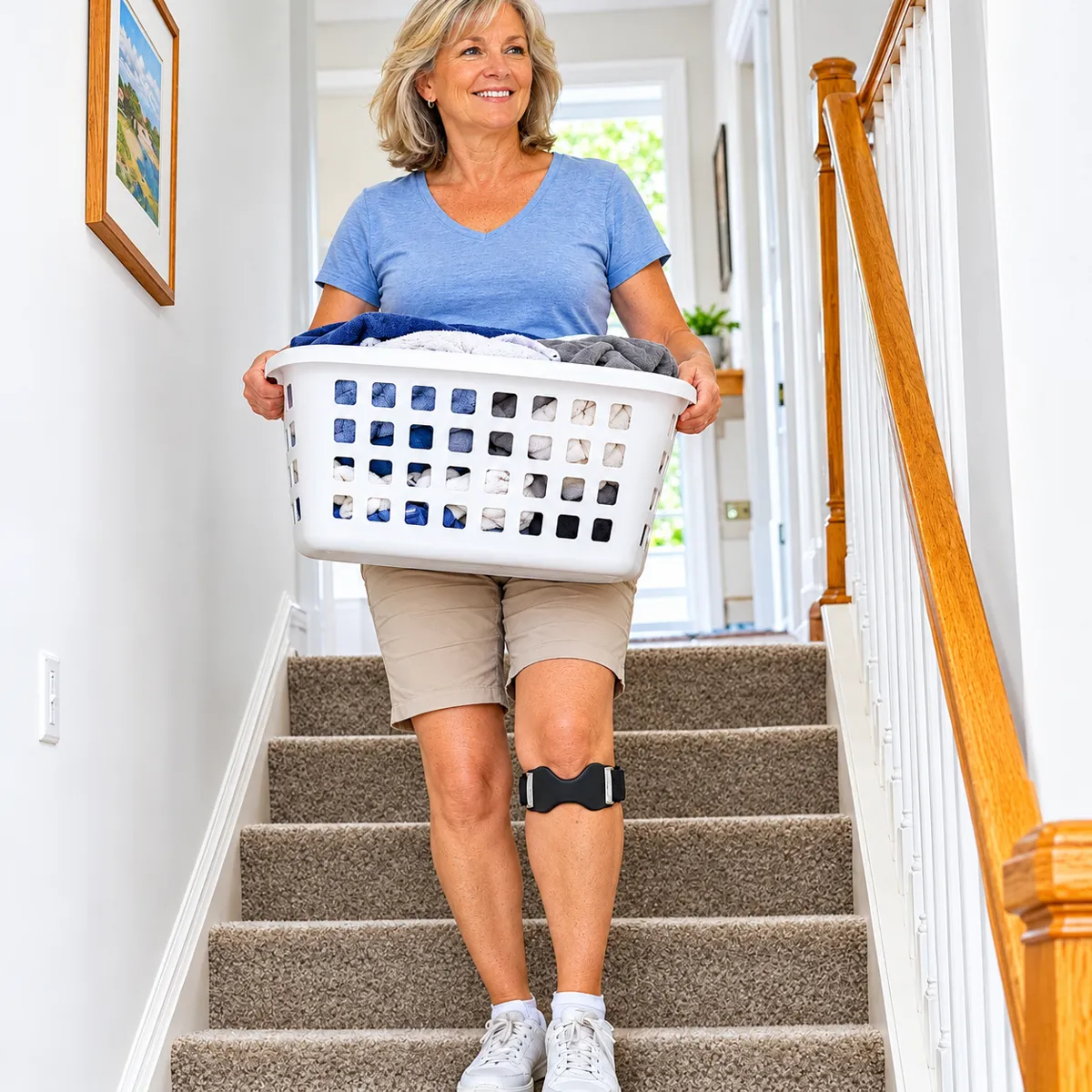
Begin with the setting, not a purchase. Keep the staircase clear, switch on the light and use a secure handrail. Avoid carrying a laundry basket that hides the next step or leaves both hands occupied. Ask someone else to move bulky items while the knee is troublesome.
Give yourself permission to go slowly. You do not need to practise normal-looking stairs for someone else's benefit. If you cannot descend safely, do not experiment with different techniques alone; ask a physiotherapist to assess your stairs and show you an appropriate approach.
Plan fewer unnecessary journeys
Think about one ordinary day at home. Could your reading glasses, phone charger or a spare cardigan stay on the floor where you spend most time? Combining small errands may reduce repeated uncomfortable trips without turning your day into complete rest.
For temporary knee pain, the NHS suggests reducing weight through the sore knee, such as avoiding prolonged standing. Its advice also includes a wrapped ice pack for up to 20 minutes every two to three hours. Follow the NHS guidance and ask a pharmacist about suitable pain relief rather than assuming every medicine is right for you.
Keep movement decisions individual
There is no single stair exercise suitable for everyone reading this page. NHS inform recommends identifying and modifying aggravating activities while remaining active for diagnosed patellofemoral pain. That is different from forcing yourself through repeated painful descents to strengthen an undiagnosed knee.
Ask a physiotherapist what movement is suitable, how much discomfort is acceptable for your particular problem and what should make you stop. The Chartered Society of Physiotherapy knee pain resources provide a starting point for understanding professional support. You do not need to arrive with a diagnosis already chosen.
Could a patella strap have a role?
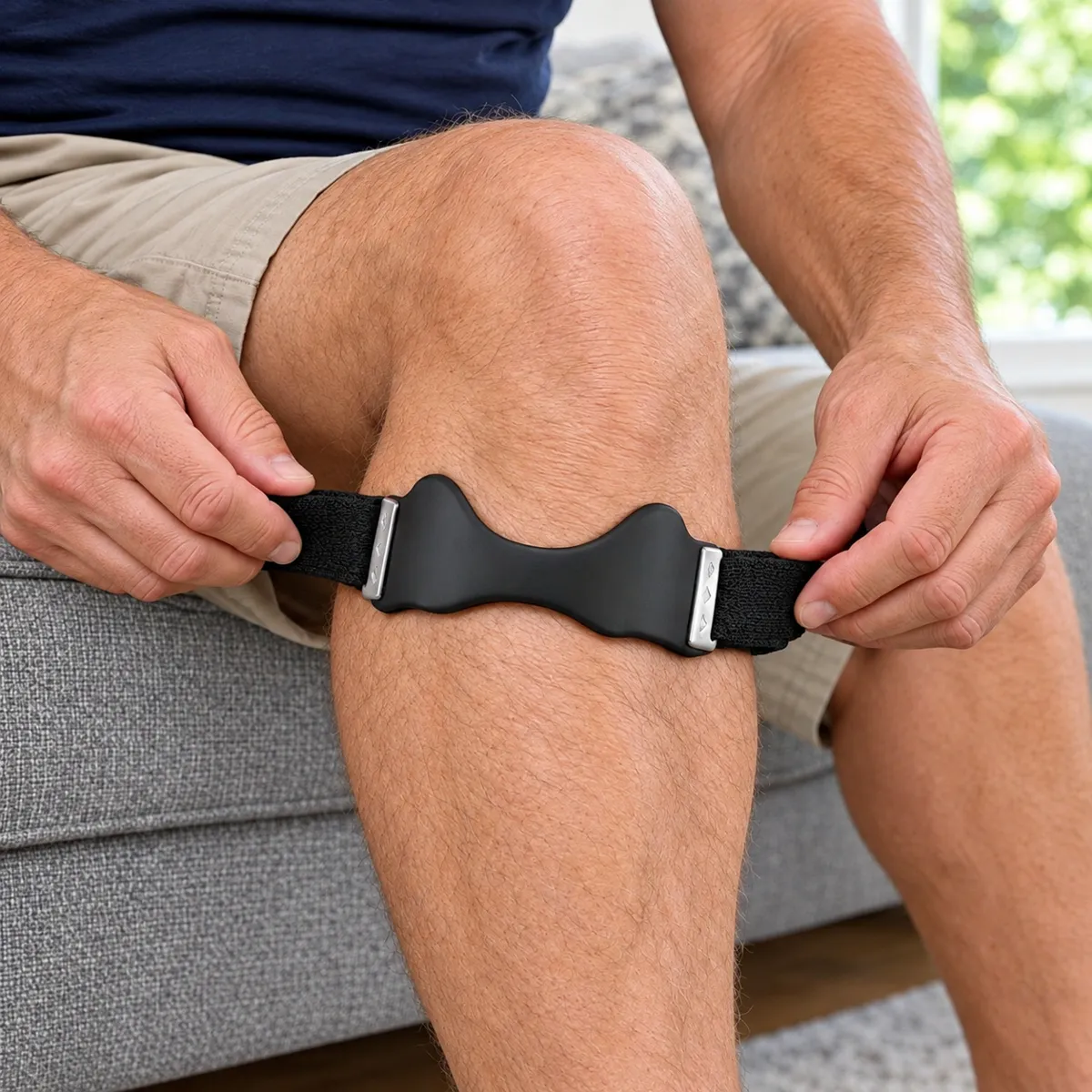
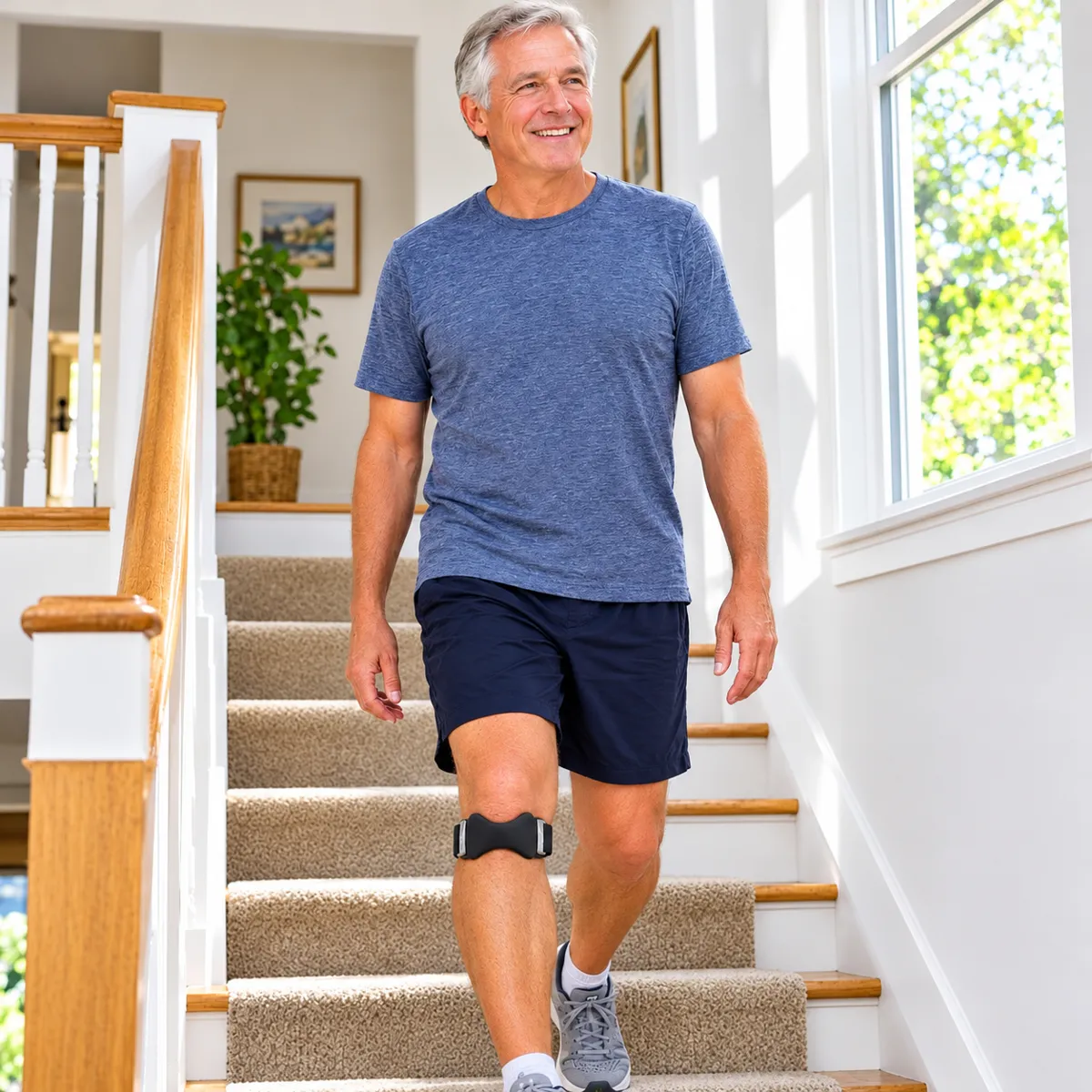
A patellar tendon strap is a narrow band worn below the kneecap, rather than a sleeve covering the whole joint. It is an optional support to consider, not the default answer to pain on stairs. A knee that gives way should be assessed, not trusted to a small band.
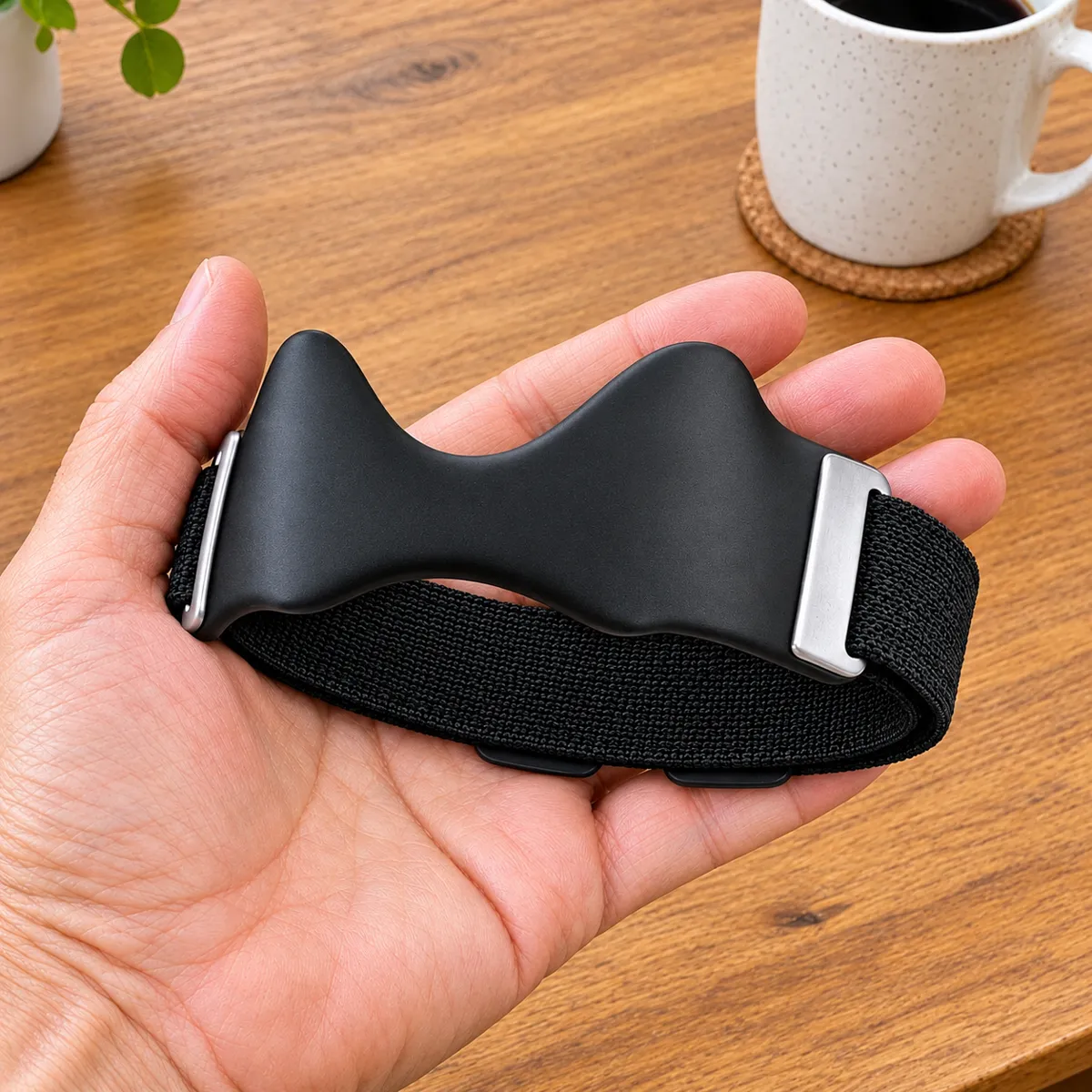
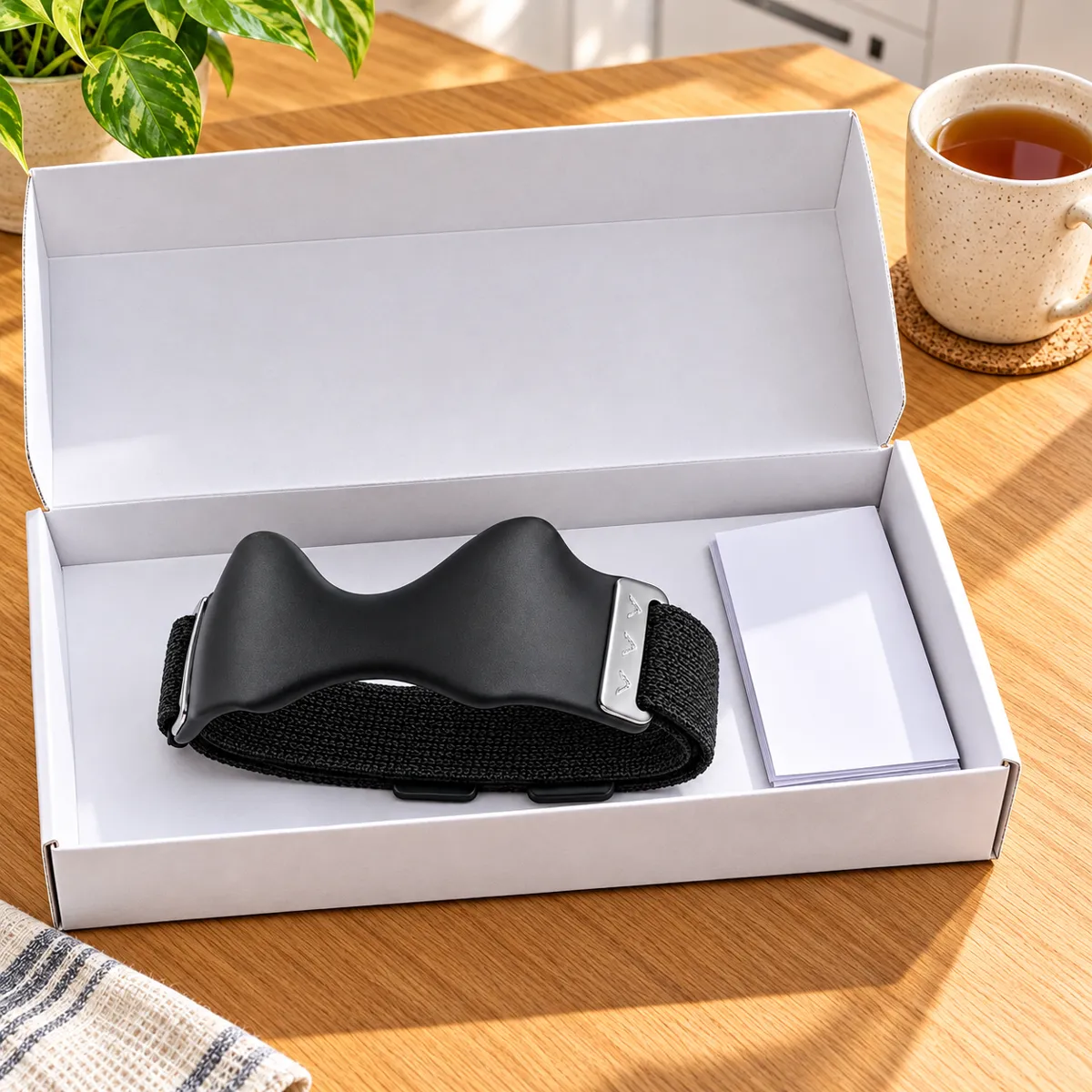
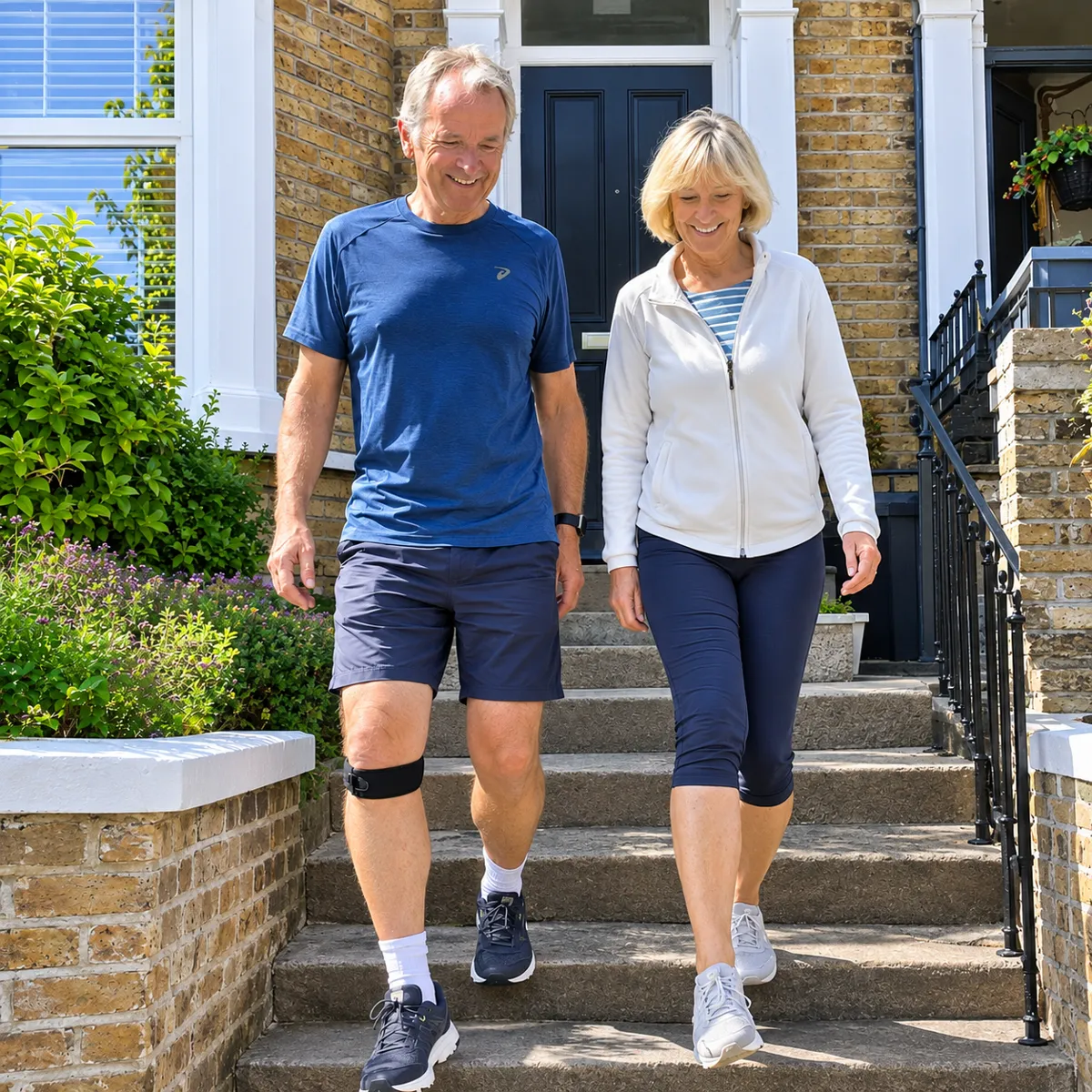
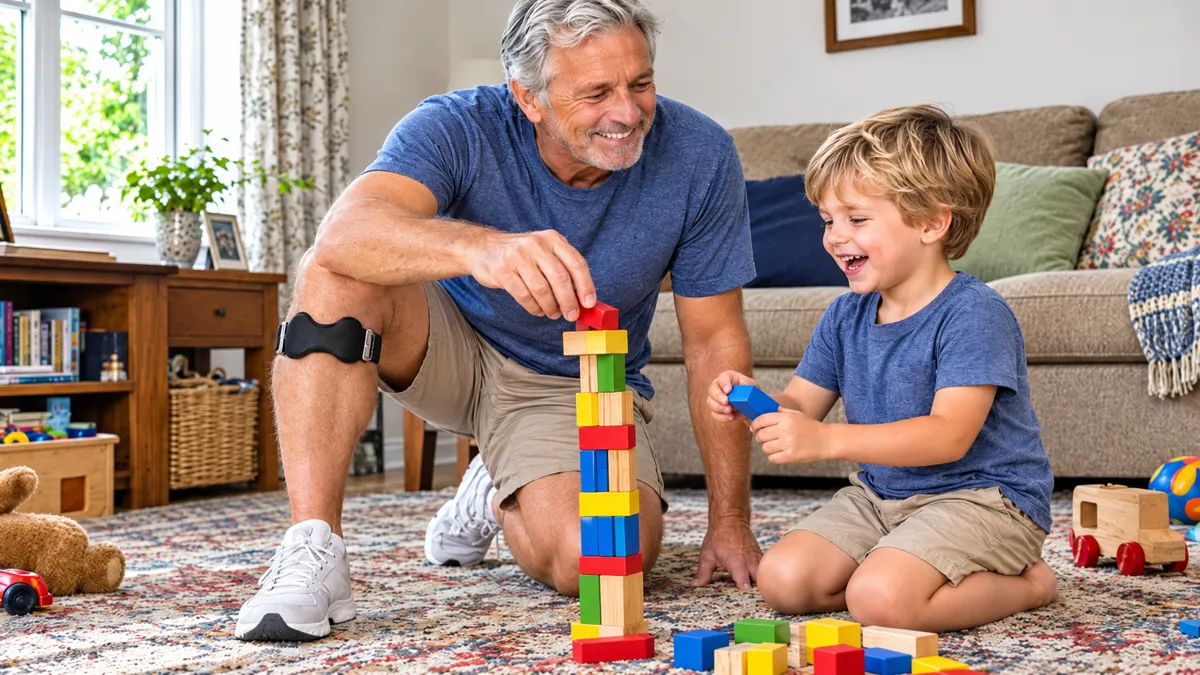
The StepBrake Strap has a rigid contoured black pad with two raised lobes, a soft knitted black elastic band and silver end plates. Its pad sits approximately 2 cm below the kneecap, over the patellar tendon. It is adjustable, fits either knee and is intended for most adult knees.
That product description is not evidence that it will help your particular pain. StepBrake is a new brand with no customer reviews or ratings to report. For the wider support choice, read knee strap versus knee brace; for strap-specific detail, see our patella tendon strap guide.
If a clinician thinks a strap is reasonable, start with fitting while seated and a brief level walk. Stop if pressure causes pain, tingling, numbness or skin changes. Do not use a more comfortable feeling as permission to ignore swelling or increase stair trips beyond what you can safely manage.
A practical plan for the next few days
- Check whether you have any urgent warning signs before trying self-care or a support.
- Make your usual route safer by clearing steps and keeping a hand free.
- Write down the pain location and activities that bring it on.
- Reduce avoidable uncomfortable stair journeys while arranging advice if needed.
- Review whether daily activities are becoming easier, unchanged or harder.
A short note is enough: “Left knee, around the front, worse on the final flight after shopping.” Add any swelling or injury and whether you can bear weight normally. This is more helpful than a long list of internet diagnoses or a single pain score without context.
If a family member is helping, ask them to carry bags or organise an appointment rather than pull you down the steps. Keep your own pace and use the rail. If stairs are preventing safe access to essential rooms, explain that clearly when requesting help; it is an important daily-living problem.
If you decide to compare buying options
Look at suitability, fit and returns before a headline discount. StepBrake costs £29 for one strap, £44 for two, £59 for three or £89 for four. A single strap is not sold as a pair. There is no requirement to buy one for a knee that does not need support.
UK delivery is free by Royal Mail Tracked 48, with dispatch within one working day and arrival usually in two to four working days. The 30-day money-back guarantee requires an email within 30 days of delivery and posting the strap back for a full refund. Check delivery and returns before ordering.
You can order the StepBrake Strap from the official website if it suits your needs. It is slim enough under trousers, fits in under a minute and should be hand washed and air dried. Those conveniences should sit alongside, not replace, an appropriate assessment of persistent pain.
When to see your GP
Arrange GP or physiotherapy advice for pain lasting more than two weeks, pain following an injury or symptoms affecting everyday life. Seek prompt advice for sudden pain or swelling. Do not wait for a support delivery before having a worsening knee checked.
Contact NHS 111 urgently if your knee is very painful, badly swollen, misshapen, locked or giving way, or you cannot move it or bear weight. A hot, red knee with fever or feeling shivery also needs urgent advice, in line with the NHS warning signs.
Summary
Start with safety, a clear symptom description and fewer unnecessary uncomfortable stair trips. A patella band may be an optional support, but the reason for your pain matters more than the product category. Get help when symptoms persist or warning signs appear.
Sources and further reading
- NHS – Knee pain
- NHS inform – Patellofemoral pain syndrome
- NHS Borders – Patellar tendinopathy
- Chartered Society of Physiotherapy – Knee pain
This guide is general information, not medical advice. Read our editorial policy. If you are worried about your knee, speak to your GP, a pharmacist or call NHS 111.
Common questions
Why does my knee hurt downstairs but not upstairs?+
Different activities can provoke different symptoms, but that contrast does not identify one condition. Note where the pain is and whether walking, sitting or squatting also brings it on. A GP or physiotherapist can use that history alongside an examination rather than diagnosing from the direction of travel alone.
Should I film myself using the stairs for my appointment?+
Ask your clinician whether a short video would be useful before making one. Do not repeat a painful or unsafe descent just to capture it, and never hold a phone while relying on a handrail. A written description of the difficulty is a perfectly reasonable starting point.
Is painless clicking on stairs an emergency?+
The NHS distinguishes painless clicking, which can be normal, from painful clicking or a knee that locks or gives way. If clicking comes with pain, swelling or a change in function, seek advice. Contact NHS 111 urgently for locking, giving way or other urgent knee warning signs.
What should I tell the receptionist when booking?+
Explain how long the pain has lasted, whether it followed an injury and whether you can safely walk and use stairs. Mention swelling, locking, giving way or fever straight away. These details help the service direct you appropriately; you do not need to name a suspected condition.
Could moving my bedroom downstairs be sensible?+
A temporary change may be practical if stairs are difficult, but it should not become a substitute for getting assessed. Think about safe access to a toilet, lighting and trip hazards as well. If essential rooms are becoming inaccessible, tell your GP or physiotherapy service clearly.
Should an adult child buy a strap as a surprise?+
It is better to discuss the problem first, particularly if symptoms are new or the knee feels unreliable. Ask what your parent finds difficult and whether they have sought advice. A strap may not be suitable, and practical help with shopping or an appointment might be more useful.