Knee strap for arthritis: what it can and can't do
An honest look at patella straps for knee arthritis, alongside the advice the NHS and NICE give.
By the StepBrake team · sources checkedUpdated
Quick answer
A knee strap for arthritis is not an established treatment for osteoarthritis, and evidence about other supports does not prove that a patella strap works. NICE prioritises tailored exercise, information and weight management where appropriate, with supports reserved for specific circumstances. Ask your GP or physiotherapist before choosing one for arthritic knee symptoms.
Key points
- • A strap is a support, not a treatment
- • Exercise and weight management matter most
- • Ask your GP or physio what suits your knee
Searching for a knee strap for arthritis can bring up confident promises, but choosing a support deserves more care than that. A patella strap is not a treatment for arthritis. If knee pain is new, worsening or affecting everyday life, speak to your GP or physiotherapist before buying a strap to manage it yourself.
Get professional advice first for severe or sudden pain, swelling, locking, giving way, symptoms after injury or pain lasting more than two weeks. Seek urgent NHS help if you cannot bear weight, your knee is very painful or badly swollen, or you have fever with a hot, red knee. Do not wait for a product to arrive.
Does a knee strap for arthritis have evidence behind it?
The useful question is not simply whether any knee support has ever helped anyone. It is whether the specific device is suitable for your diagnosis, symptoms and goals. Evidence about a brace or another aid cannot automatically be applied to a narrow patellar tendon strap, and we do not have clinical evidence establishing StepBrake as an arthritis treatment.
NICE’s osteoarthritis recommendations identify therapeutic exercise and weight management where appropriate, alongside information and support, as core care. They do not recommend that everyone with osteoarthritis should purchase a knee support. That distinction should remain clear even on a website that sells one.
NICE says not to routinely offer insoles, braces, tape, splints or supports unless there is joint instability or abnormal biomechanical loading; therapeutic exercise is ineffective or unsuitable without the aid or device; and adding it is likely to improve movement and function. These are combined conditions for clinical judgement, not a shopping checklist for self-diagnosis.
This does not mean no person with osteoarthritis will ever be advised to use a support. It means the decision should be individual and linked to function, with professional assessment. It does not establish that a patella band changes arthritis, prevents progression or is equivalent to a support selected by a physiotherapist.
Understanding what “arthritis” means here
Arthritis is not one single diagnosis. This guide discusses general osteoarthritis self-management because that is the focus of the NICE guidance cited. It does not extend that advice to inflammatory arthritis or assume that all painful knees have osteoarthritis.
The NHS describes osteoarthritis as a condition that causes joints to become painful and stiff. Symptoms and their impact vary between people. A product description cannot tell you whether that is the explanation for your knee discomfort or whether something else needs attention.
If your diagnosis is uncertain, write down when symptoms started, which activities are difficult and whether you notice swelling or changes in movement. Take that information to your GP. Do not use a comfortable response to a knee support strap as a diagnostic test: feeling different in a strap does not identify the underlying condition.
What a patella strap is, and what it is not
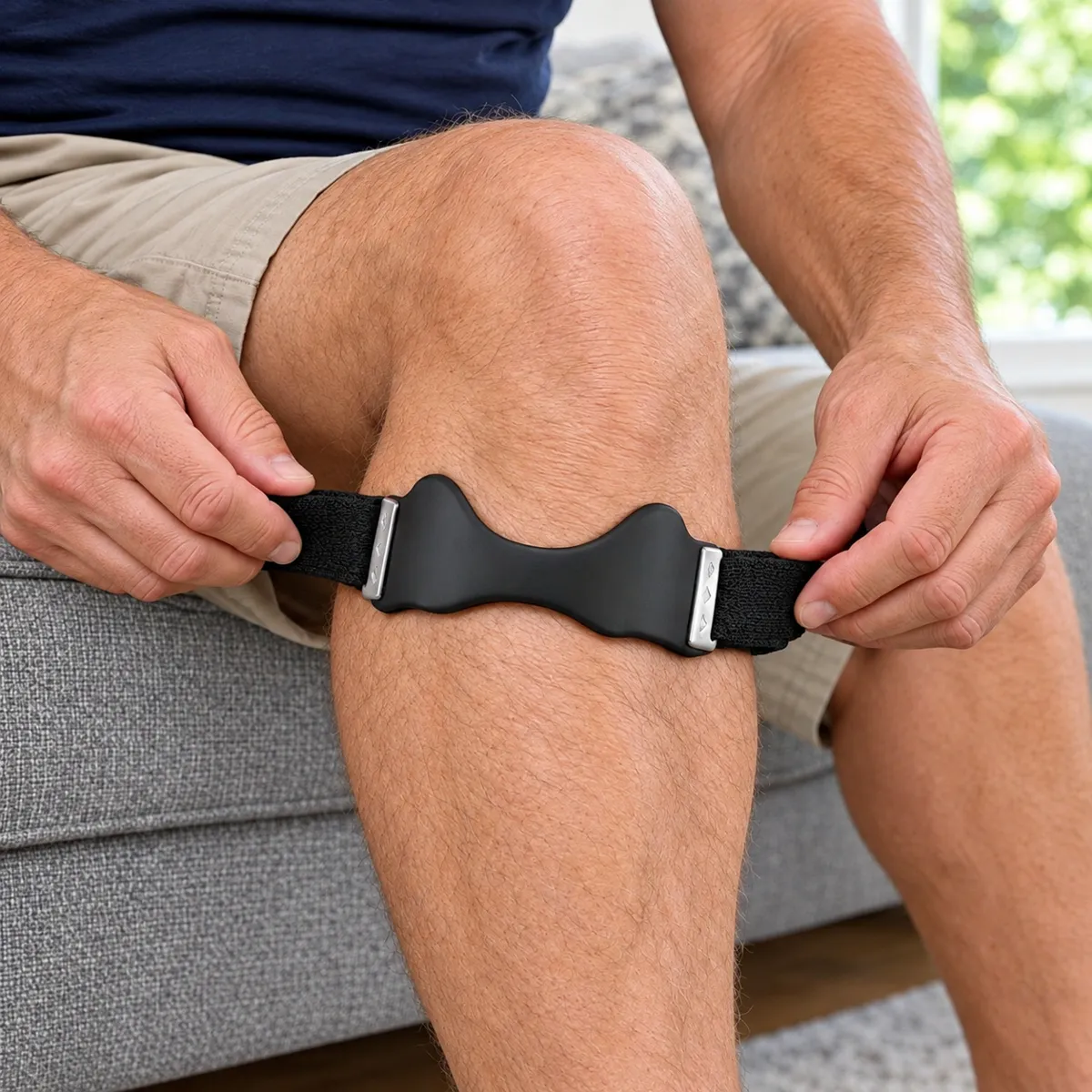
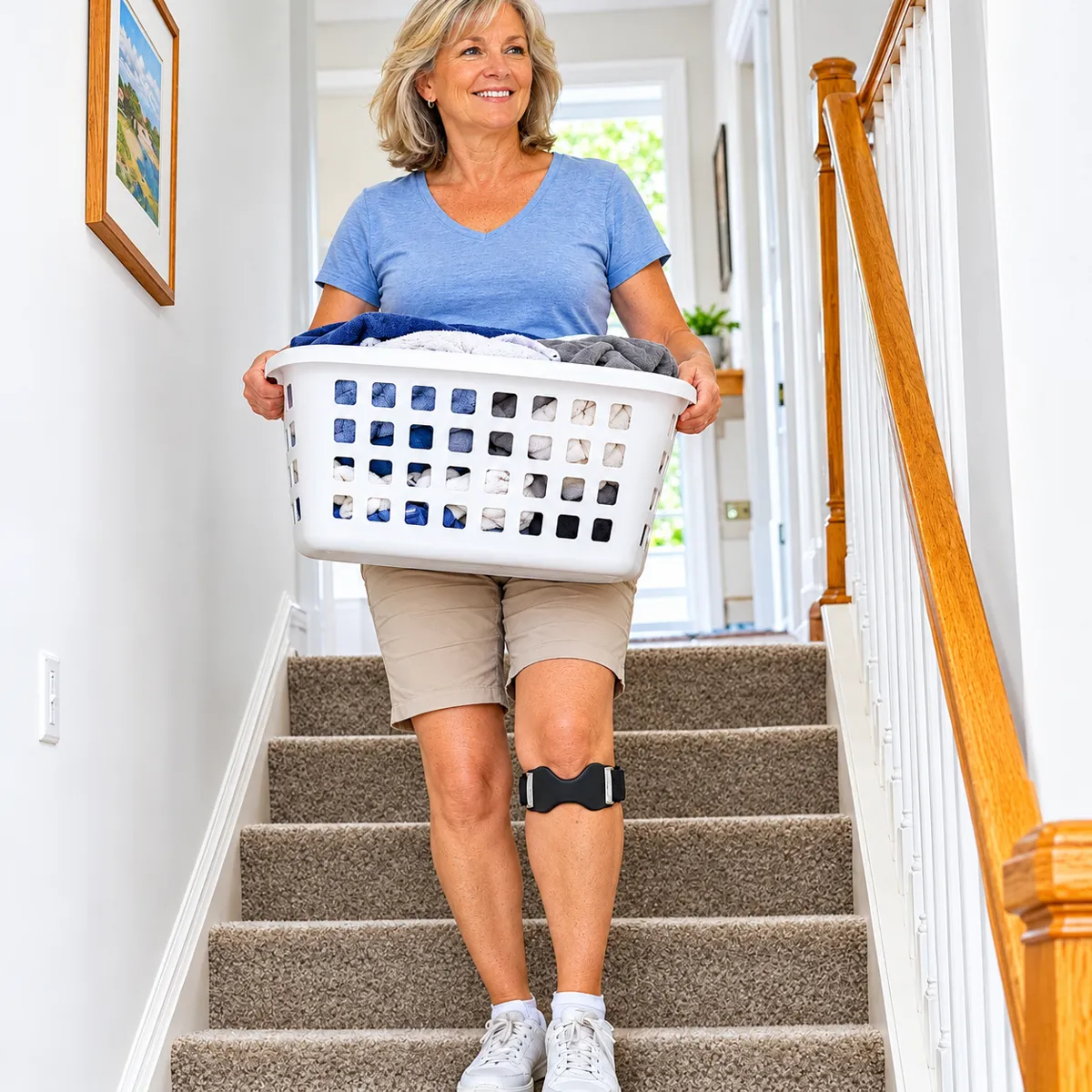
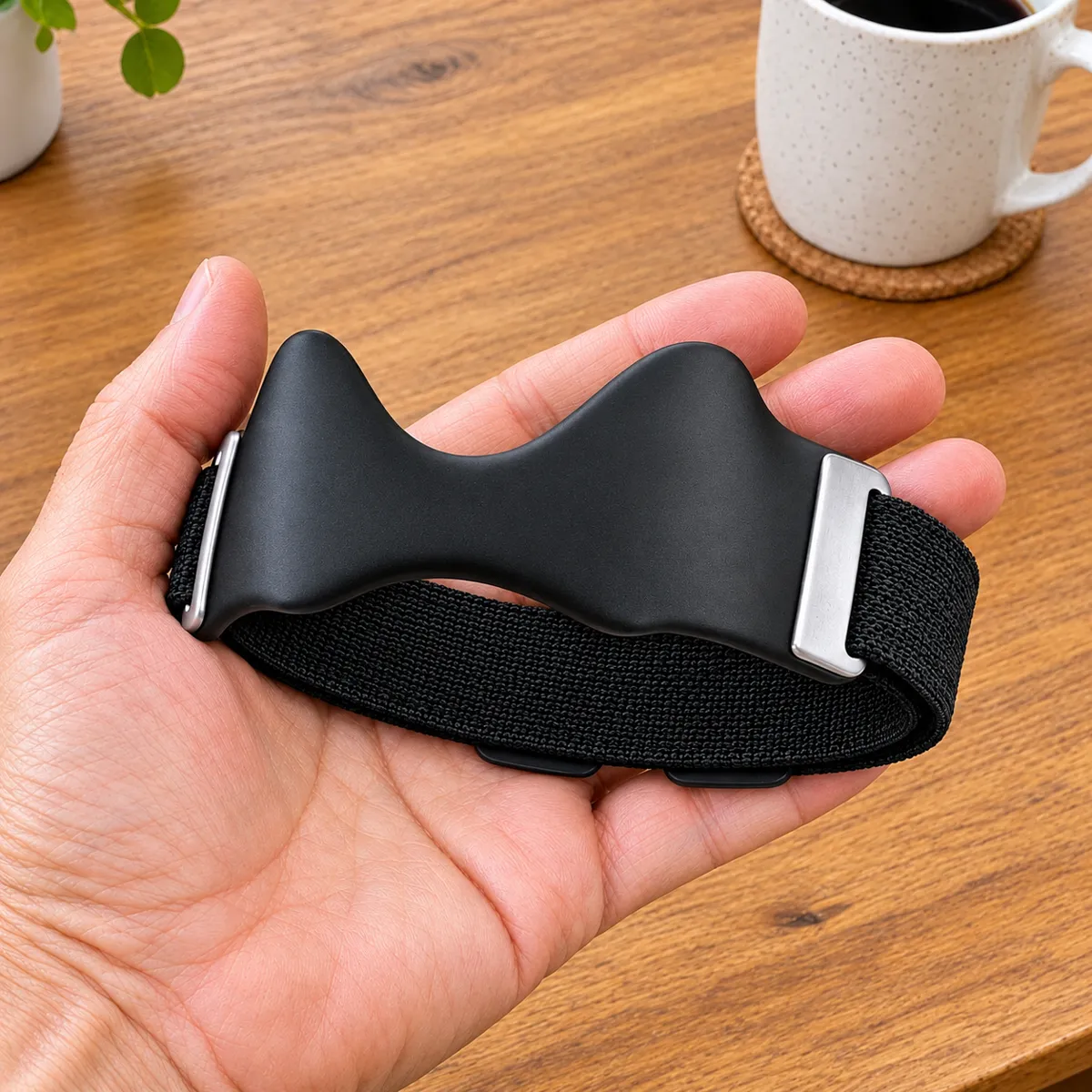
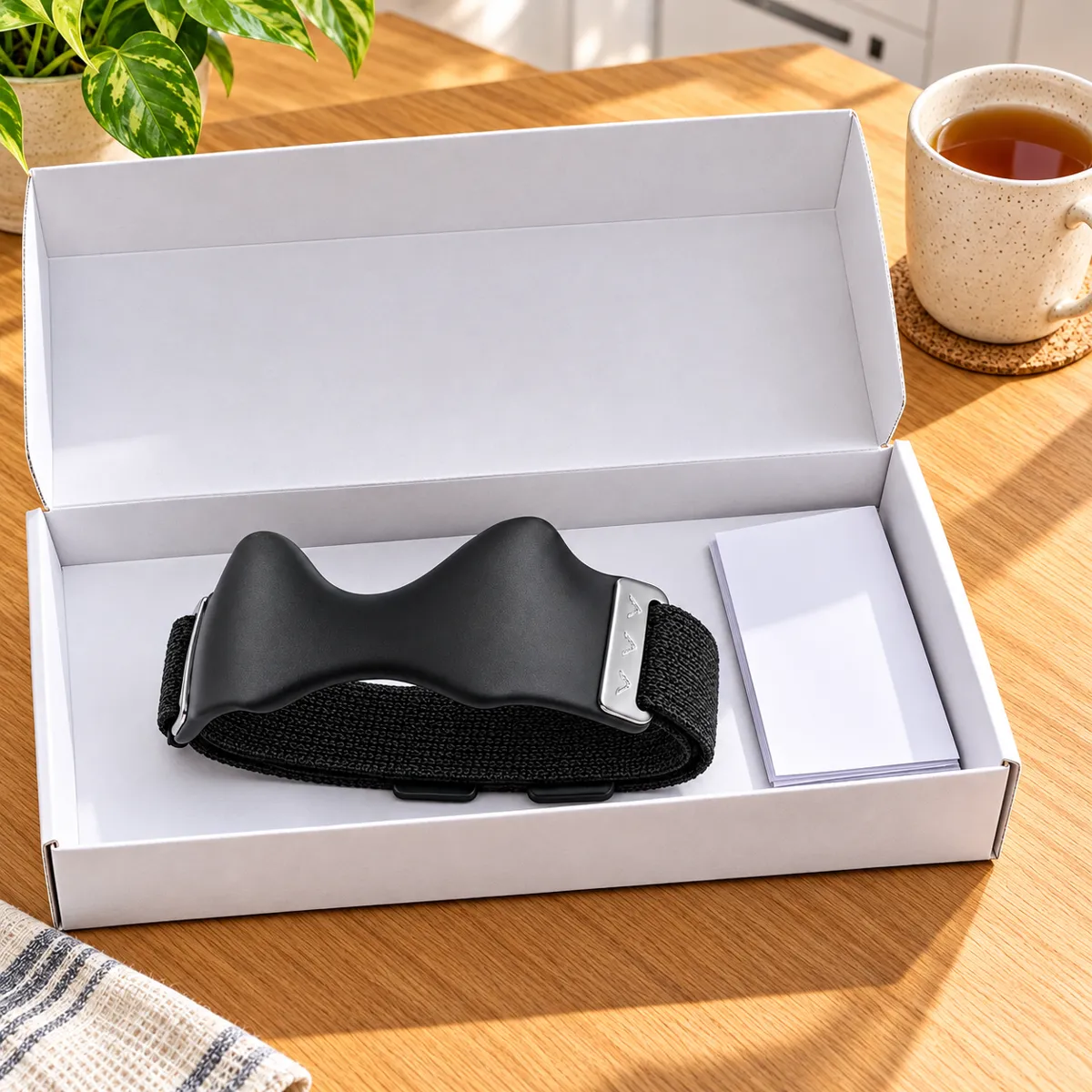
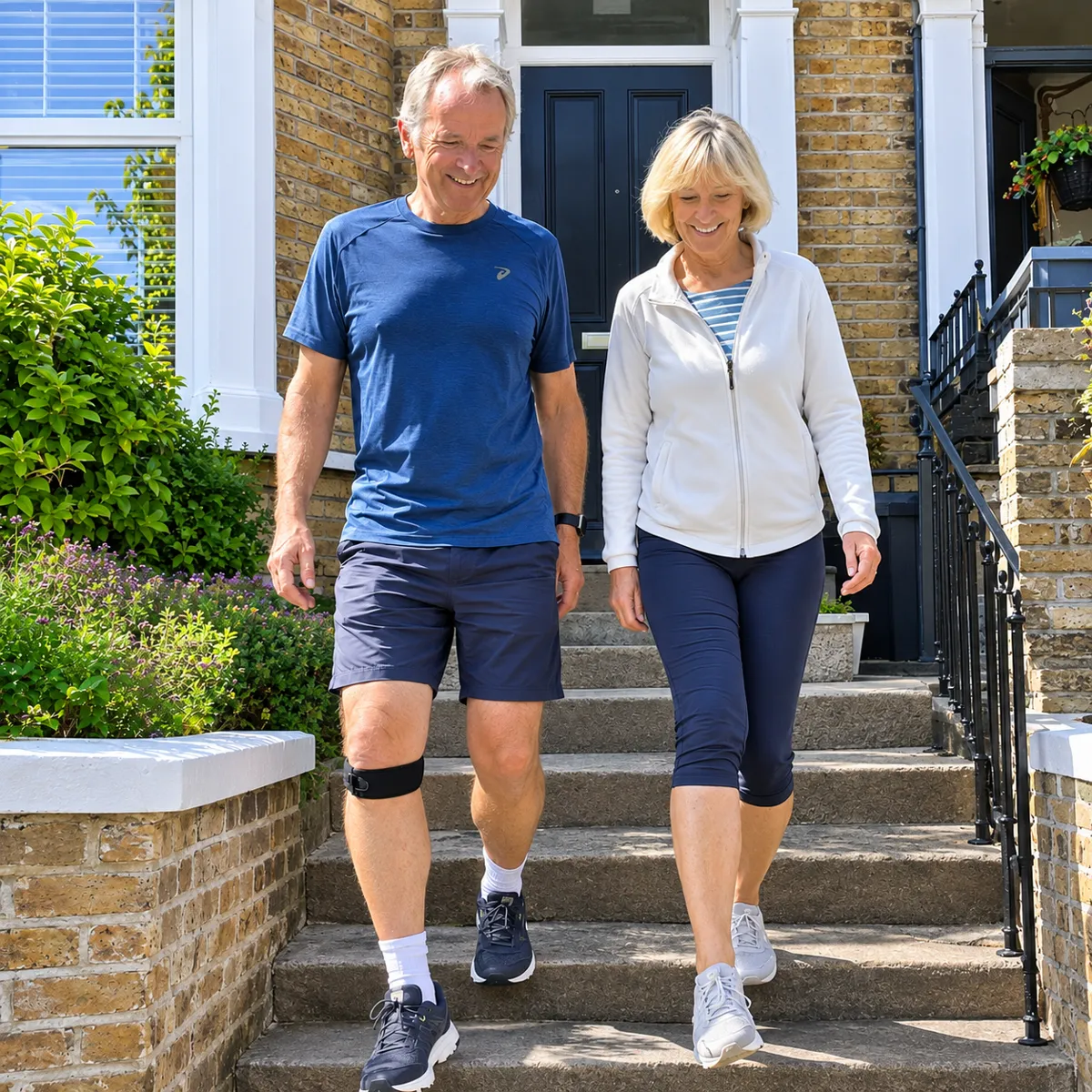
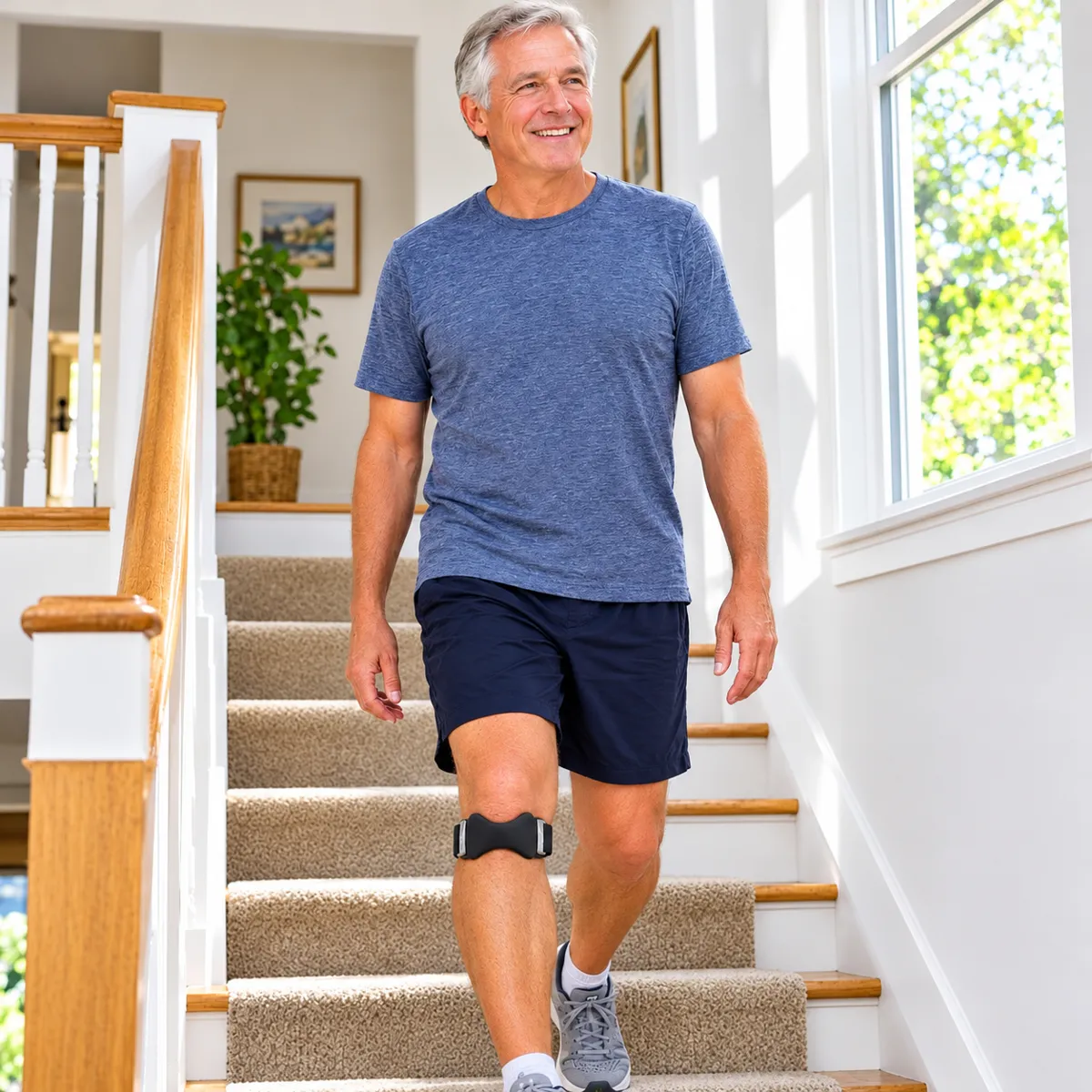
StepBrake is a slim, adjustable patellar tendon strap with a rigid contoured black pad and a soft knitted black elastic band. The pad has two raised lobes and sits approximately 2 cm below the kneecap. Silver end plates form part of the strap, which fits either knee and most adult knees.
That is a description of its construction and intended placement, not proof of a medical benefit. It does not cover the whole knee, and it should not be described as a substitute for a brace prescribed for a particular problem. Our strap versus brace guide explains the basic differences in format.
Comparing a knee strap for arthritis with recommended care
The table separates established guidance from product choices. The priorities come from NICE’s recommendations on osteoarthritis care, not a trial of StepBrake. Your clinician can help apply them to your circumstances and preferences.
| Option | What guidance says generally | What to discuss |
|---|---|---|
| Tailored therapeutic exercise | A core part of osteoarthritis management, including strengthening and aerobic fitness. | Which exercises, level and progression suit you? |
| Information and support | Care should help you understand the condition and participate in decisions. | Which symptoms and activities matter most to you? |
| Weight management where appropriate | Recommended support for people living with overweight or obesity. | What realistic, supported approach fits your health and needs? |
| Braces or supports | Not routinely offered; NICE specifies combined circumstances for considering them. | Would a particular device improve your movement and function? |
| A retail patella strap | General recommendations do not demonstrate a benefit from StepBrake. | Is this type of strap appropriate at all for your knee? |
Exercise should not be displaced by a purchase
NICE recommends therapeutic exercise tailored to the person, such as local muscle strengthening and general aerobic fitness. It also says exercise may initially cause pain or discomfort, while consistent long-term participation benefits joints and function. That is advice to build an appropriate plan, not an instruction to push through severe or changing pain.
Ask whether supervised sessions or a physiotherapy assessment would help if you are worried about starting. Explain what has made exercise difficult before, including balance concerns, fatigue or fear of falling. A clinician can discuss adjustments; a strap seller cannot decide which movements are safe for your individual knee.
Weight management may be relevant for some people, but it is not a condition of deserving care or support. Discuss it sensitively with a professional if appropriate. A knee strap does not replace exercise advice, weight-management support or any medicine or other treatment your clinician recommends.
Questions to take to your GP or physiotherapist
- Is osteoarthritis the likely explanation for my symptoms, or do I need another assessment?
- What practical goal should we work towards, such as moving between rooms or managing a short outing?
- What exercise plan can I begin safely, and how should I respond if symptoms change?
- Is there a specific reason to consider a support, and which type would address it?
- How would we decide whether an aid is useful, and when should we review it?
- Are there reasons I should avoid pressure from a strap, including skin or sensation problems?
Bring your current supports or a clear product description if you already own one. A professional needs to know whether you mean a narrow patellar tendon strap, a sleeve or a more structured brace. Our patellar tendon strap guide can help clarify the terminology, but it cannot make that clinical choice.
If a clinician agrees that you can try a strap
Agree a modest, practical goal and how you will judge the experience. That might involve checking comfort during an already appropriate activity, not increasing the activity to test the product. Keep any walking aid or handrail you normally use. A sense of support is not evidence that your joint is protected from injury.
Follow the StepBrake fitting instructions, with the pad below the kneecap and the band flat. Do not tighten until painful or keep wearing it through numbness, tingling, skin irritation or worsening symptoms. Remove it if there is a problem and ask for advice before another attempt.
Do not assume that an immediate comfortable feeling predicts a lasting benefit. Equally, discomfort is not something to endure to make a purchase worthwhile. Review the experience with your clinician, especially if the support changes how you move or you begin relying on it for tasks that previously felt unsafe.
Reading support claims with care
A responsible knee strap UK listing should distinguish construction from outcomes. Phrases such as “adjustable” and “fits either knee” describe features. Claims to repair cartilage, reverse arthritis or guarantee relief go much further and should not be inferred from the existence of a pad and band.
Versus Arthritis’s knee pain information provides broader context, while the NHS knee pain page helps with safety decisions. Neither is an endorsement of this product. StepBrake is a new brand and we do not have customer reviews, ratings or testimonials to offer.
If you decide to order the StepBrake Strap, treat that as a retail choice alongside professional advice, not a medical recommendation from this article. Questions about an order can go to our shop; questions about diagnosis, treatment or an exercise plan belong with a qualified clinician.
When to see your GP
Arrange GP or physiotherapy advice for persistent symptoms beyond two weeks, severe or sudden pain, swelling, locking, giving way or pain after an injury. Do not assume an existing arthritis diagnosis explains every new change. Follow NHS urgent-care advice for inability to bear weight, major swelling or a hot, red knee with fever.
Summary
Patella straps are not established arthritis treatments. NICE prioritises tailored exercise, information and appropriate weight management, and limits routine use of supports. Ask your GP or physiotherapist whether any device is appropriate for you, and do not let a purchase delay assessment or replace your agreed care plan.
Sources and further reading
- NICE – Osteoarthritis in over 16s: recommendations
- NHS – Osteoarthritis
- NHS – Knee pain
- Versus Arthritis – Knee pain
This guide is general information, not medical advice. Read our editorial policy. If you are worried about your knee, speak to your GP, a pharmacist or call NHS 111.
Common questions
Does NICE recommend buying a patella band for osteoarthritis?+
No general recommendation says everyone with osteoarthritis should buy a patella band. NICE advises against routinely offering supports unless specified circumstances are met together. Its guidance calls for individual assessment, not a particular retail purchase, and does not establish that StepBrake improves arthritis symptoms.
Does feeling supported mean my arthritis has improved?+
Not necessarily. Feeling different while wearing a support is a personal experience, not evidence of a change in the underlying condition. Discuss meaningful goals and progress with your clinician. Do not use temporary comfort as a reason to stop an exercise plan or other agreed care.
Can I use this advice for rheumatoid arthritis?+
This guide focuses on osteoarthritis and should not be transferred to rheumatoid arthritis or another inflammatory condition. Ask your GP, rheumatology team or physiotherapist about support options that fit your diagnosis. New warmth, swelling or a significant symptom change should not be managed by simply adding a retail strap.
Should I buy a strap before my first arthritis appointment?+
There is no need to buy a strap to prepare for an assessment. A brief record of symptoms, activities you find difficult and questions about your goals is more useful. A clinician can explain whether any support is worth considering and whether a different approach should take priority.
Could a patella strap replace a prescribed brace?+
Do not replace a prescribed brace with a narrow patellar tendon strap without discussing it with the professional who recommended the brace. Different devices have different purposes and coverage. Similar wording on a product listing does not make them interchangeable or establish the same effect on movement.
How should I judge claims that a strap rebuilds cartilage?+
Treat such claims cautiously and ask for evidence that directly supports the specific product and outcome. This guide makes no claim that StepBrake rebuilds cartilage, reverses arthritis or prevents progression. Independent NHS and NICE information is a better starting point for understanding osteoarthritis care than a sales promise.