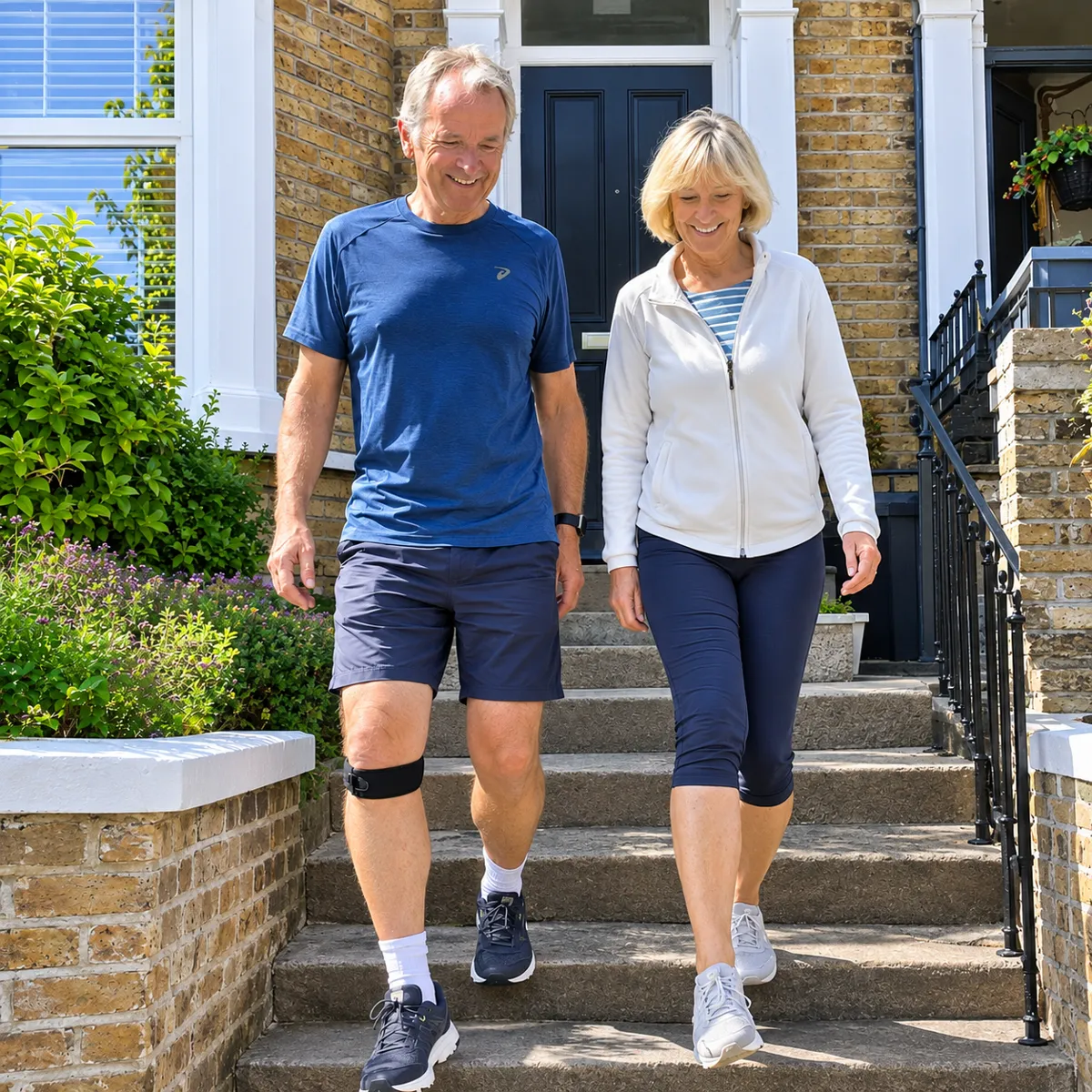
How to wear a patella strap correctly
Where the pad goes, how tight it should feel and the mistakes to avoid, in five simple steps.
By the StepBrake team · sources checkedUpdated
Quick answer
To wear a patella knee strap, place the contoured pad approximately 2 cm below your kneecap, over the patellar tendon, and adjust the band until secure but comfortable. Check the fit while sitting, standing and taking a few level steps. Remove it if it causes pain, numbness, tingling or skin changes.
Key points
- • Pad goes about 2 cm below the kneecap
- • Snug, with room to slide a finger under
- • Recheck the fit after a few minutes of walking
Learning how to wear a patella knee strap starts with placement, not pulling the band as tight as possible. This guide explains the StepBrake Strap’s fitting sequence, checks to make before moving and mistakes to avoid. A comfortable fit does not prove that a strap is appropriate for the cause of your knee pain.
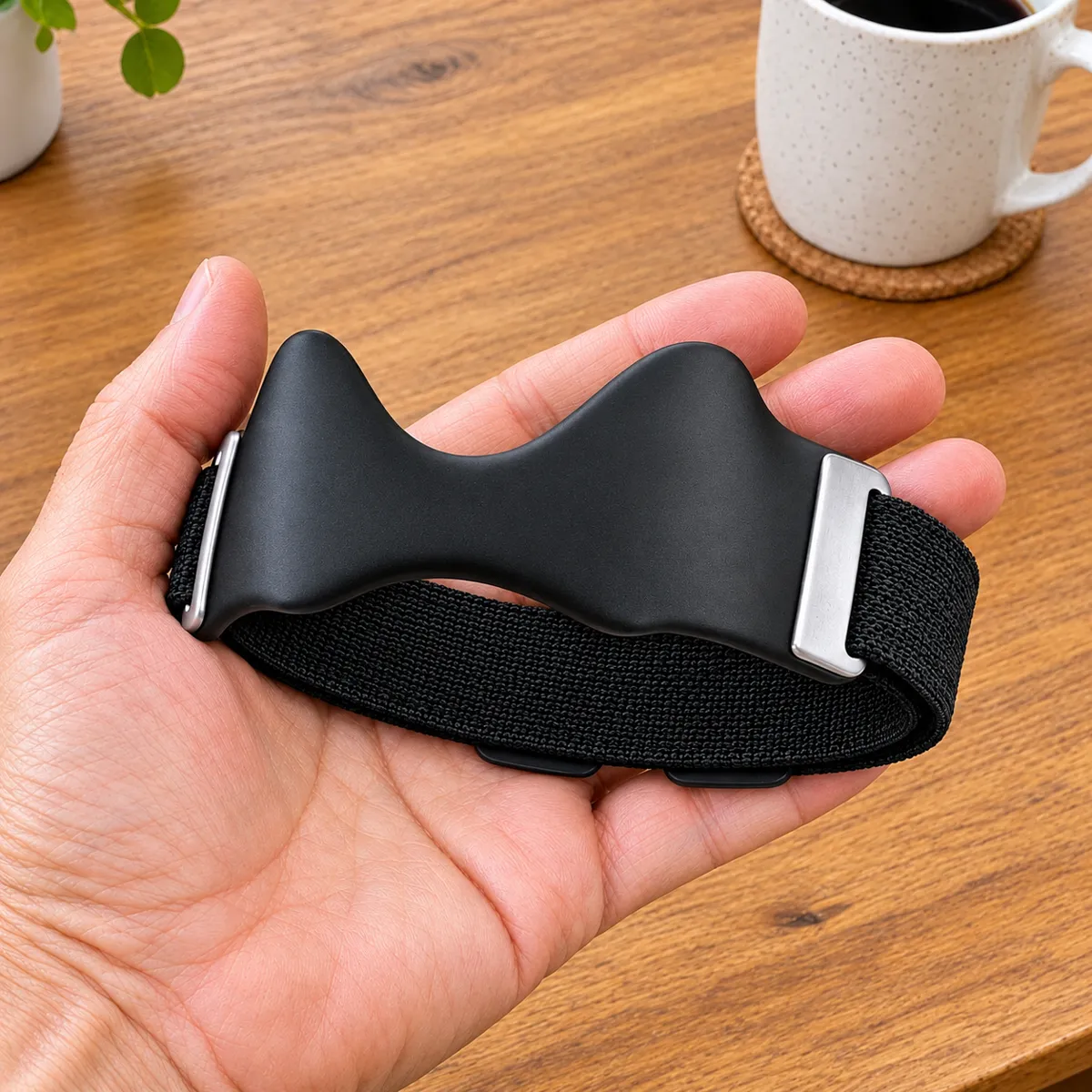
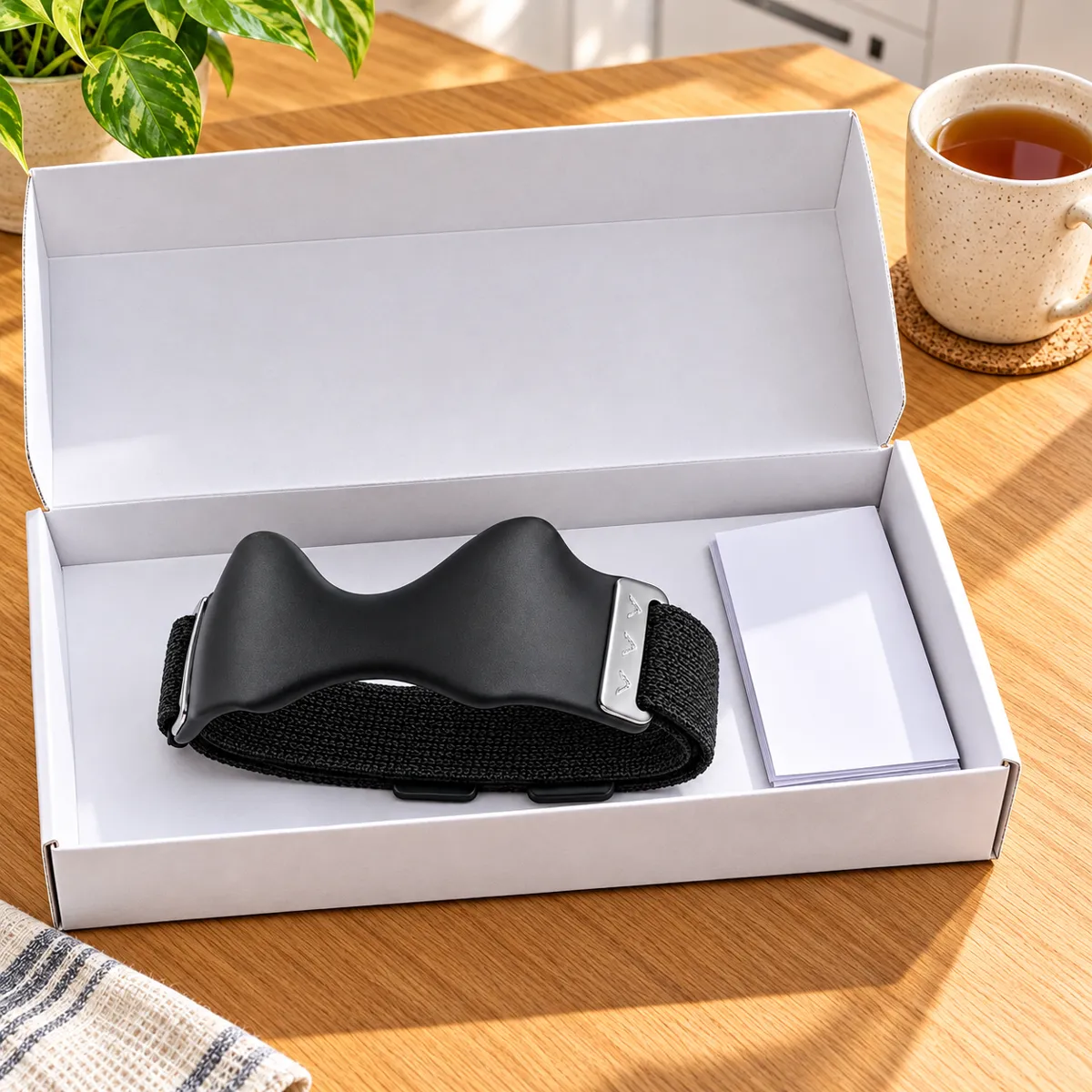
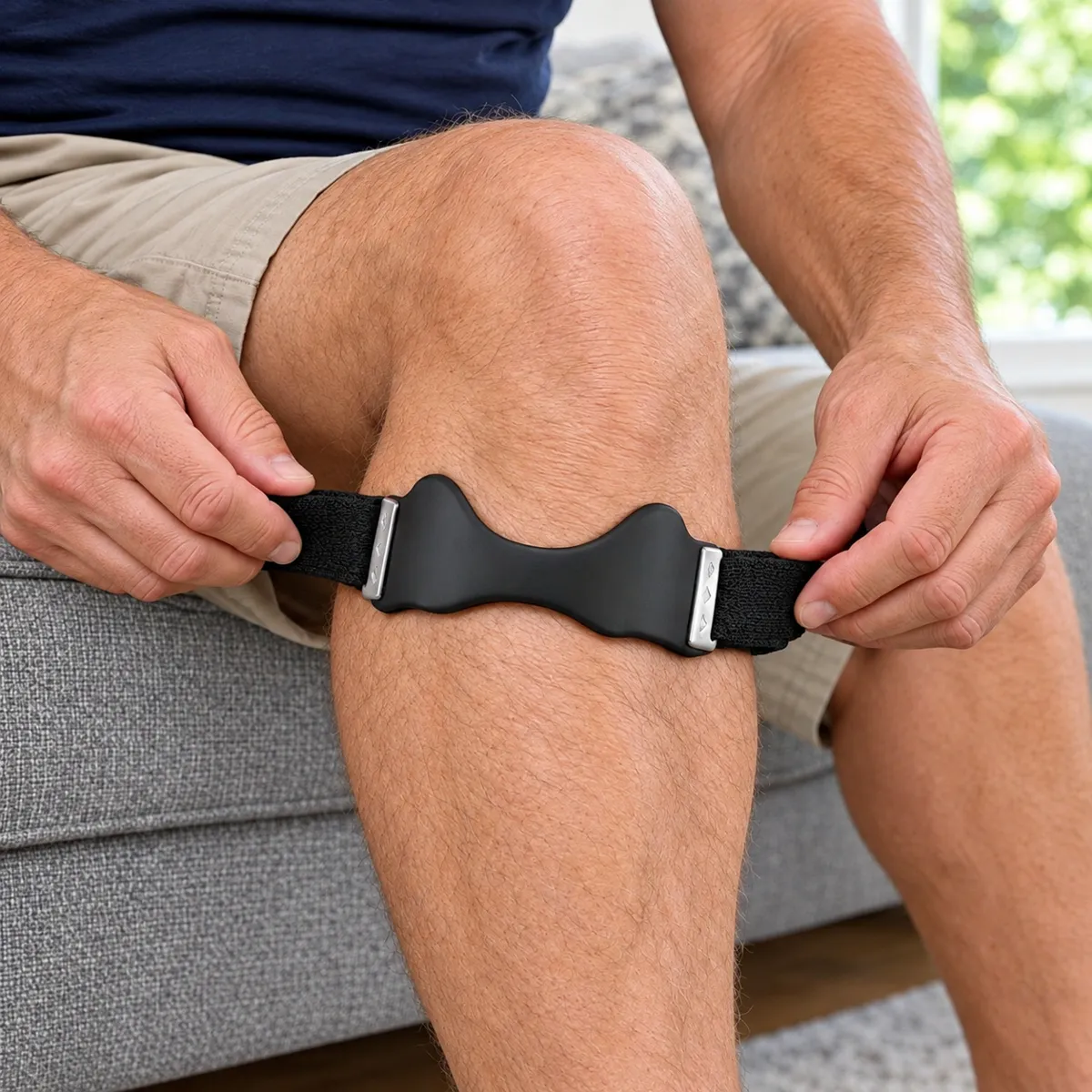
The StepBrake Strap has a rigid, contoured black pad with two raised lobes, a soft knitted black elastic band and silver end plates. It is adjustable and fits either knee. It is one size for most adult knees, rather than a promise that every knee shape or size will be suitable.
How to wear a patella knee strap: prepare first
Choose a stable chair and a clear, level area where you can stand without rushing. Have a usual walking aid or another person nearby if you normally need support. Do not make stairs your first fitting test, particularly if your knee already feels uncertain.
Look at the strap before putting it on. Check the band and pad for damage and make sure the fastening can hold securely. If anything seems broken, do not improvise a repair or tighten another part to compensate. Ask the seller for help instead.
Start with clean, dry skin and look for soreness where the pad and band will sit. Do not strap over a wound, irritated skin or an area that is already uncomfortable to touch. If you have reduced sensation or concerns about circulation, ask a clinician about suitability before trying it.
A patellar tendon strap is a narrow support below the kneecap, not a brace covering the whole joint. Our strap and brace comparison explains that practical distinction. Neither the width of a support nor how firmly it presses tells you whether it suits your particular symptoms.
How to wear a patella knee strap: step by step
- Sit comfortably. Keep your foot supported and your knee in a relaxed position that lets you see the area below the kneecap. Move clothing out of the way so that you can position the pad accurately rather than guessing through a trouser leg.
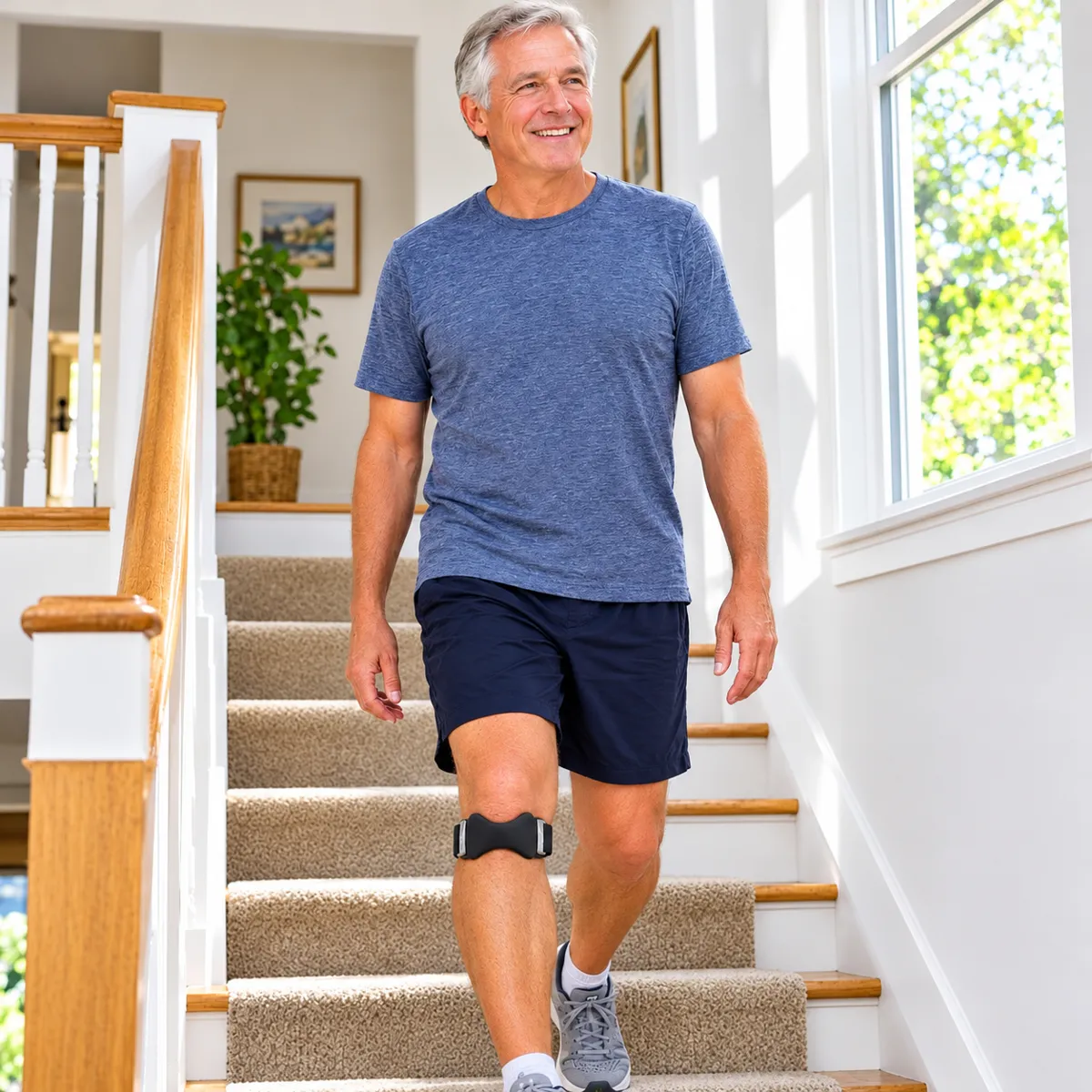
- Find the lower edge of your kneecap. The StepBrake pad is intended to sit approximately 2 cm below it, over the patellar tendon, rather than on the kneecap itself. If you cannot identify a comfortable position, stop and ask a physiotherapist rather than pressing around a painful area.
- Centre the contoured pad. Place it at the front of the knee in that below-kneecap position. The two raised lobes are part of the pad’s shape. Do not turn it into a side support by moving it round towards the inside or outside of the joint.
- Wrap the elastic band. Bring it around the knee without twisting it. Check that the soft knitted band lies flat, including behind the knee, and that the silver end plates are not creating an uncomfortable pressure point.
- Adjust gradually. Secure the strap so it stays in position without biting into the skin. There is no need to seek the tightest possible setting. If secure placement is only possible with painful pressure, this is not an acceptable fit.
- Check while seated. Gently change your knee position within a comfortable range. Stop if the pad digs in, the band pinches or you notice tingling. Loosen or remove it before making another adjustment.
- Stand and reassess. Use your usual support if needed. Check that the pad remains below the kneecap and that the band has not rolled. Take a few slow steps on level ground only if standing feels comfortable.
- Recheck after moving. If it slips or becomes uncomfortable, stop and refit it. Repeated slipping is not a reason to keep tightening indefinitely. Remove the strap if it will not remain comfortably in place.
Fitting can take under a minute once you know the sequence, but your first attempt should not be a race. Use our size guide if you are unsure about the one-size description. We do not provide an invented circumference range or a universal tension measurement.
Common patella strap fitting mistakes
Small changes in positioning can change how the strap feels. The table below is a practical troubleshooting aid, not a way to diagnose pain or decide that symptoms are harmless. Stop testing if an adjustment increases discomfort.
| Mistake | What to check | Safer next step |
|---|---|---|
| Pad directly on the kneecap | The pad is too high for the intended StepBrake position. | Remove and reposition approximately 2 cm below the kneecap. |
| Band pulled very tight | Look for pinching, pain, tingling or a marked change in skin colour. | Remove it; do not tolerate symptoms to keep it secure. |
| Band twisted behind the knee | A fold may create a concentrated pressure point. | Unfasten, flatten the band and refit without twisting. |
| Repeated slipping | Check position, fastening and whether clothing is interfering. | Refit once carefully; stop if comfortable stability is not possible. |
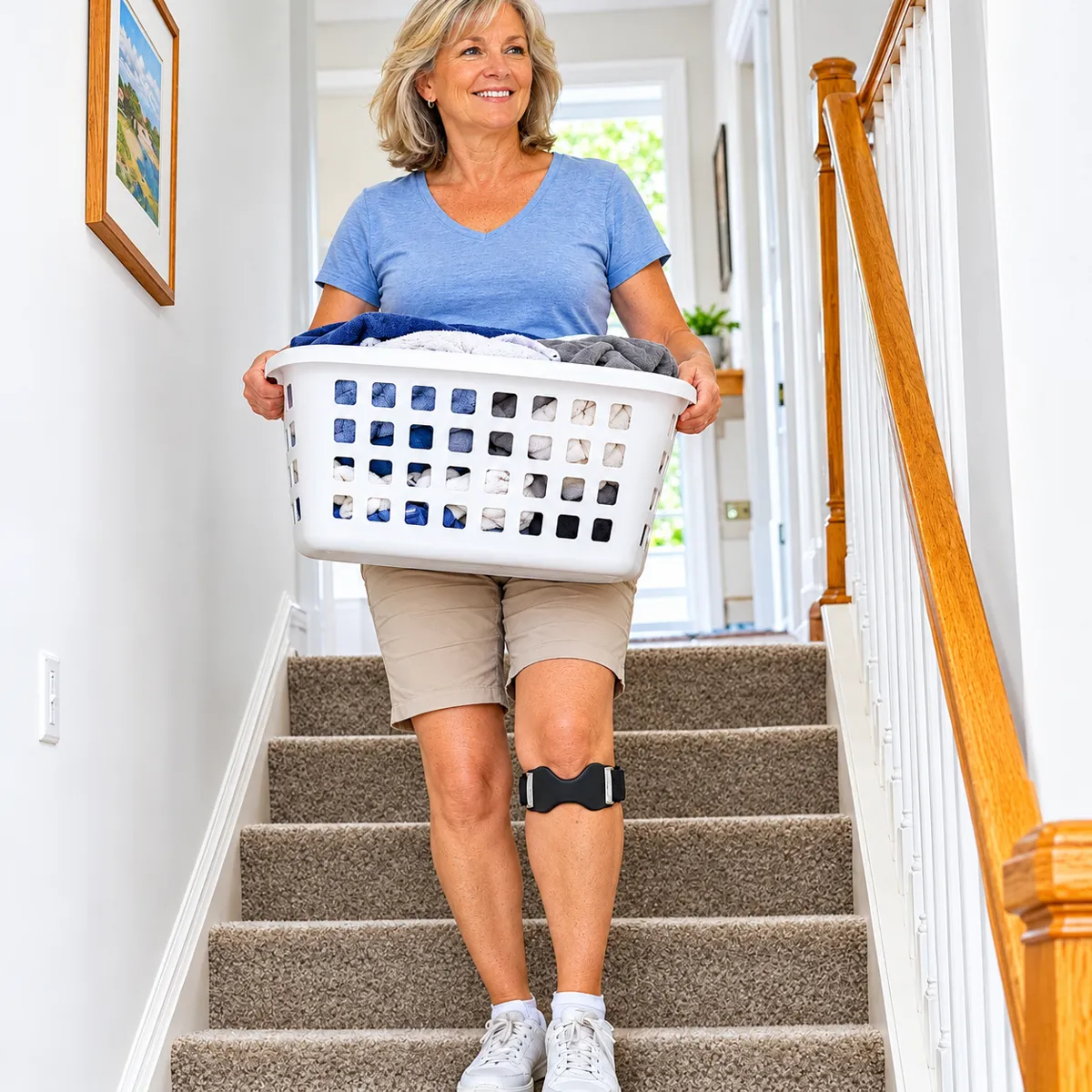
| Testing immediately on stairs | You have not checked ordinary standing and level steps. | Start somewhere stable and level, with usual support available. |
| Ignoring skin irritation | Inspect the area under both the band and pad. | Remove the strap and let the skin recover; seek advice if needed. |
A comfortable knee support strap is not a diagnosis
Do not judge success by whether you can push through a painful task. Knee pain has different possible causes, and a strap cannot identify which one applies. The NHS knee pain guidance explains when symptoms need professional attention and when urgent help is appropriate.
Keep any existing rehabilitation or activity advice from your clinician. A patella band is not permission to abandon a walking aid, increase exercise sharply or take stairs that currently feel unsafe. If symptoms change after fitting, stop and consider whether medical advice is needed before another attempt.
For someone helping a parent fit the strap, explain each step and let the wearer decide whether it feels comfortable. Do not tighten it because it looks loose from your angle. Ask about sensation, check that they can remove it themselves and keep their usual handrail or walking support available.
Clothing, everyday use and rechecking
The StepBrake Strap is slim enough to fit under trousers. Leave enough room to inspect and adjust it; tight clothing can hide a rolled band or make removal awkward. Begin by fitting where you can see the pad clearly, then check again after arranging your clothes.
There is no universal number of hours that makes a knee strap suitable for everyone. Avoid inventing a wearing schedule from how quickly it fits. Ask your physiotherapist for advice about duration, particularly if you have a medical condition or need support for more than a brief activity.
Recheck if you have been sitting and then stand, or if the strap feels different during an activity. Remove it for skin checks and whenever it becomes uncomfortable. Our stairs guide discusses everyday precautions, but a product guide cannot assess whether your stairs are safe for you.
Taking the strap off and caring for it
Sit somewhere stable before unfastening it if bending or balancing is difficult. Release the band rather than dragging the pad over the skin. Look at the area underneath, and do not immediately put it back on if the skin is sore or the knee feels worse.
Hand wash the StepBrake Strap and allow it to air dry. Do not assume it can go through a washing machine or tumble dryer. Let it dry before wearing again, and check the band, pad and fastening before the next use.
The Chartered Society of Physiotherapy’s knee pain information is a useful starting point for understanding professional support. Versus Arthritis also provides knee pain information. Neither source is an endorsement of StepBrake or a substitute for a fitting assessment.
If you want to order the StepBrake Strap, check the product details and remember that fit and suitability are separate questions. Ask for professional advice first if you are unsure whether a narrow knee support strap is appropriate for your symptoms.
When to see your GP
Contact your GP or physiotherapist for severe or sudden pain, swelling, locking, giving way, pain after injury or pain lasting more than two weeks. Do not keep experimenting with strap tension instead. Seek urgent NHS help for a very painful knee, inability to bear weight, major swelling or a hot, red knee with fever.
Summary
Place the StepBrake pad approximately 2 cm below the kneecap, keep the band flat and adjust for comfort rather than maximum pressure. Check sitting, standing and level steps before doing more. Remove it for new symptoms or an unsatisfactory fit, and use clinical advice rather than a strap to guide decisions about persistent pain.
Sources and further reading
This guide is general information, not medical advice. Read our editorial policy. If you are worried about your knee, speak to your GP, a pharmacist or call NHS 111.
Common questions
Should I mark the pad position on my skin?+
You do not need to mark your skin to fit the strap. Locate the lower edge of the kneecap each time and position the pad approximately 2 cm below it. If finding the position is difficult or uncomfortable, ask a physiotherapist to demonstrate rather than relying on a mark that may not reflect your posture.
Can someone else fasten the strap for me?+
Yes, someone can help with positioning and fastening, but you should control the comfort decision. Tell them immediately about pinching, tingling or discomfort. They should not keep tightening because the strap looks loose. If you cannot remove it independently, discuss a practical and safe approach before wearing it.
What if the band folds when I sit down?+
Unfasten the strap and lay the band flat before trying again. Recheck the fit in both sitting and standing rather than accepting a fold in one position. If the band repeatedly rolls or causes pressure behind the knee, stop using it and ask for fitting advice.
Can I move the pad sideways to avoid a tender spot?+
Do not move the pad around the side of the joint to find a tolerable place and assume it will work the same way. StepBrake is intended for placement at the front, below the kneecap. Tenderness at the intended position is a reason to pause and ask a clinician about suitability.
Should I refit it after changing trousers?+
Check the strap after changing clothing, particularly if fabric has caught the band or moved the pad. Make sure it remains flat and in the intended position. Clothing should not prevent you from checking the skin or removing the strap promptly if it becomes uncomfortable.
Is a quicker fitting time a sign of a better fit?+
No. Familiarity may make fitting quicker, but time is not a safety or suitability test. Placement, comfort and the ability to move without new symptoms matter more. Allow extra time on your first attempts and stop if you cannot obtain a secure fit without excessive pressure.