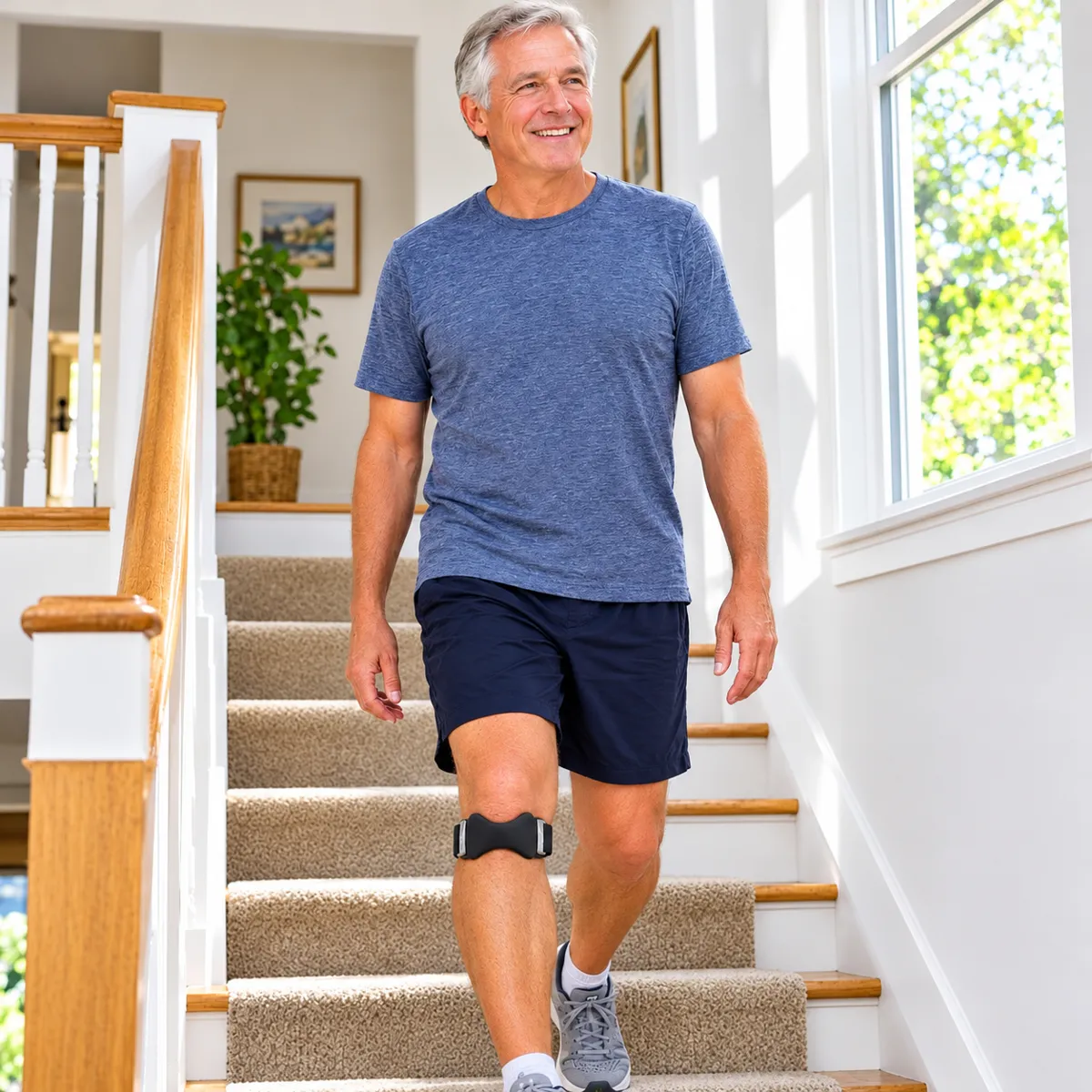
Knee strap for hiking and walking downhill
Descents are where knees complain. Here is how to make them easier.
By the StepBrake team · sources checkedUpdated
Quick answer
A knee strap for walking downhill may be an optional support, but it cannot make an unsuitable route safe or explain the cause of knee pain. Start with a shorter, gentler route and an exit plan. Seek advice for persistent symptoms, and do not walk on a knee that locks or gives way.
Key points
- • Descents load the knee like stairs
- • Shorter steps and poles help
- • A strap packs into a pocket
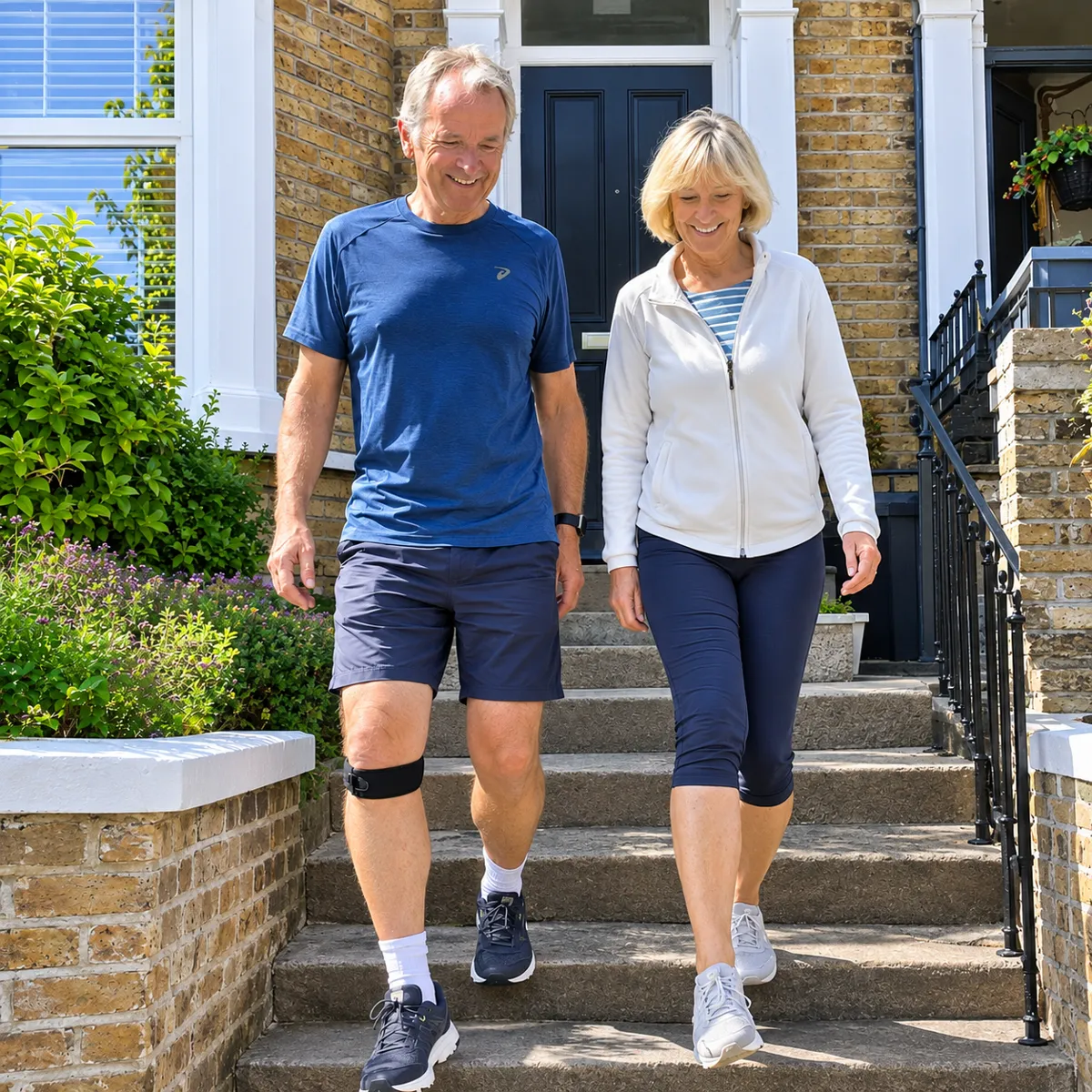
A knee strap for walking downhill can look like a simple answer when the return leg of a favourite walk becomes uncomfortable. Yet the descent is only part of the decision. Route length, surface, weather and how easily you can turn back matter just as much as the support you wear.
This guide is for everyday walkers planning parks, country lanes and gentler countryside outings. It explains how to think about knee pain walking downhill without diagnosing it, and how to approach a strap trial cautiously. A support is not insurance against a fall or a reason to continue when your knee feels unsafe.
Before choosing a knee strap for walking downhill
Notice whether symptoms happen only on descents or also on stairs, level paths and after sitting. Write down the location and when the problem began. A particular walking pattern can provide useful history, but it cannot tell you which structure is responsible or which product will be suitable.
NHS Borders guidance on patellar tendinopathy describes pain beneath the kneecap that can increase on hills and stairs. It also lists increased or excessive loading, including downhill walking or running, among possible contributing factors. That is general condition information, not confirmation that your symptoms come from the tendon.
Pain around or behind the kneecap can have a different explanation. NHS inform guidance on patellofemoral pain describes this location and symptoms during activities including stairs and squatting. The useful response to overlap is assessment when needed, not choosing a diagnosis by whichever article sounds most familiar.
Look at the whole outing
A short distance on a map may still contain a steep or awkward return. Check the shape of the route, where the descents occur and whether there are benches, road access or a gentler alternative. Do not leave the hardest section until you are tired and far from help.
| Route feature | Question before setting off | More cautious choice |
|---|---|---|
| Long descent | Can I avoid committing to it? | A shorter route with easier exits |
| Loose or wet surface | Will footing be predictable? | A familiar firm path in suitable weather |
| Remote stretch | How would I get home if symptoms worsen? | A local walk near transport or help |
| Group pace | Can I stop without pressure? | A companion happy to turn back |
Managing knee pain walking downhill without over-testing
Choose a route you can shorten rather than one you must finish. A nearby park with a gentle slope may be a better first outing than a hill walk you have not attempted for months. There is no benefit in proving that you can reach a viewpoint if the return becomes difficult.
Tell a walking companion in advance that you may change the plan. Keep your phone accessible and think about transport, not just distance. If you would not feel safe completing the route without a strap, buying one should not be the only change that makes you decide to attempt it.
Keep the first trial modest
If a clinician considers a patellar strap appropriate, fit it at home before the walk. Start with a short level walk and check comfort and skin afterwards. Only consider a gentle descent if ordinary walking is safe and the knee has no warning signs requiring assessment.
Use a familiar route, usual footwear and a pace that lets you choose each step comfortably. Do not combine a first strap trial with a new pair of boots, a heavier rucksack and a longer route. Too many changes make the experience harder to judge and the outing harder to abandon.
Stop if the support causes pain, numbness, tingling or rubbing. Turn back or use your exit plan if the knee becomes more painful or unreliable. A band that stays in place is not proof that the joint can safely tolerate another mile.
Record the part that caused trouble
Afterwards, note the route, the approximate length of the descent and where symptoms started. Include how the knee felt later, not only at the finish. “Pain began on the steep lane after twenty minutes” is more informative than simply labelling the whole walk a success or failure.
NHS inform recommends modifying aggravating activities while remaining active for diagnosed patellofemoral pain. That principle is not an instruction to continue every hill walk. A physiotherapist can help you choose an appropriate level and progression for your actual symptoms; the CSP knee pain resources offer a useful starting point.
What a patella strap adds—and what it does not
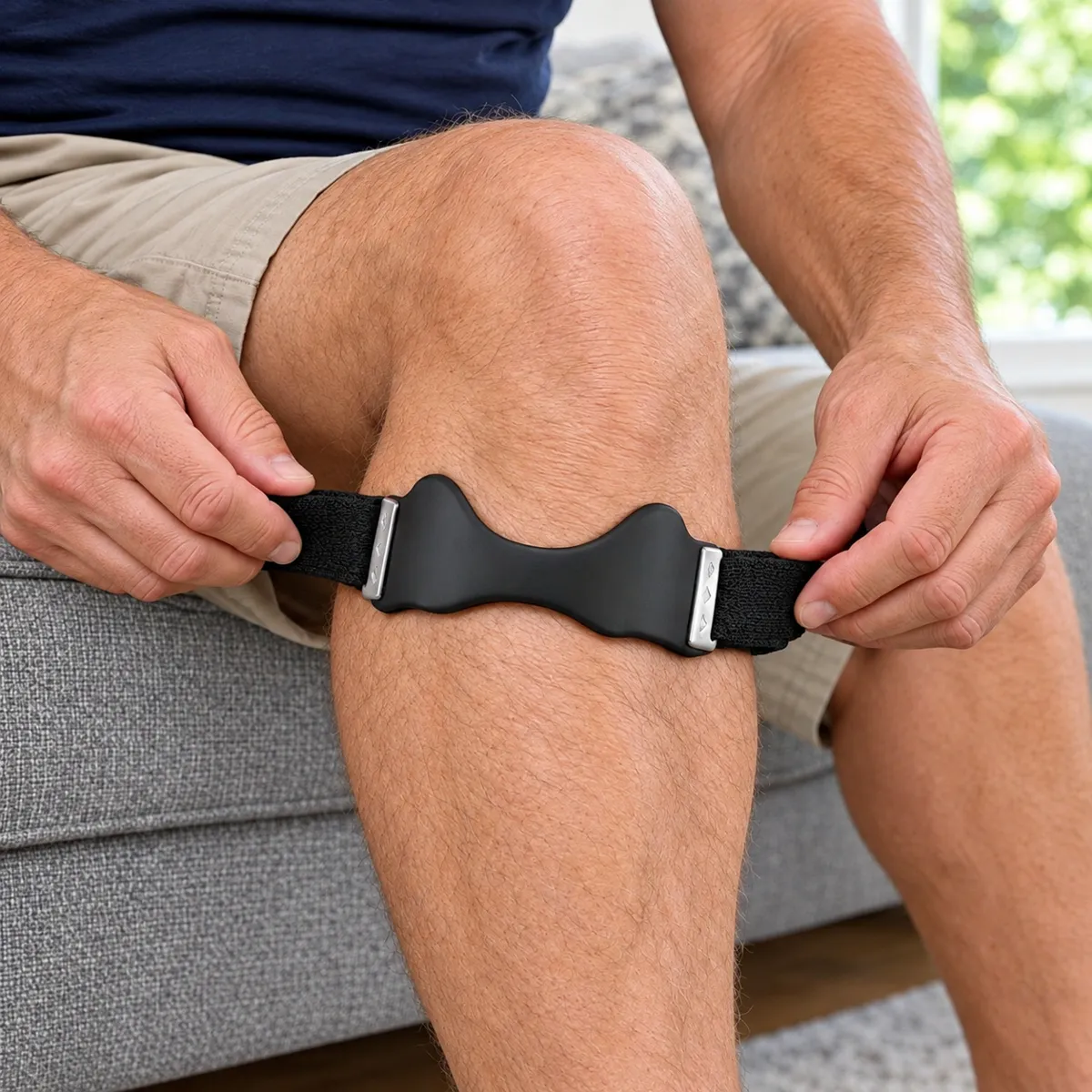
A patellar tendon strap is a narrow band that places a pad below the kneecap. It leaves most of the joint uncovered and is different from a larger brace. It should not be described as correcting your walking mechanics, preventing falls or protecting a damaged knee from further injury.
For broader detail, read our patella tendon strap guide. If your main concern is the difference between local support and a larger structure, see knee strap versus knee brace. The right category depends on the need, not on how challenging the route looks.
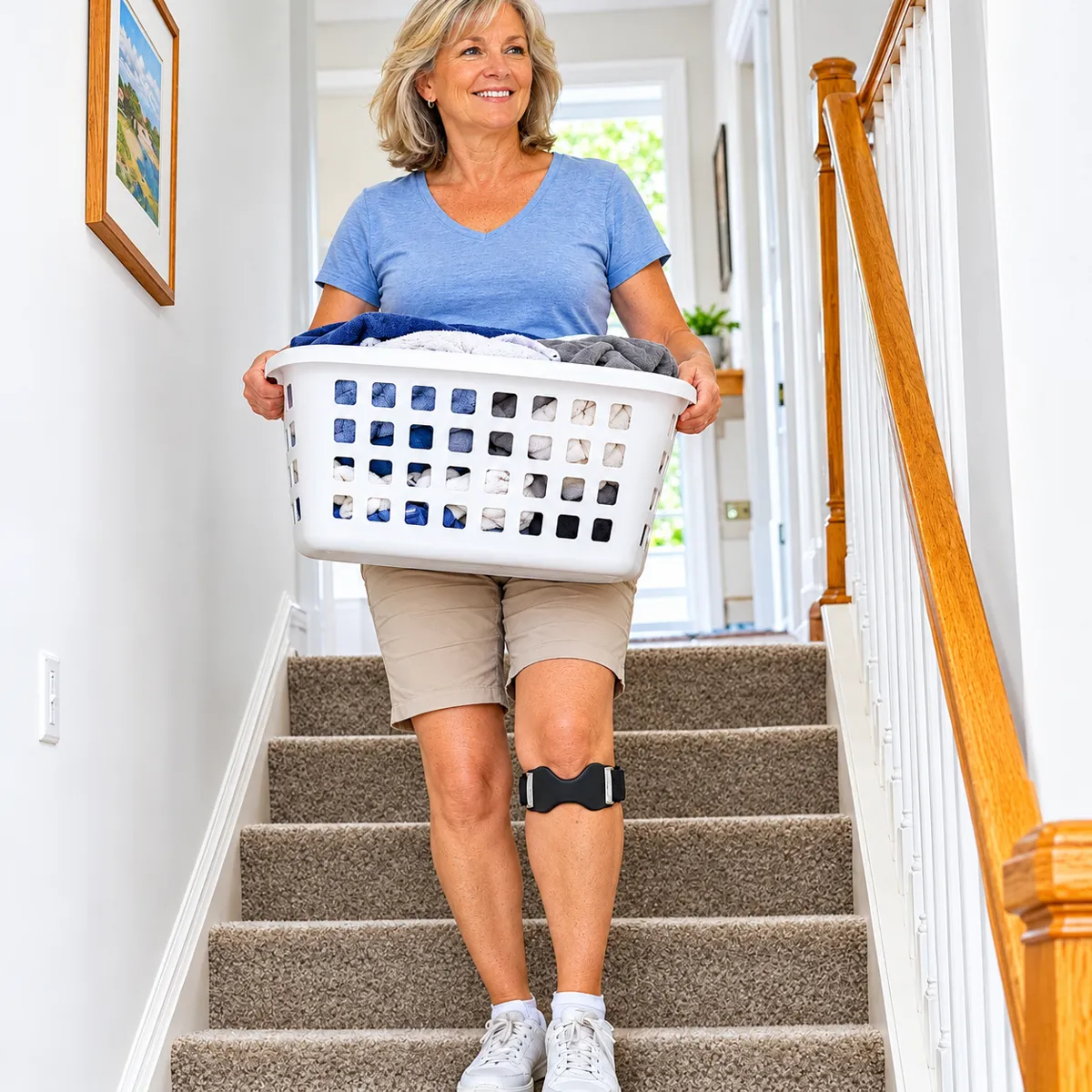
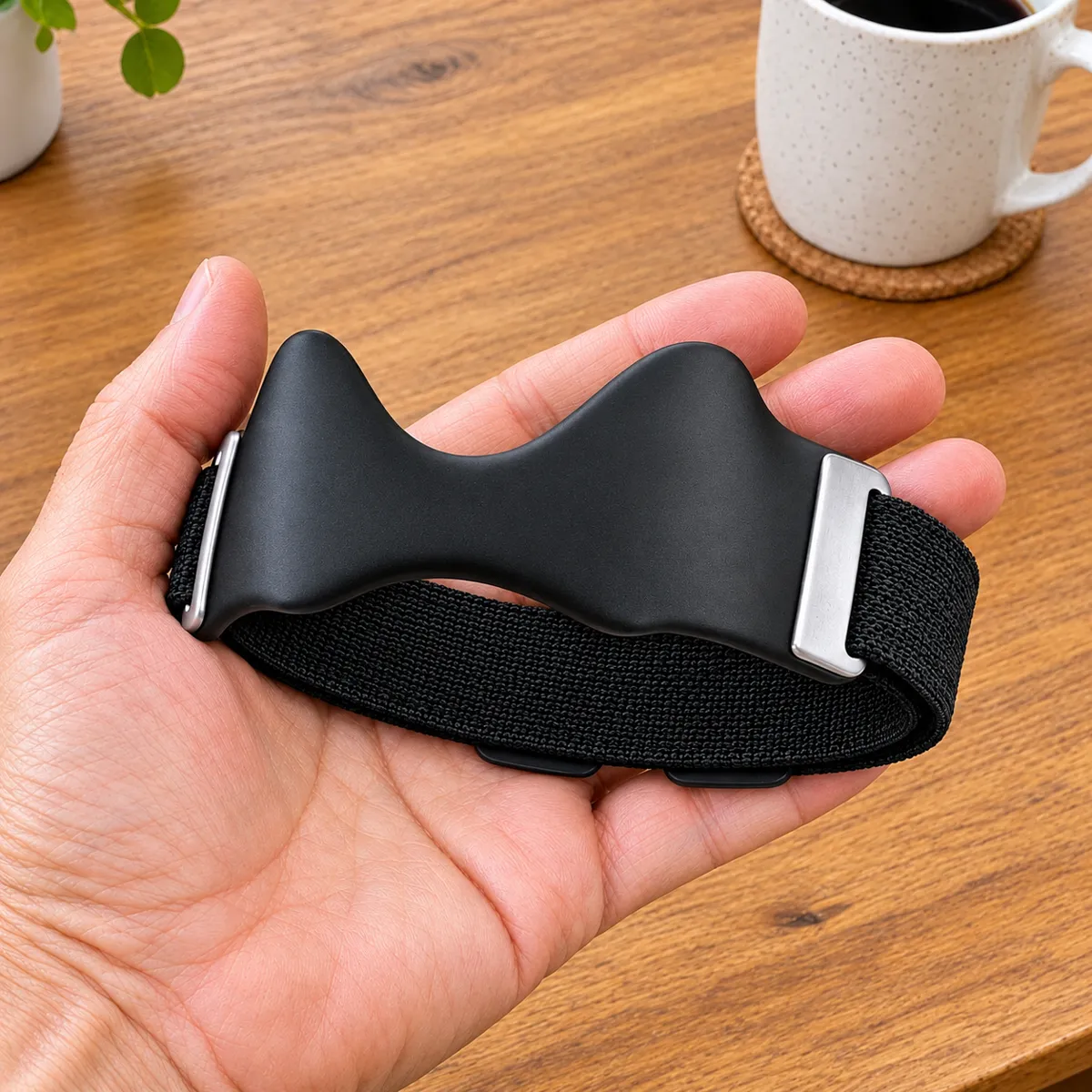
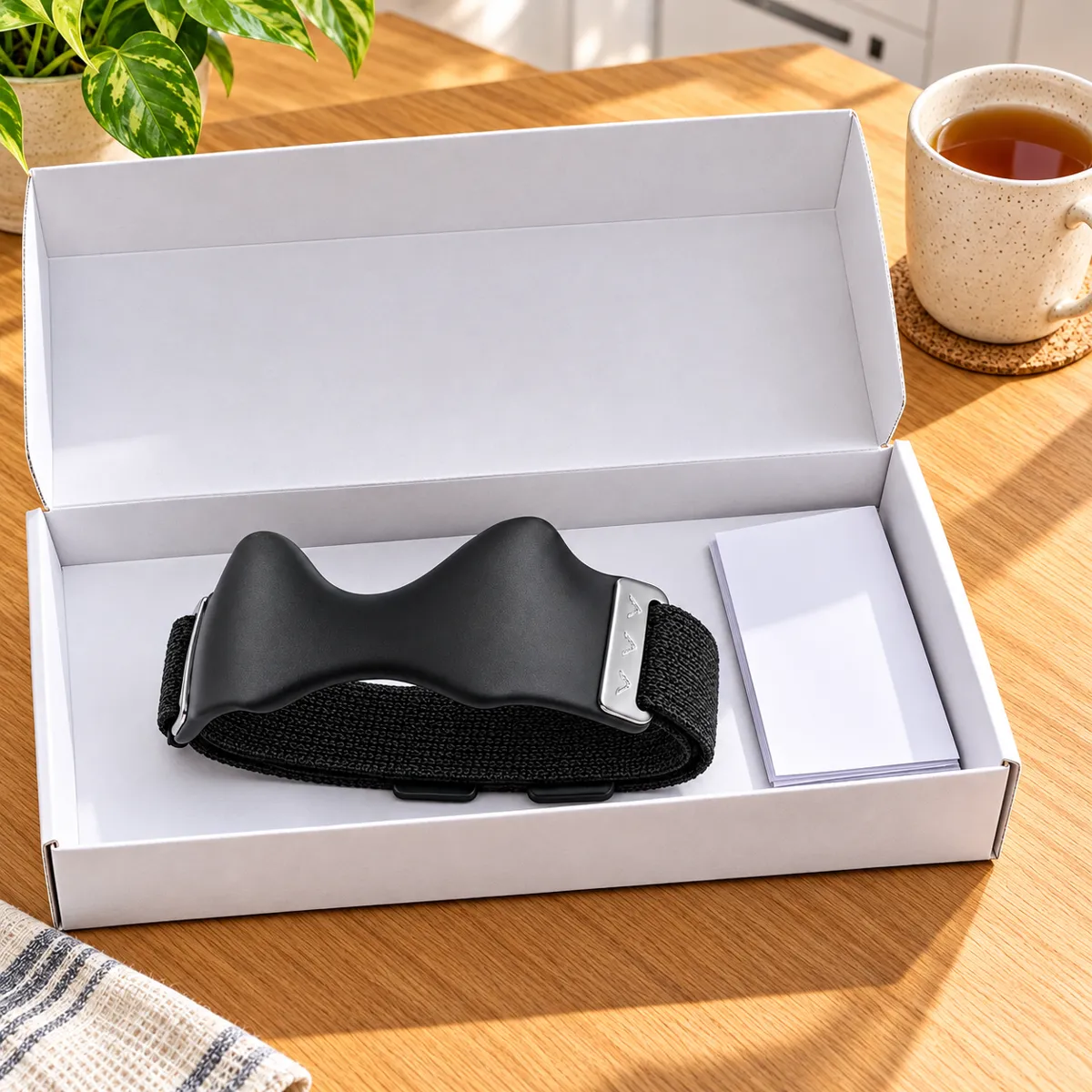
StepBrake has a rigid contoured black pad with two raised lobes, a soft knitted black elastic band and silver end plates. Its pad sits approximately 2 cm below the kneecap on the patellar tendon. It is adjustable, fits either knee and is intended for most adult knees.
It is slim enough under trousers and fits in under a minute. Those are practical features, not evidence of improved downhill comfort. StepBrake is a new brand with no customer reviews, ratings or testimonials to report, and this guide does not claim product-specific clinical results.
Preparing for a walk with an optional support
- Check the weather, daylight and path conditions before leaving.
- Choose a route with an easier alternative and a realistic way home.
- Fit the strap while seated rather than at the edge of a slope.
- Keep your usual walking essentials accessible.
- Agree with your companion that stopping or turning back is acceptable.
Our patella strap fitting guide covers positioning. Do not tighten repeatedly to stop movement caused by an unsuitable fit. If you cannot adjust it comfortably, ask for advice before taking it somewhere that makes removal or returning home awkward.
After mud, rain or an uncomfortable outing
Remove the strap and check your skin. Hand wash StepBrake and allow it to air dry; do not improvise tumble drying or direct heat. Check the band, pad and fastening before the next use, and contact support if the product appears damaged.
If a route caused pain, buying another accessory is not the only possible response. Review whether the outing was too demanding and whether symptoms need assessment. Do not schedule a harder walk simply because the diary says it is time to progress.
Costs and UK delivery
StepBrake costs £29 for one, previously £49, with bundles of two for £44, three for £59 and four for £89. It is sold only through the official website. Choose a quantity for an actual need rather than assuming every walker in a group requires the same support.
Free Royal Mail Tracked 48 delivery is available to UK addresses only. Dispatch is within one working day, with arrival usually in two to four working days. If a walking holiday is close, do not make the safety of the trip depend on a parcel arriving and immediately suiting you.
The 30-day money-back guarantee requires an email within 30 days of delivery and posting the strap back for a full refund. Read shipping and returns before you order the StepBrake Strap. Product and order questions can go to support@stepbrakestrap.co.uk.
When to see your GP
Arrange GP or physiotherapy advice after an injury, for sudden pain or swelling, or if symptoms last more than two weeks. Do not keep using walks as repeated tests of an undiagnosed problem. Consult the NHS knee pain guidance for urgent warning signs.
Contact NHS 111 urgently for very painful, badly swollen, misshapen, locked or giving-way knees, or inability to move or bear weight. A hot or red knee with fever or shivering also needs urgent advice. Seek help rather than attempting a remote descent.
Summary
A sensible route and a willingness to turn back come before an accessory. If a patella strap is suitable, try it close to home and judge comfort cautiously. Persistent or concerning downhill knee pain deserves professional advice, not a tougher test.
Sources and further reading
- NHS – Knee pain
- NHS Borders – Patellar tendinopathy
- NHS inform – Patellofemoral pain syndrome
- Chartered Society of Physiotherapy – Knee pain
This guide is general information, not medical advice. Read our editorial policy. If you are worried about your knee, speak to your GP, a pharmacist or call NHS 111.
Common questions
Should my first strap trial be on a walking holiday?+
Preferably leave time for a modest local trial before a trip, if a clinician considers a strap suitable. A holiday can create pressure to continue despite discomfort. Do not assume a new support will make an ambitious itinerary manageable, and keep alternative activities available if your knee is troublesome.
Is a circular walk better than an out-and-back route?+
Neither is automatically better. A circular route may commit you to a difficult return, while an out-and-back route may require repeating the same slope. Choose according to terrain, exit points and your ability to shorten the outing, rather than relying on the route shape alone.
Can I put the strap on only when I reach the summit?+
A summit is not an ideal place to learn the fit or discover pressure discomfort. Practise positioning at home while seated, then assess a short local walk if suitable. Avoid relying on a support for the first time when the only way home is a long descent.
Will a strap make wet paving or loose gravel safe?+
No. A patellar strap does not improve the grip of footwear or remove surface hazards. Wet, loose or uneven ground still calls for a route decision based on conditions and your ability. If you are relying on the strap to make a risky surface acceptable, choose another route.
What should I tell friends who want to keep walking?+
Explain before setting off that you may need a shorter route or an early return. Agree on a plan that does not leave you descending alone if symptoms worsen. There is no need to prove the support works by matching someone else’s distance or pace.
Should I book a hill walk as soon as the strap arrives?+
Allow time to check fit and suitability without a booking deadline. Delivery usually takes two to four working days after the stated dispatch process, but arrival does not establish readiness for hills. A gentle local trial and any needed professional advice should come before committing to a demanding outing.