Knee strap vs knee brace vs knee sleeve
What each one does, and which suits you.
By the StepBrake team · sources checkedUpdated
Quick answer
In a knee strap vs knee brace comparison, the main difference is design and coverage. A patellar tendon strap sits below the kneecap; a sleeve covers more of the knee; a brace may have a more structured construction. Choose by purpose and fit, and seek professional advice for injury, instability or persistent pain.
Key points
- • Strap: pain just under the kneecap
- • Sleeve: general warmth and stiffness
- • Brace: unstable knees, on advice
Knee strap vs knee brace: compare the job, not the name
The knee strap vs knee brace question can be confusing because shops sometimes use “support” for several different designs. Start with what the product physically does and where it sits. A narrow patella strap, a pull-on sleeve and a structured brace should not be treated as three strengths of the same item.
This comparison comes from StepBrake, which sells a patellar tendon strap. It explains the categories without claiming that our design is better for everyone. If you have been prescribed a particular brace or given fitting instructions by a clinician, do not replace that advice with a general buying article.
Before comparing products, decide whether you are looking for a small support below the kneecap or have been told you need a different kind of device. You do not need to identify a diagnosis yourself. In fact, unexplained symptoms are a reason to ask for advice rather than make a more elaborate purchase.
The three designs side by side
Product details vary within each category. Some braces are soft, while others are more structured, so the word “brace” alone tells you very little. Read the description and fitting instructions rather than relying on the product name or how substantial it looks in a photograph.
| Question | Patellar tendon strap | Knee sleeve | Knee brace |
|---|---|---|---|
| Where does it sit? | A narrow band below the kneecap | Over a broader area around the knee | Coverage varies with the design |
| How is fit chosen? | Adjustment and pad position | Usually the specific product’s size guide | The product’s sizing and fitting instructions |
| What should you check? | Comfort and whether the pad stays positioned | Whether you can put it on and remove it | Its intended role and any clinician instructions |
| Is it interchangeable? | Not a whole-knee device | Not automatically a substitute for a brace | Not automatically necessary because symptoms exist |
What a patellar tendon strap offers
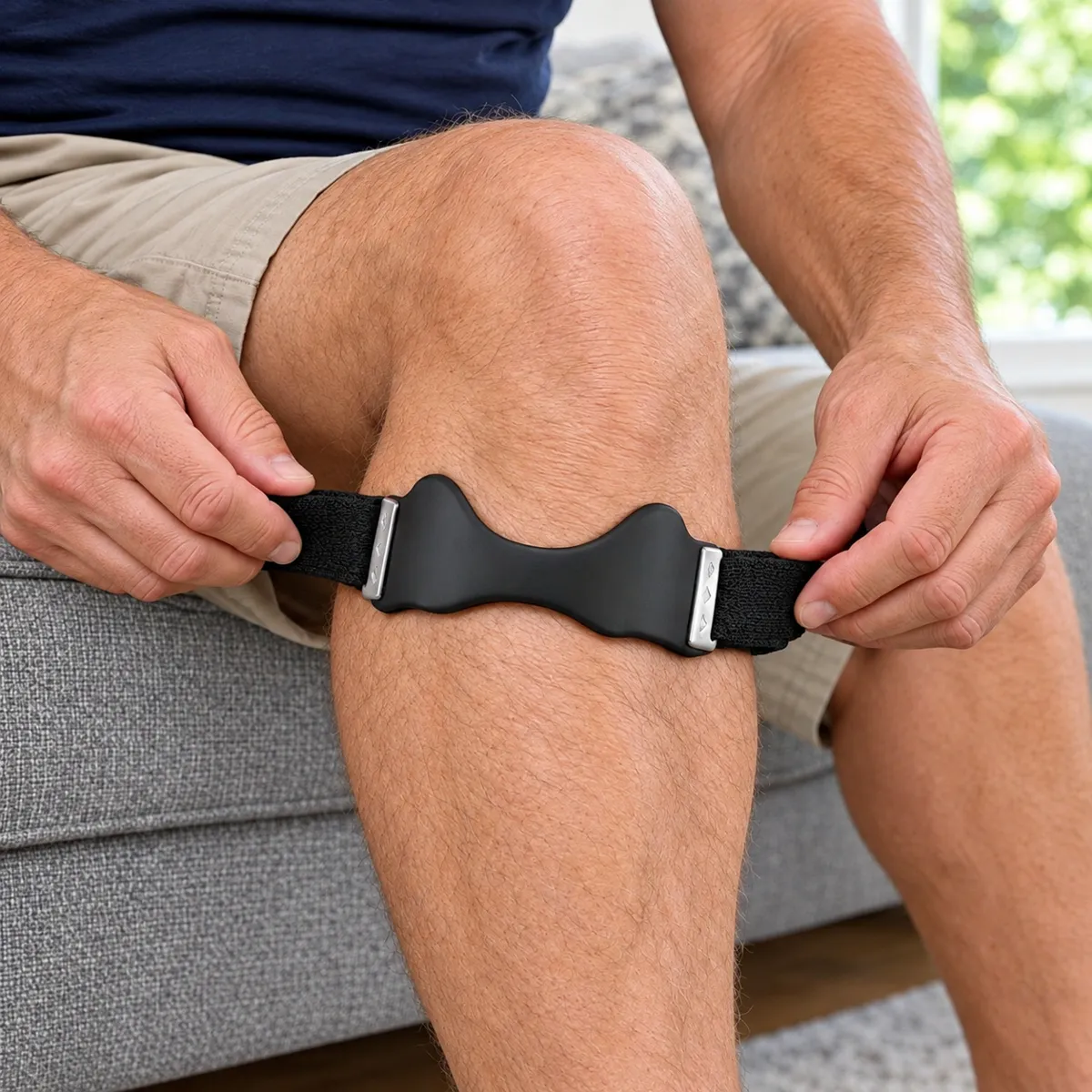
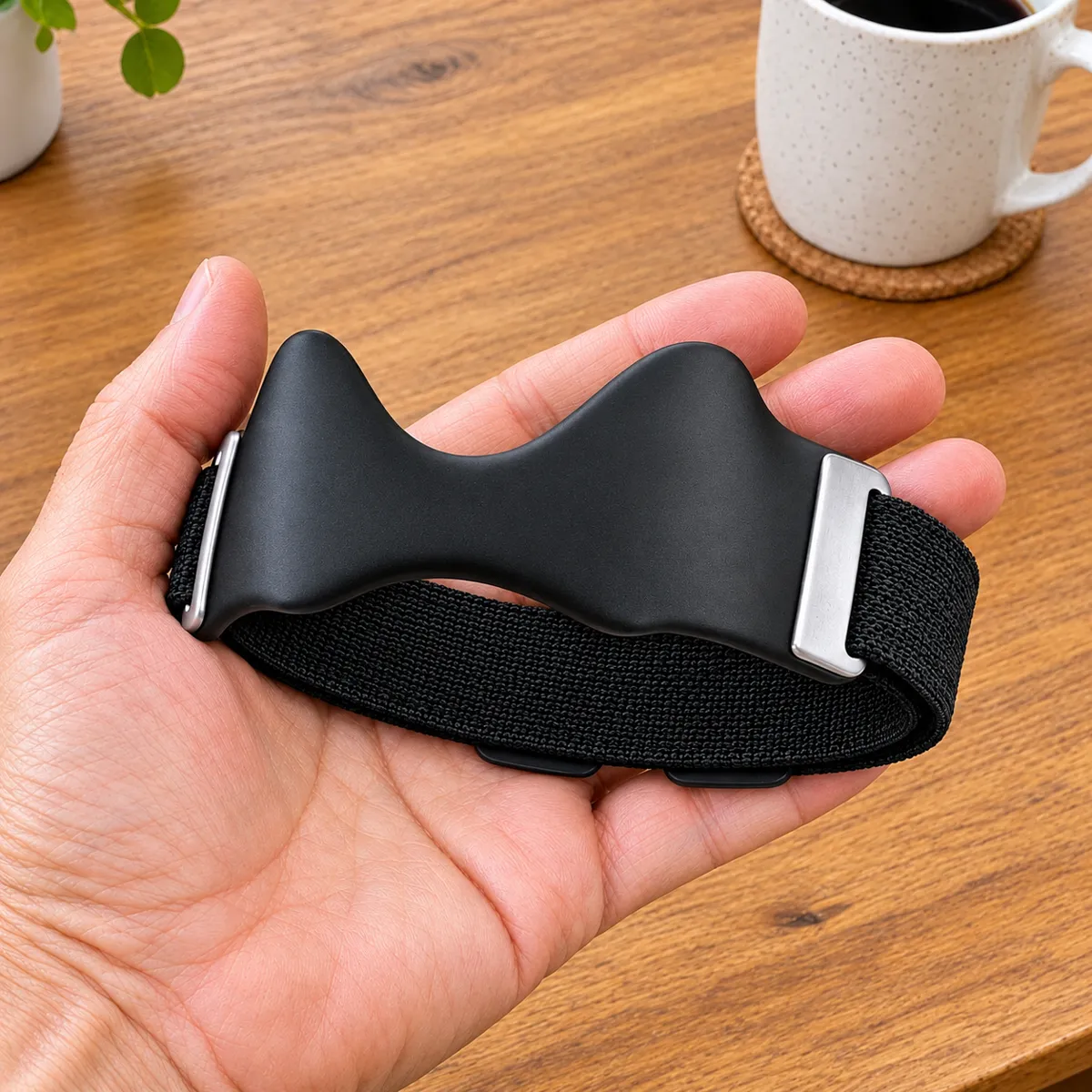
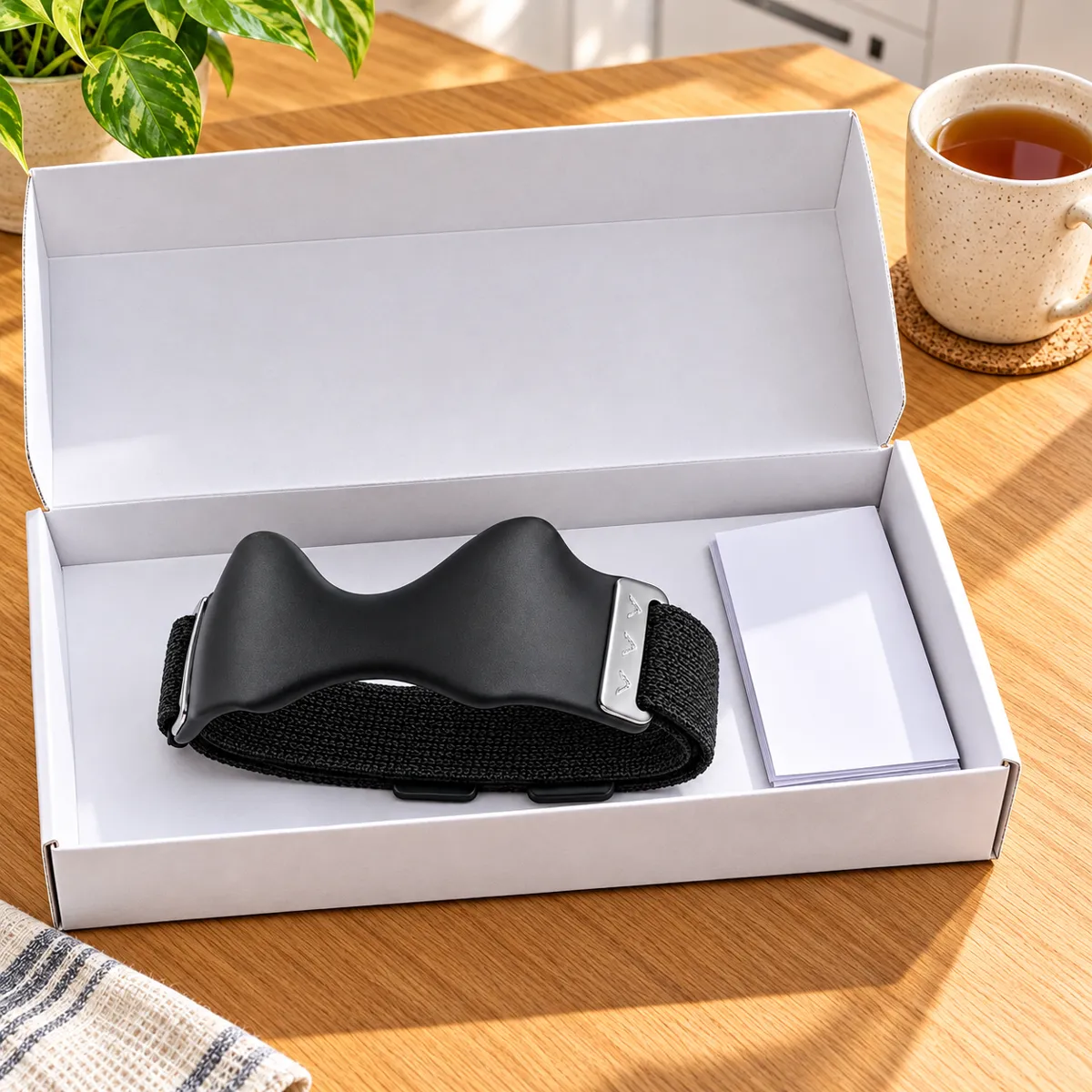
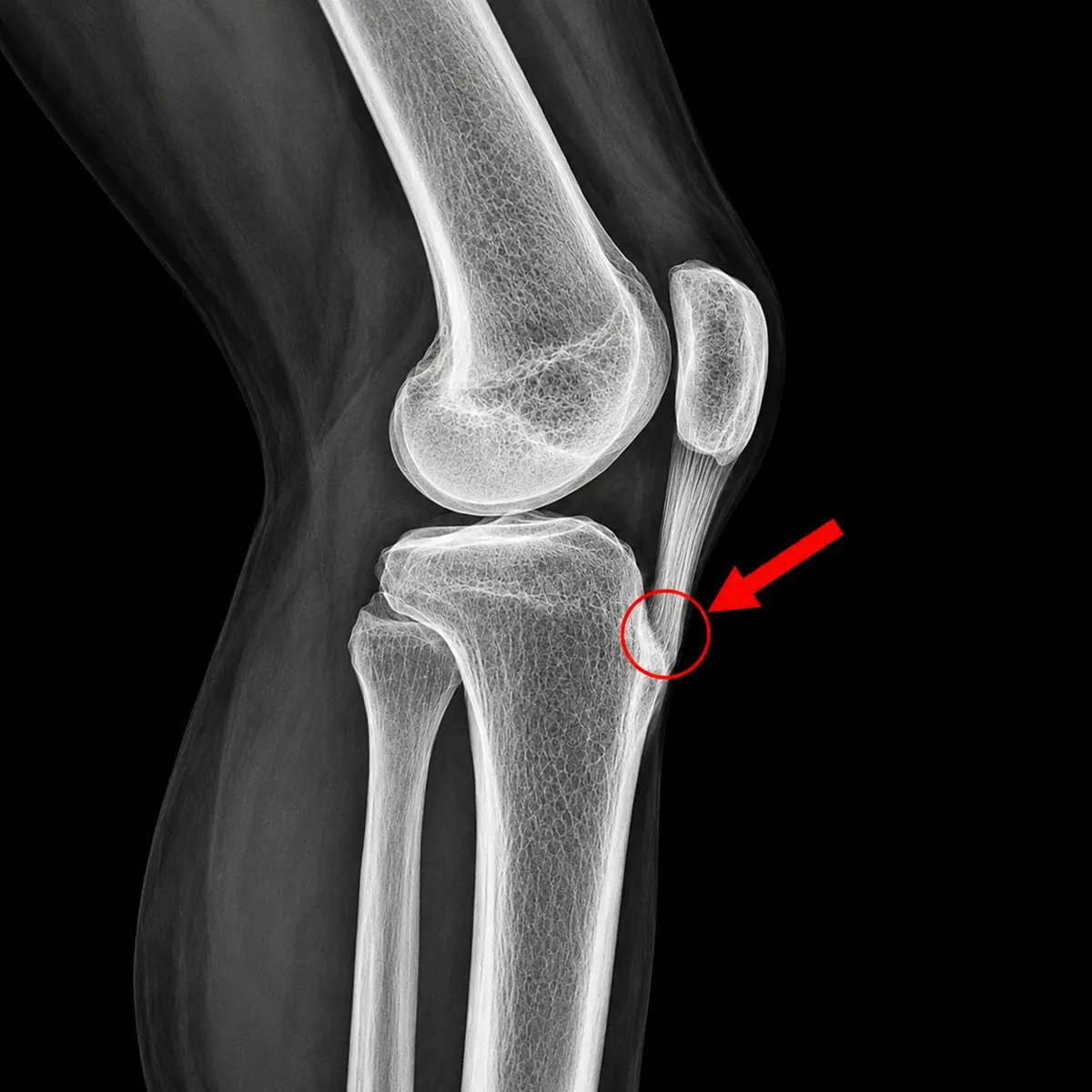
A patellar tendon strap is a focused, low-coverage design. StepBrake has a rigid contoured black pad with two raised lobes, a soft knitted black elastic band and silver end plates. The pad sits approximately 2 cm below the kneecap on the patellar tendon, rather than directly over the kneecap.
Its one-size adjustable format fits most adult knees and can be used on the left or right. It is slim enough under trousers and fits in under a minute. Those features may appeal if you want a straightforward support without a large area of fabric covering the knee.
That narrow design is also a limitation: it is not a full knee sleeve or a structured brace. Do not interpret a small pad as a replacement for a device recommended after an injury. Our patellar tendon strap guide gives more context about this product category.
Knee strap vs knee sleeve: coverage and convenience
A sleeve generally covers more of the knee than a strap. Its precise fit, materials and instructions depend on the individual product. A pull-on design also raises a practical question: can you comfortably get it over your foot and up your leg, and remove it again without a struggle?
A strap presents a different task: finding the correct position below the kneecap and adjusting the band. Neither task is automatically easier for every person. If you have difficulty reaching your knee or handling fastenings, think through the actual fitting process rather than choosing from a picture alone.
Clothing matters too. StepBrake is slim enough under trousers, but that does not mean every sleeve or brace will fit under your usual clothes. Consider the clothes you wear most often and check the specific product’s dimensions or fitting advice when available. Do not buy tighter clothing as a way to hold a support in place.
When a brace needs a different conversation
A brace can be designed for a particular purpose, and some are supplied with clinical instructions. That makes it important to know what device you are comparing. A friend’s brace, or one that looks similar online, may not answer the same need as the support you have been advised to use.
If your knee gives way or locks, shopping for something that looks stronger is not the right substitute for assessment. The NHS knee pain page explains warning signs and when to get medical help. Describe what happens to your knee rather than trying to choose a diagnosis from a product label.
Following an injury, ask a GP or physiotherapist which type of support, if any, is appropriate. If you already have a prescribed brace, ask before switching to a strap or sleeve. A general article cannot set a wearing schedule or tell you when a particular device can safely be stopped.
Use everyday examples without making promises
Imagine someone who wants a slim support beneath their usual trousers for ordinary outings. A small strap may be worth considering if its intended position and adjustment suit them. That is a practical match between features and preference, not a prediction of symptom improvement or a guarantee about walking distance.
Now imagine someone whose knee has started giving way after a fall. The important distinction is not whether a sleeve costs less than a brace. They need assessment of the new problem. Equipment that feels reassuring must not become a reason to postpone help or keep testing an injured knee.
Finally, someone buying for a parent should ask about dressing, reaching and adjusting, not only colour or appearance. Our guide to knee support for older adults considers that everyday context. Older age alone does not identify the correct product, and a support should not be used to explain away new symptoms.
Compare the ownership details as well as the design
With StepBrake, one strap is £29, previously £49; two cost £44, three £59 and four £89. Free Royal Mail Tracked 48 delivery is available to UK addresses only. Dispatch is within one working day, with arrival usually in two to four working days. Delivery speed should not drive a medical decision.
There is a 30-day money-back guarantee: email within 30 days of delivery, then post the product back for a full refund. The optional £4.95 Secure Delivery + Lifetime Warranty covers replacement for loss, theft or damage in post and lifetime manufacturing defects. It is not a promise of suitability for every knee.
Care is another meaningful difference between products. StepBrake should be hand washed and air dried. Compare that with the instructions for any sleeve or brace you consider rather than assuming all supports share a laundry routine. If you want one product simply because care looks easier, first make sure its actual design is appropriate.
A simple way to reach a decision
First, rule out symptoms that call for advice. Next, write down whether your priority is a narrow patella band, broader fabric coverage or a device recommended for a particular purpose. Then check the individual product’s fitting instructions. This sequence helps keep a price comparison from becoming an accidental health decision.
For StepBrake fitting details, use how the StepBrake Strap works. For practical shopping questions across support categories, see the UK knee strap buying checklist. Both can help you ask clearer questions, but neither can decide what is causing your knee symptoms.
If the strap format matches what you are seeking, you can order the StepBrake Strap directly. There are no customer reviews or ratings yet, so this comparison does not rely on customer endorsements. Choose on the published specifications and limitations rather than an assumed reputation.
When to see your GP
Seek GP or physiotherapy advice after an injury or for pain lasting more than two weeks. Severe or sudden pain, swelling, locking or giving way needs prompt attention; contact NHS 111 when urgent advice is needed. Do not use a new support to postpone assessment.
The NHS injury advice and NHS exercise information provide general context, not instructions for selecting a brace.
Summary: different designs, different decisions
A strap concentrates its design below the kneecap, a sleeve covers a larger area, and a brace needs to be understood by its specific purpose. Compare those differences before prices or appearance. The right next step may be fitting a suitable support, or it may be getting professional advice first.
Sources and further reading
This guide is general information, not medical advice. Read our editorial policy. If you are worried about your knee, speak to your GP, a pharmacist or call NHS 111.
Common questions
Is a sleeve simply a wider patella strap?+
No. The designs cover different areas and have different fitting considerations. A patella strap needs its pad positioned below the kneecap, while a sleeve fits over a broader area. Check each product’s instructions rather than assuming wider coverage means the same support.
Can I swap a prescribed brace for a StepBrake Strap?+
Do not replace a prescribed brace on the basis of this comparison. Ask the clinician who recommended it whether a change is appropriate. StepBrake is a slim patellar tendon strap, not an equivalent version of every brace used in clinical care.
Does a bulkier brace mean my knee problem is more serious?+
You cannot judge a knee problem from the size of a support. Devices vary in purpose and construction, and appearance is not a diagnosis. If you are worried about symptoms, describe them to a GP or physiotherapist rather than using product bulk as a guide.
Should I wear a strap and sleeve together?+
This guide does not recommend combining supports. Layering changes the fit and can make it harder to judge comfort or position. Ask a physiotherapist about your circumstances, particularly if a support has already been recommended, rather than assuming two products provide twice the benefit.
Which design is easiest for someone who struggles to dress?+
That depends on the person and the individual product. Think about reaching the knee, handling adjustments and pulling fabric over the foot. Discuss those practical tasks with the intended wearer; do not assume one category will be easiest for everyone.
Can I choose a brace just because my knee gives way?+
A knee that gives way needs medical advice rather than guesswork about equipment. Seek prompt assessment, particularly if this is new or follows an injury. A brace chosen online cannot establish why it happens or replace a clinician’s advice about the next step.