Jumper's knee strap: tendon support for jumping sports
For basketball, volleyball, netball, football and gym sessions.
By the StepBrake team · sources checkedUpdated
Quick answer
A jumpers knee strap is a narrow support worn below the kneecap. Sometimes called a patellar tendinopathy strap, it is not a treatment for tendon pain and cannot confirm a diagnosis. Consider comfort, placement and professional advice first, particularly if jumping, landing or ordinary daily activities have become painful for you.
Key points
- • Jumping loads the patellar tendon
- • A strap gives gentle tendon pressure
- • Use alongside rest and physio advice
A jumpers knee strap is often searched for after discomfort during jumping or landing. You may also see the phrase patellar tendinopathy strap on shopping pages. These labels describe a type of support or the reason someone is searching; they do not show that the strap treats a tendon condition.
This guide focuses on making a careful purchase when sport involves repeated take-offs and landings. It is for recreational players as well as people returning to a familiar activity after a break. The aim is to separate a practical accessory decision from the assessment and management of pain.
What does “jumpers knee strap” actually mean?
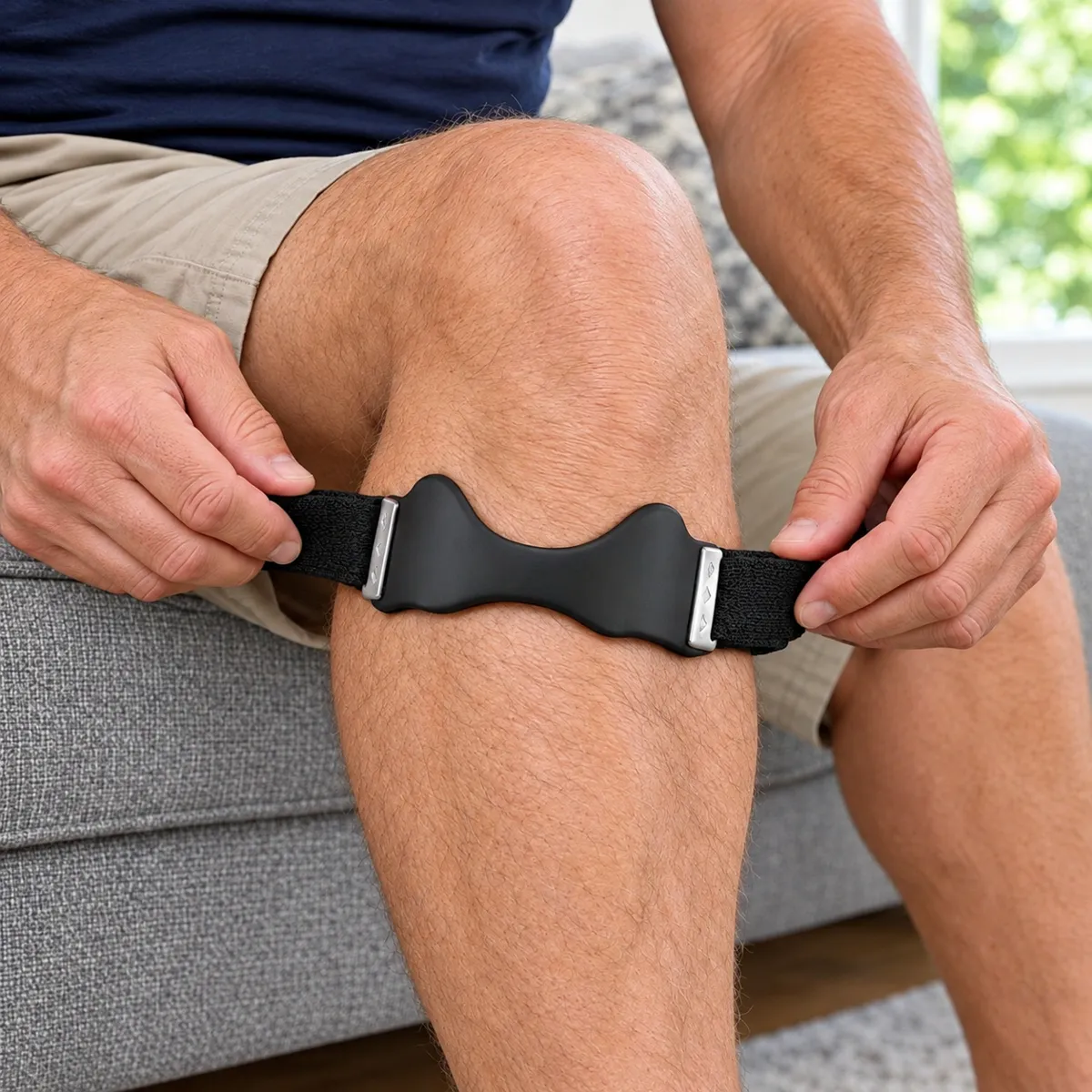
A patella band is a slim strap placed beneath the kneecap rather than over the entire knee. StepBrake calls its product a patellar tendon strap because of that placement. The name should not be read as a promise to change tendon health, restore sporting capacity or shorten recovery.
It is easy to match a symptom to a familiar sporting nickname and stop asking questions. However, the NHS knee-pain guidance lists different possible causes and advises against diagnosing the problem yourself. Discomfort noticed during sport still deserves attention if it begins affecting ordinary activities.
The NHS running-injuries guide also discusses pain around the kneecap and tendon-related problems. It is useful background, not a way to distinguish conditions from one symptom. A clinician can assess the history and decide what advice is appropriate for you.
Choosing a jumpers knee strap without treatment claims
Start with what you can actually check: where the pad sits, whether you can adjust the band and whether the return policy is clear. Be cautious about language suggesting that pressure automatically means recovery. A firmer sensation is not evidence that a painful tendon is ready for another training session.
| Shopping phrase | What to check instead | What it does not establish |
|---|---|---|
| Patellar tendinopathy strap | Its intended position and construction | That it treats tendinopathy |
| Adjustable support | Whether you can manage the fastening comfortably | That tighter is better |
| One size | The stated fit limits and return terms | That it suits every adult |
| Sports accessory | Whether it fits your practical needs | That you are cleared to play |
If you have already received a diagnosis, tell your physiotherapist exactly which support you are considering. A photo or plain product description is more helpful than a broad label such as “knee brace”. Ask whether it belongs in your individual plan, rather than asking the strap to provide the plan itself.
StepBrake: construction and placement
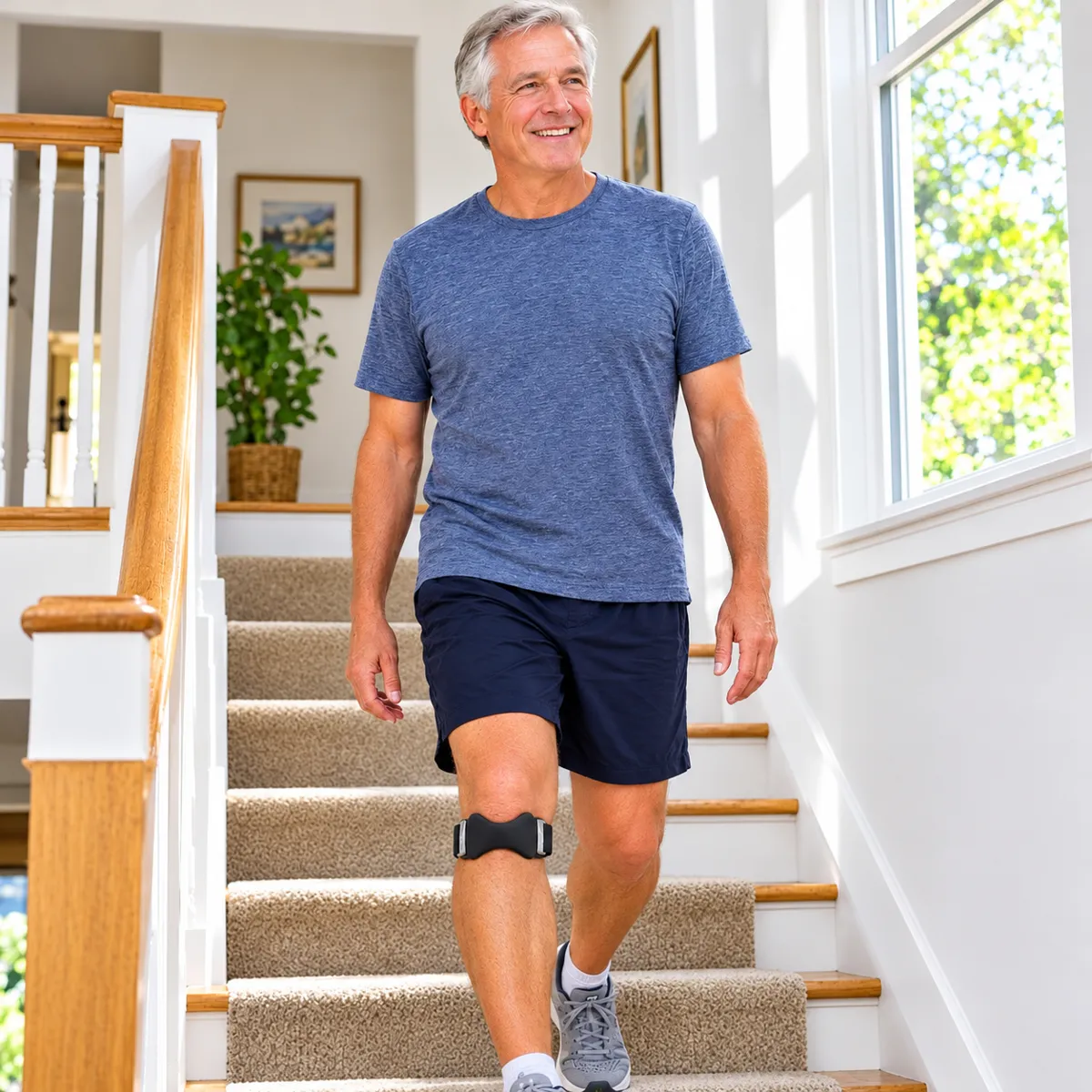
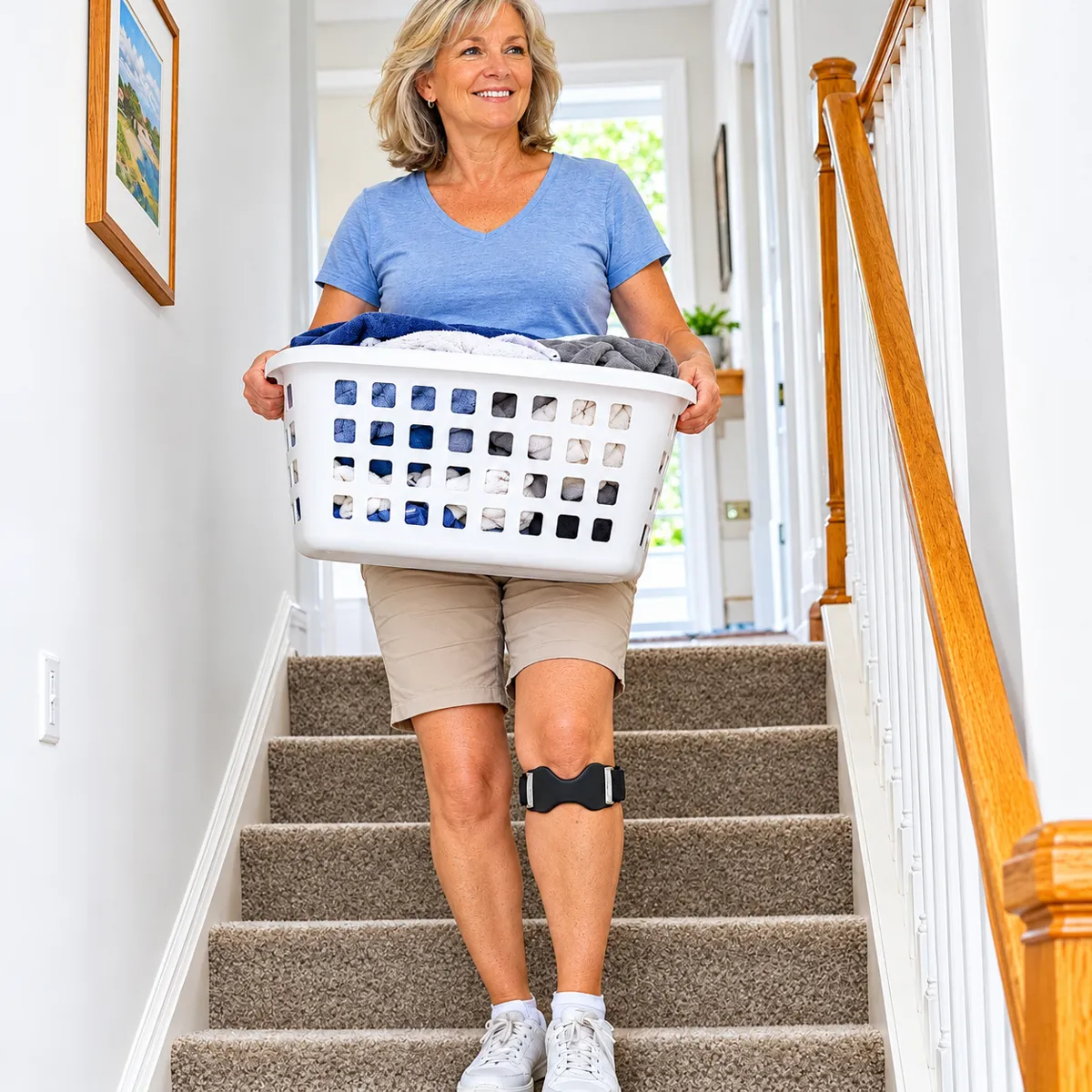
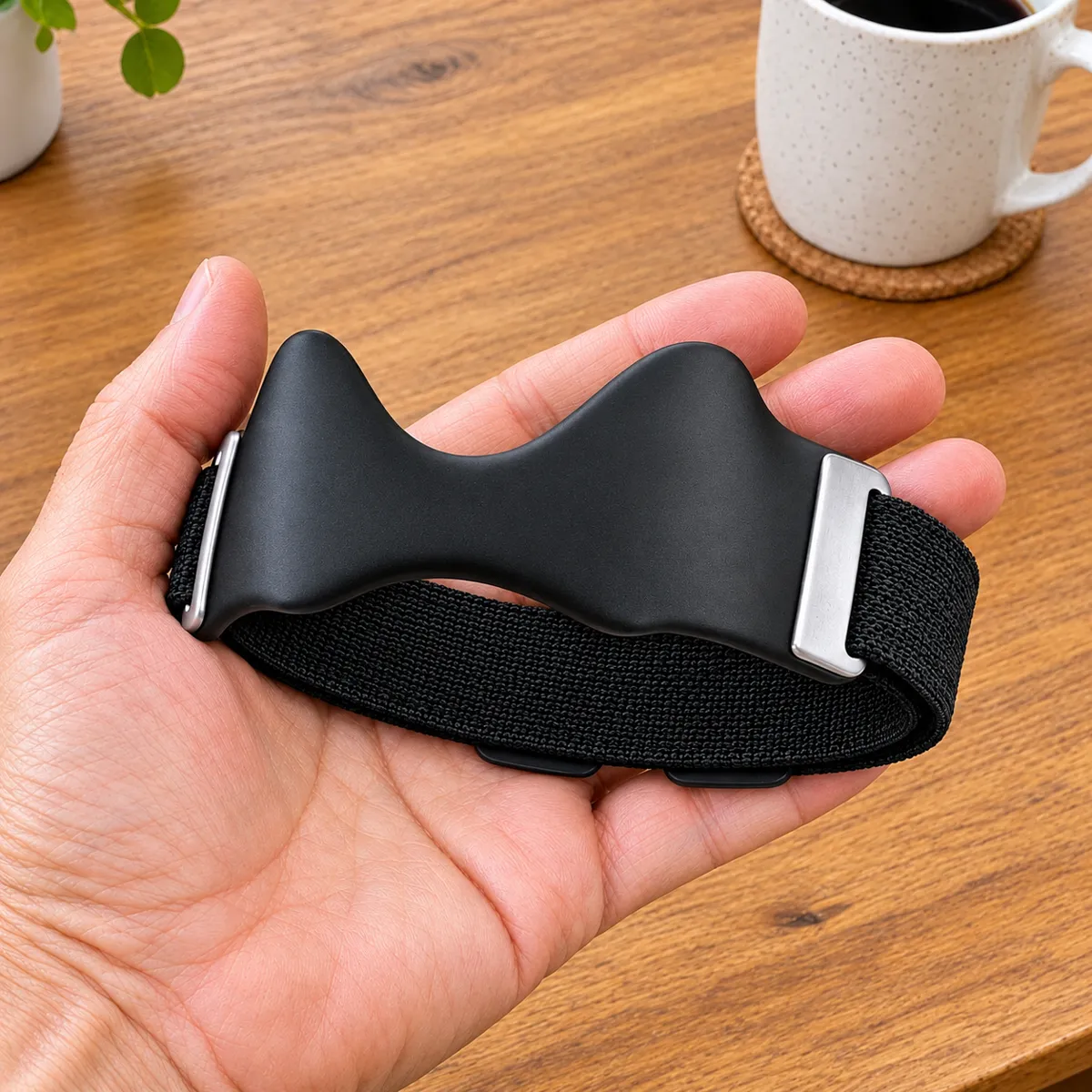
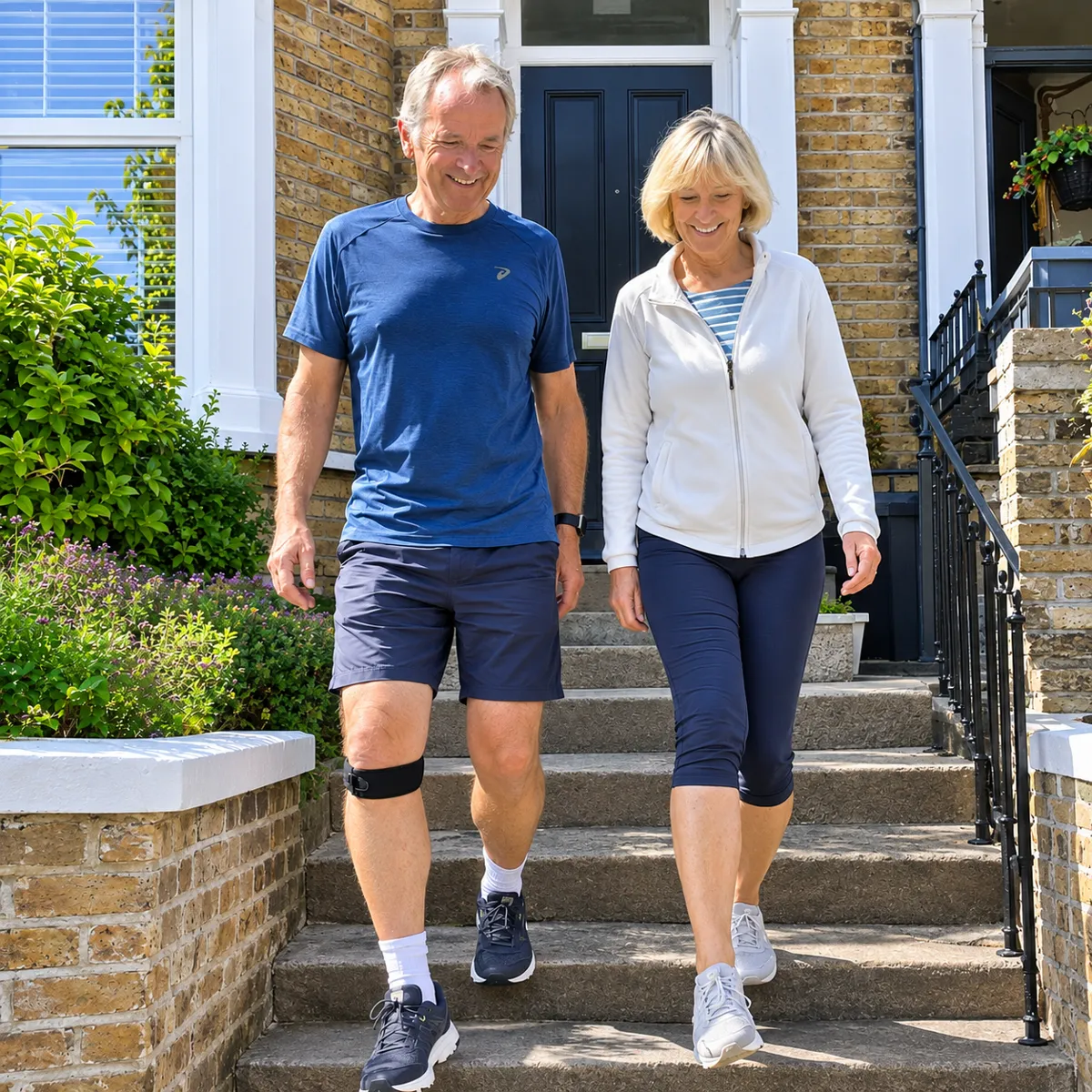
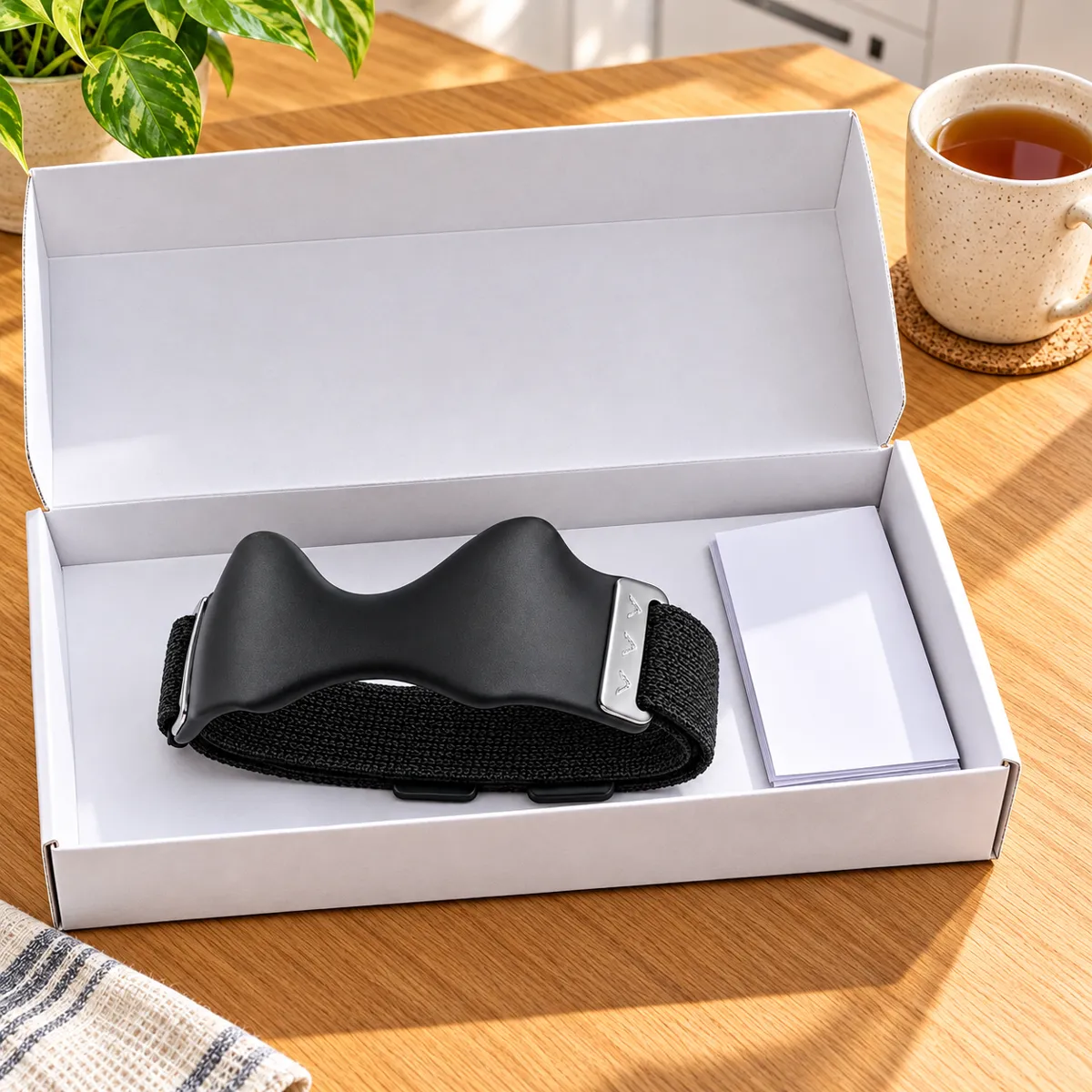
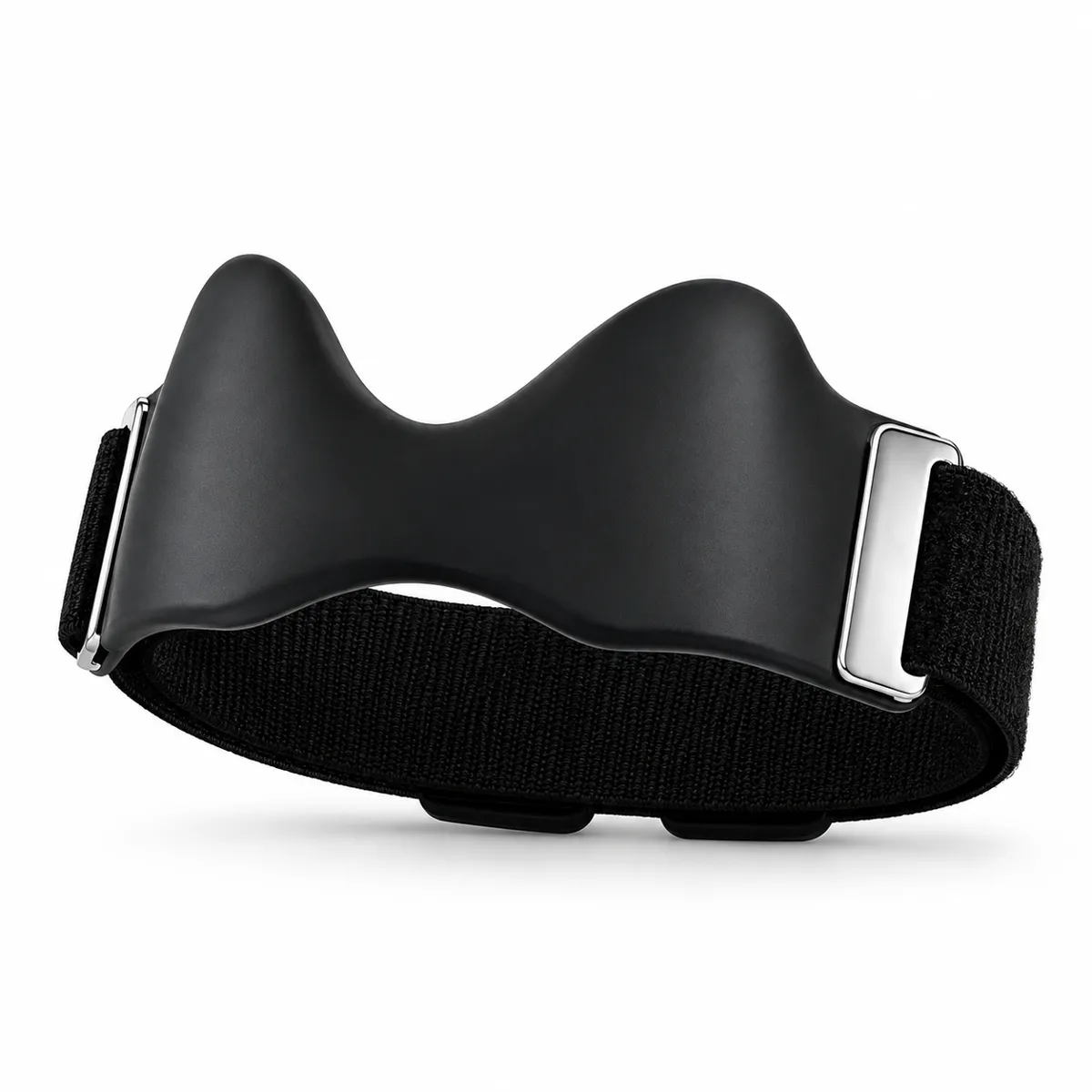
StepBrake Strap has a rigid contoured black pad with two raised lobes, a soft knitted black elastic band and silver end plates. The pad sits about 2 cm below the kneecap on the patellar tendon. It is adjustable, fits either knee and is designed for most adult knees.
The slim design fits under trousers and can be fitted in under a minute. Those details may matter when changing between everyday clothing and sports kit. They do not mean the strap prevents injury or makes jumping safe when your knee is painful.
For more on the accessory itself, see the patellar tendon strap guide. Read the placement instructions before a first fitting. Avoid buying from an assumed universal size: an adjustable band still needs to sit comfortably on your own leg.
Make the first check a fitting, not a landing drill
Put the strap on somewhere calm where you can see and reach the band. Locate the kneecap, place the pad according to the instructions and adjust gently. You should not need to create a painful squeeze to feel that you have fitted a support properly.
Stand and take a few easy steps if that is comfortable for you. Stop if the band rubs, pinches, causes numbness or changes the colour of your skin. If it keeps moving, do not assume repeated tightening is the answer; recheck the instructions and reconsider whether the fit suits you.
- Check the pad location without rushing.
- Practise releasing and readjusting the band.
- Notice comfort during ordinary, gentle movement.
- Remove it if the fit feels wrong.
- Keep any decision about returning to jumping separate.
A few painless movements at home are not a return-to-sport assessment. Do not add hops, repeated squats or a maximum jump simply to test a purchase. If you are following professional advice, ask how a support should fit into that advice before changing the activity.
Questions worth taking to a physiotherapist
Describe what happened before the symptoms began, including any sudden injury. Explain whether discomfort appears during take-off, landing, afterwards or at other times, without assuming the pattern identifies the cause. Mention any swelling, locking or giving way directly rather than calling everything stiffness.
Ask what activities are appropriate now and what changes should prompt another appointment. If you play in a group, it can help to explain the advice to the person organising sessions so that you are not pressured into extra practice. A band should not become a signal to others that everything is back to normal.
Be specific about your goals: returning to a weekly game is different from coping comfortably with work and household tasks. There is no universal strap-wearing timetable that answers those goals. Your circumstances, symptoms and assessment matter more than another player’s equipment choice.
Plan the purchase around everyday practicality
Think about where you will put the strap on and how you will carry it when not wearing it. A support that is straightforward in your living room may be less convenient in a busy changing area. Practising the fastening is a practical check, not a reason to train before you are ready.
Hand wash StepBrake and allow it to air dry. Leave time for that between uses rather than assuming it can be washed and worn immediately. If you notice a problem with its construction, contact support@stepbrakestrap.co.uk instead of modifying the pad or band yourself.
For a broader equipment comparison, see knee strap versus knee brace. A larger support is not automatically a better answer to pain. Equally, choosing a slim strap for convenience does not make it an alternative to a brace that a clinician has specifically recommended.
Price, delivery and what the guarantee means
StepBrake costs £29 for one, previously £49. The bundle prices are £44 for two, £59 for three and £89 for four. There is no need to buy a bundle simply because you participate in sport; quantity is a practical purchasing choice, not a measure of protection.
Free Royal Mail Tracked 48 delivery is available to UK addresses only. Orders are dispatched within one working day and usually arrive in two to four working days. Avoid setting a sporting return date around a parcel estimate: delivery timing and readiness for activity are separate questions.
You can order the StepBrake Strap only from the official website. It comes with a 30-day money-back guarantee: email within 30 days of delivery, post it back and receive a full refund. The refund policy is worth reading before purchase, especially if you are unsure about the fit.
The optional £4.95 Secure Delivery + Lifetime Warranty add-on covers replacement for loss, theft or damage in the post and lifetime manufacturing defects. It is not a promise about sporting outcomes. StepBrake is a new brand, with no customer reviews, ratings or testimonials to establish how it will feel for you.
Keep diagnosis separate from age and activity
People of different ages can have knee symptoms, and being active does not establish the cause. The NHS osteoarthritis overview explains one joint condition, but it is not a reason to label your own discomfort. Likewise, playing a jumping sport does not prove that a tendon is the source.
When to see your GP
Speak to a GP or physiotherapist about pain lasting more than two weeks or pain after an injury. Severe or sudden pain, swelling, locking, giving way or difficulty bearing weight needs urgent advice through NHS 111. Seek urgent help for a hot, red knee with fever too; stop activity rather than testing a strap.
Summary
A jumpers knee strap is a support accessory, not a treatment for patellar tendinopathy. Choose by fit, clear information and realistic expectations. Keep symptom assessment and decisions about returning to sport with an appropriate health professional, not with a product name.
Sources and further reading
This guide is general information, not medical advice. Read our editorial policy. If you are worried about your knee, speak to your GP, a pharmacist or call NHS 111.
Common questions
Does “patellar tendinopathy strap” mean a medical treatment?+
No. That phrase is commonly used to describe a strap people search for when considering tendon-related symptoms. It does not demonstrate a treatment effect. StepBrake is a support accessory, and its name or placement cannot establish a diagnosis or replace professional advice.
Should I jump to check whether the strap works?+
Do not use jumping as a test of a new purchase when your knee is painful. An initial fitting should check placement, fastening and comfort during gentle everyday movement. Decisions about resuming painful sporting activity are separate and may need physiotherapy advice.
Can I wear it instead of following my rehabilitation advice?+
No. A support is not a replacement for an individual rehabilitation plan. If a clinician has given you advice, discuss the strap with them before changing that plan. Describe the actual product and where it sits rather than assuming all knee supports are interchangeable.
Will a tighter patella band give more useful support?+
More pressure is not evidence of a better fit or a better result. Adjust gently and stop if you notice pinching, numbness, skin-colour changes or discomfort. If the strap will not stay comfortably positioned, reconsider the fit instead of continually tightening it.
Can my coach decide whether I need a tendon strap?+
A coach can help organise activity around professional advice, but equipment recommendations do not replace clinical assessment. Explain any symptoms and seek an appropriate health professional if they persist or follow injury. Do not let wearing a strap be mistaken for clearance to resume full training.
Does the lifetime add-on cover a return to sport?+
No. The optional £4.95 add-on concerns replacement for loss, theft or damage in the post and lifetime cover for manufacturing defects. It makes no promise about symptoms, sporting ability or recovery. The separate 30-day money-back guarantee has its own return process.