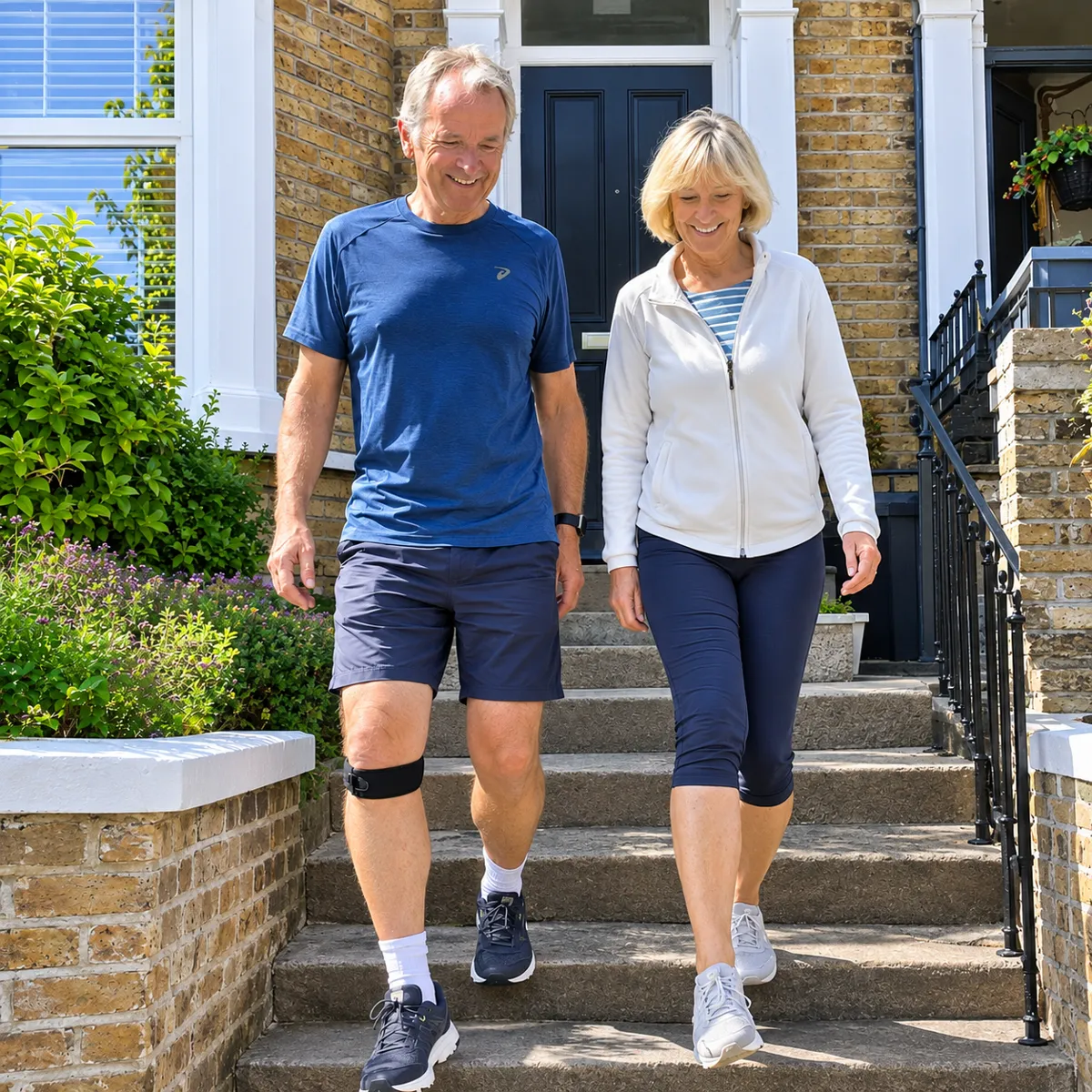
Patella tendon strap: a simple guide
What a patellar strap is, how it differs from a knee sleeve or brace, and how to choose one.
By the StepBrake team · sources checkedUpdated
Quick answer
A patella tendon strap, also called a patellar tendon strap or patella strap, is a narrow support worn below the kneecap. It applies local pressure rather than enclosing the knee. Suitability depends on your symptoms; it is not a treatment or a substitute for assessment, exercise advice or a prescribed brace.
Key points
- • Sits on the tendon below the kneecap
- • Different from a sleeve or brace
- • Look for a shaped, firm pad
A patella tendon strap is a small support with a surprisingly wide range of names. You may see patellar tendon strap, patella strap, patella band or knee support strap used for similar products. The important questions are where it sits, what it is designed to do and whether that matches your needs.
This guide covers the anatomy, the limits of this support category, fitting, everyday use and the practical details of buying StepBrake in the UK. It separates product facts from general medical information. No strap can diagnose knee pain, and a product description should never be mistaken for a personal treatment recommendation.
What is a patella tendon strap?
A patellar tendon strap is a narrow band worn below the kneecap, with a pad positioned over the tendon. Unlike a sleeve, it leaves most of the knee uncovered. Unlike a hinged brace, it has no rigid side framework intended to control the movement of the whole joint.
The patella is the kneecap. The patellar tendon is the structure below it connecting the kneecap to the shin bone. NHS Borders guidance on patellar tendinopathy describes the tendon beneath the kneecap and symptoms that may become more noticeable during stairs, hills or squatting.
“Patellar” describes the relationship to the kneecap; “patella” is the noun. Both wordings are common in shopping searches, but a difference in spelling does not establish a difference in quality. Look for clear positioning instructions and a realistic account of the product's limitations rather than an impressive-sounding name.
Local support is not whole-knee stability
A band applies pressure where its pad rests. That does not mean it rebuilds a tendon, restores cartilage or holds an unstable joint safely in place. If your knee gives way, do not use the presence of a strap as reassurance that stairs, running or an uneven footpath are safe.
Some people consider a strap as one part of an activity plan discussed with a physiotherapist. NHS Borders mentions a jumper's knee support within its general advice, but that is not evidence for every product or every cause of knee pain. It does not establish a proven benefit for StepBrake.
| Support type | Typical design | Important distinction |
|---|---|---|
| Patellar strap | Narrow band and local pad | Does not surround or rigidly stabilise the joint |
| Knee sleeve | Fabric covering the knee | Coverage differs from targeted pad pressure |
| Hinged brace | Larger support with side structures | Selection may need professional assessment |
| Prescribed support | Chosen for an individual clinical purpose | Do not replace it with an online alternative without advice |
Who might consider a patellar tendon strap?
Start with the reason you are looking, not the activity pictured in an advert. Is the concern a specific sore area below the kneecap, more general pain around the front, stiffness or an unreliable feeling? Those are different descriptions, even when they all become noticeable on stairs.
NHS inform describes patellofemoral pain as pain behind or around the kneecap, including during stairs, kneeling and squatting. Tendon pain can share some activity triggers. The overlap is a reason to seek an assessment when needed, not a reason to assume one small support suits every front-of-knee problem.
A strap should not be presented as a treatment for arthritis, tendinopathy or so-called runner's knee. If you already have a diagnosis, ask whether a strap has a useful place in your individual plan. If you do not, avoid using a shopping category as your diagnosis.
Bring a practical question to your appointment: “Would local pressure below the kneecap be suitable for me, and how should I judge a trial?” Ask which activities are sensible and what changes mean you should stop. Our knee strap versus knee brace guide gives more context for that conversation.
How to fit a patella strap
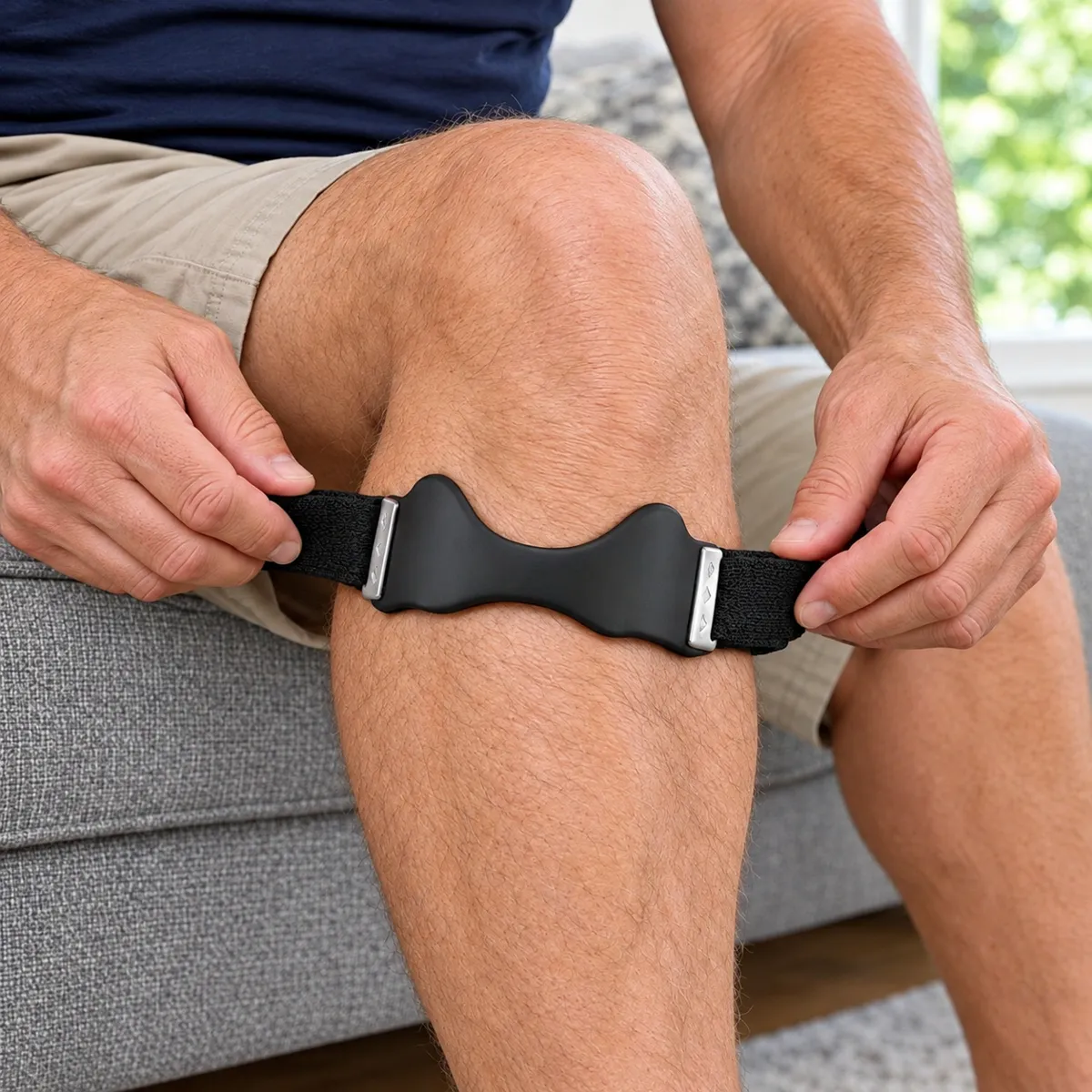
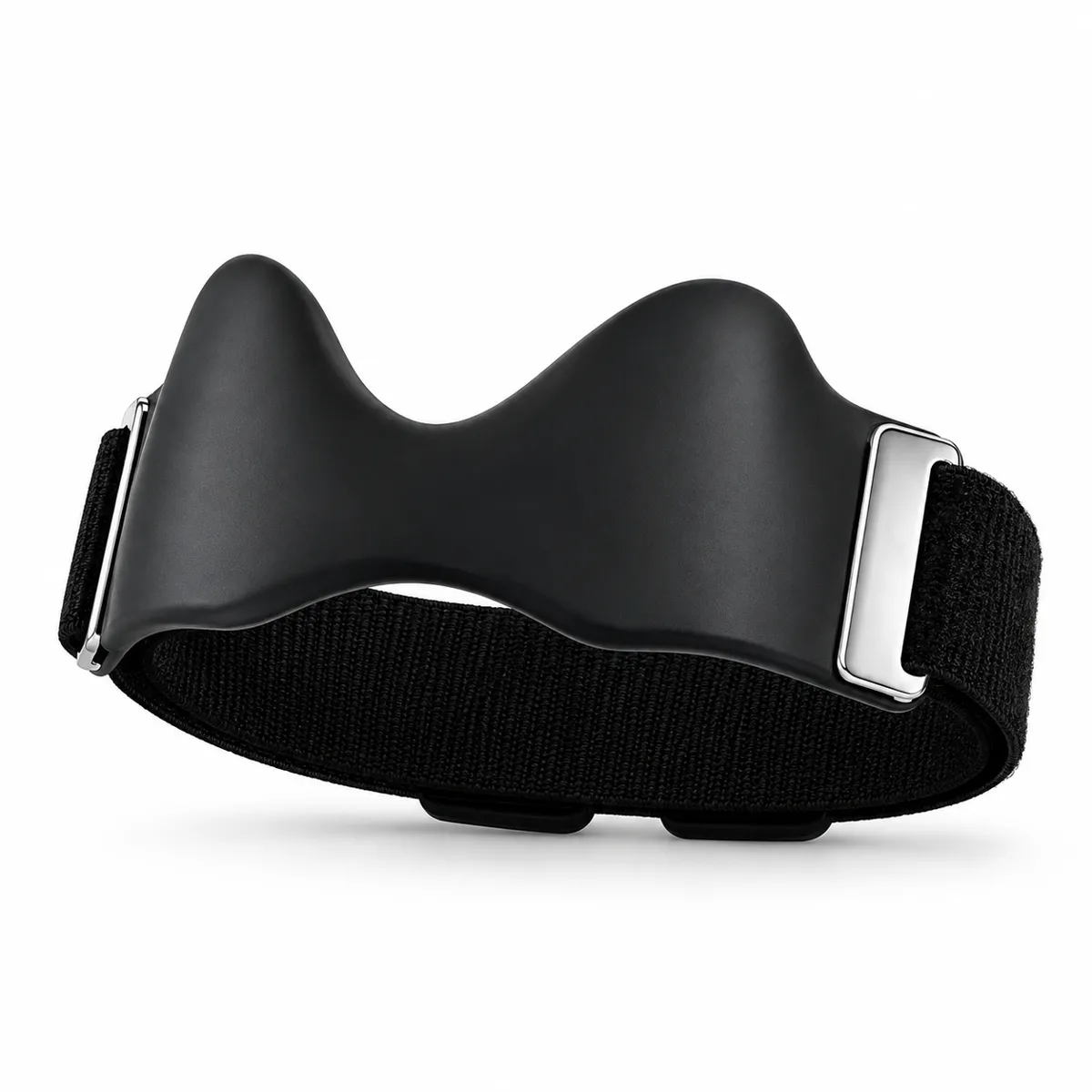
Read the instructions for the particular product because designs differ. For StepBrake, sit securely and position the contoured pad approximately 2 cm below the kneecap on the patellar tendon. The pad is intended to sit below the kneecap, not directly over the kneecap itself.
- Make sure you can comfortably reach the knee and see the position.
- Place the pad below the kneecap and arrange the band without folds.
- Adjust until secure, without excessive pressure or digging in.
- Stand near a stable support and check comfort before walking.
- After a short trial, remove it and inspect the skin.
Do not chase a stronger sensation by repeatedly tightening the strap. Pain from the pad, tingling, numbness, colour changes or rubbing are reasons to stop and remove it. If symptoms persist after removal, seek professional advice. A support that you cannot wear comfortably is not a successful fit.
What if it slips?
Check the position and the manufacturer's instructions rather than improvising extra layers or extreme tension. If it still moves or digs in, contact the seller about fit. One-size does not mean a guaranteed fit for everyone; StepBrake is described as fitting most adult knees.
Ask for help if hand strength, eyesight or reaching your knee makes adjustment difficult. Fastening the band while balancing on one leg adds an unnecessary risk. Our guide to wearing a patella strap can help with the intended placement, but cannot replace an individual assessment.
Planning an honest everyday trial
Begin with a brief, familiar activity on level ground if walking is safe for you. Keep the rest of the situation ordinary: usual shoes, no extra bags and no deliberately increased distance. The purpose is to judge comfort and practicality, not to discover how much pain you can push through.
Record whether the band stays positioned, whether you can adjust it and how your skin looks afterwards. You can also note symptoms later that day. A simple written comparison is more useful than remembering only the best few minutes or assuming any change must have come from the product.
Match the trial to the task
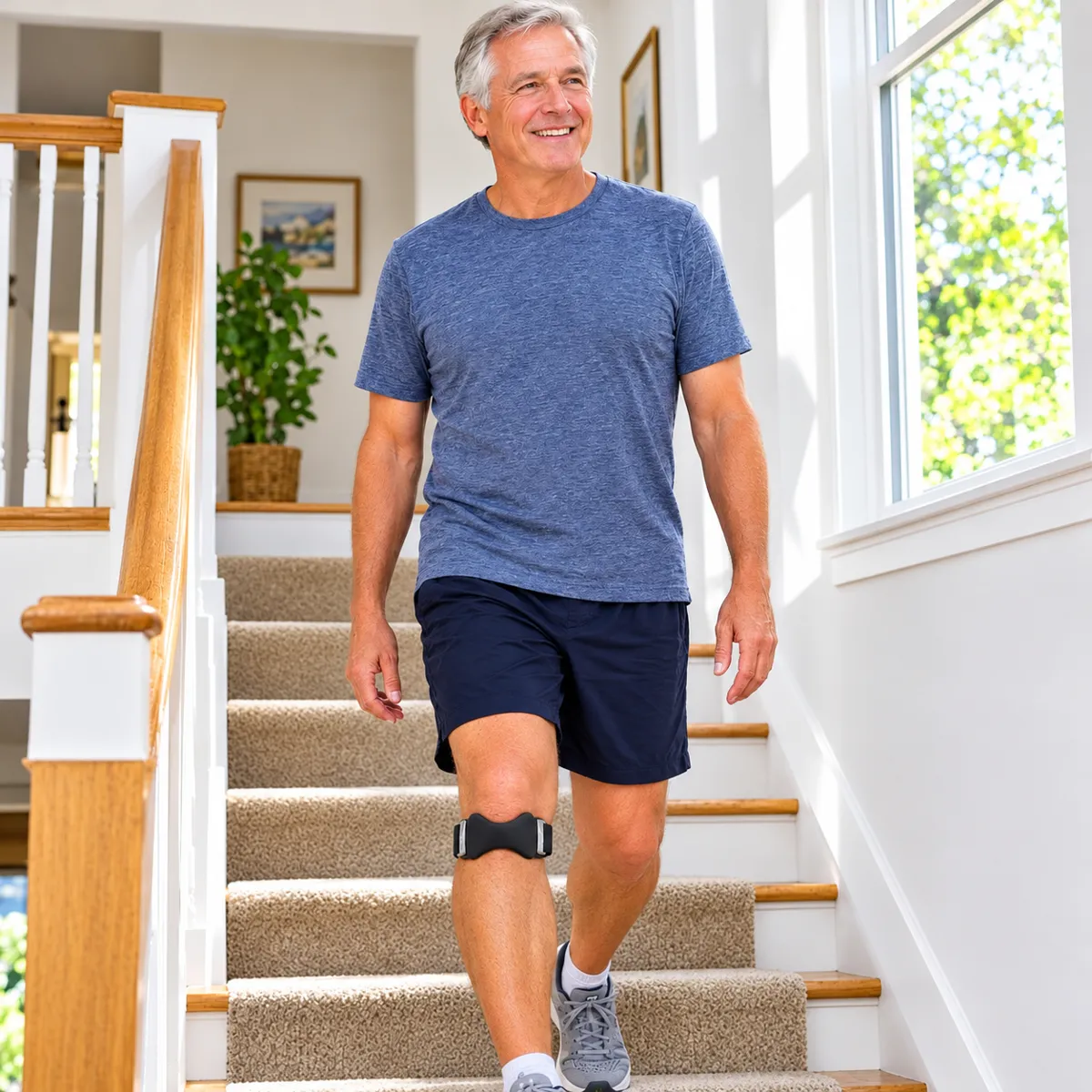
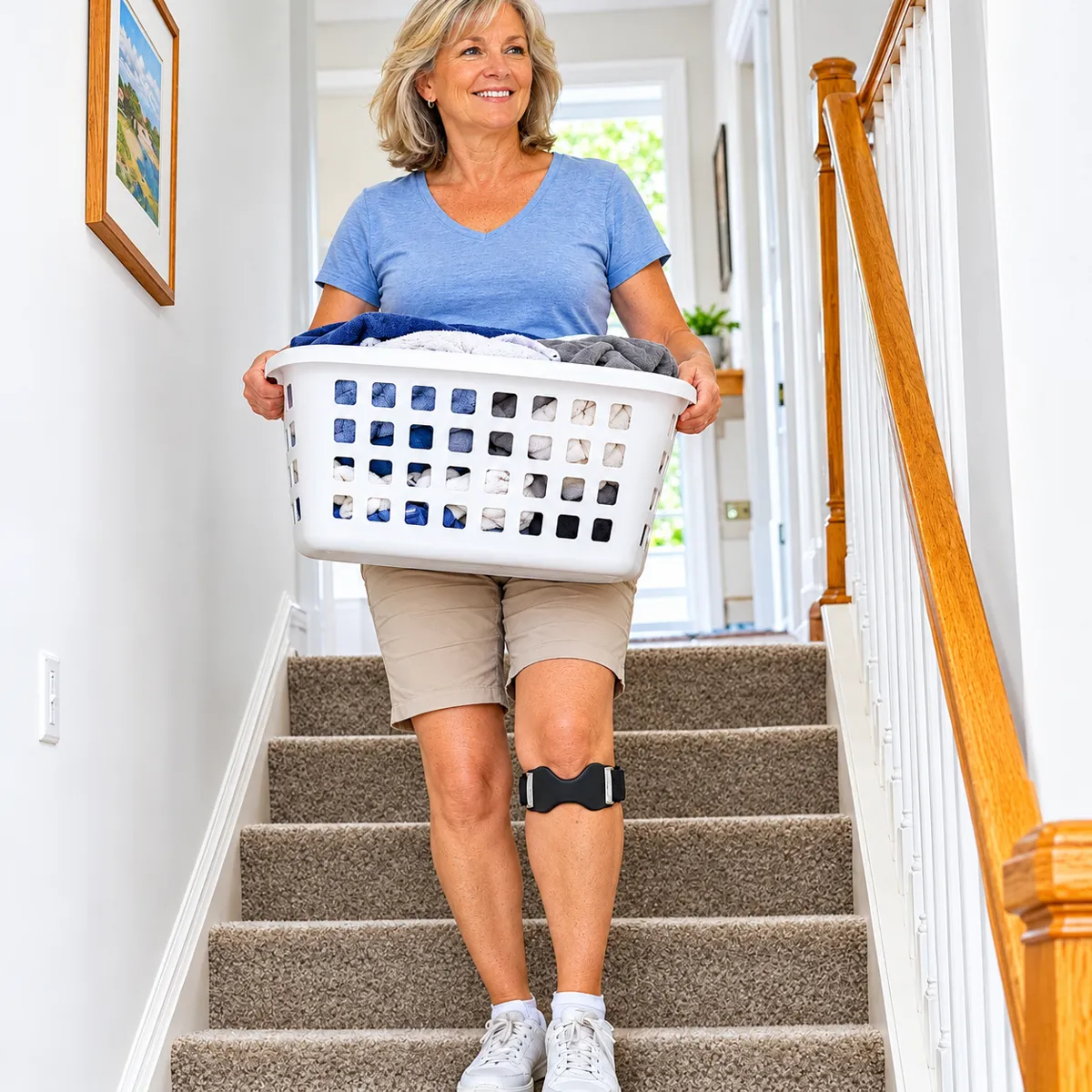
For stairs, a handrail and a clear route remain important regardless of the support. For a walk, choose a route with an easy way home rather than committing to a long descent. Do not make a first trial during an important outing where you feel unable to stop.
Read the activity-specific advice in choosing a strap for stairs and using a strap on downhill walks. These are different practical situations. Neither is an invitation to test an injured, swollen or unreliable knee without advice.
A more comfortable activity does not prove that a condition has healed. Equally, an uncomfortable band is not something you must tolerate for a supposed adjustment period. Discuss persistent symptoms with a clinician, especially if you are changing your daily routine or avoiding essential activities.
StepBrake Strap: specifications and limitations
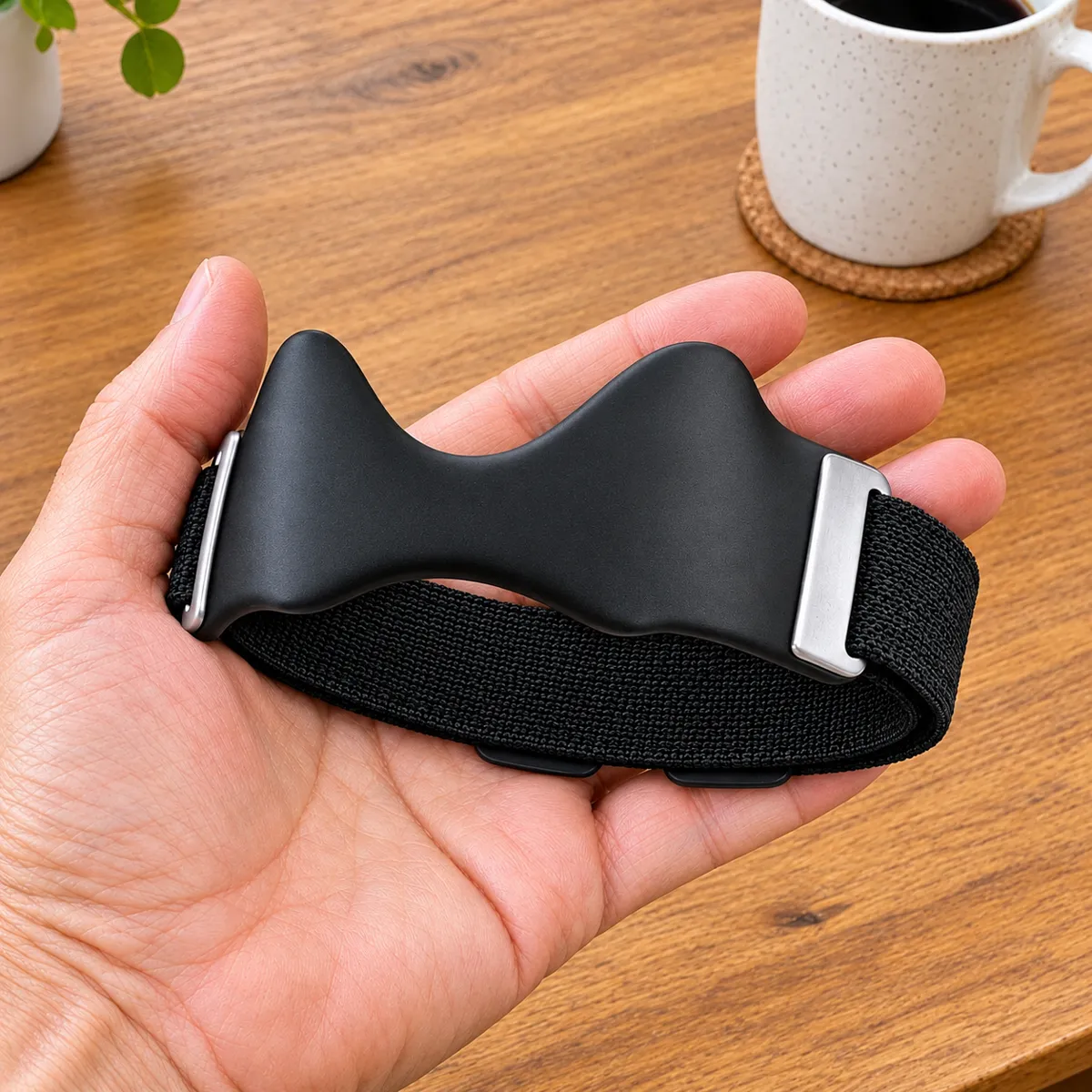
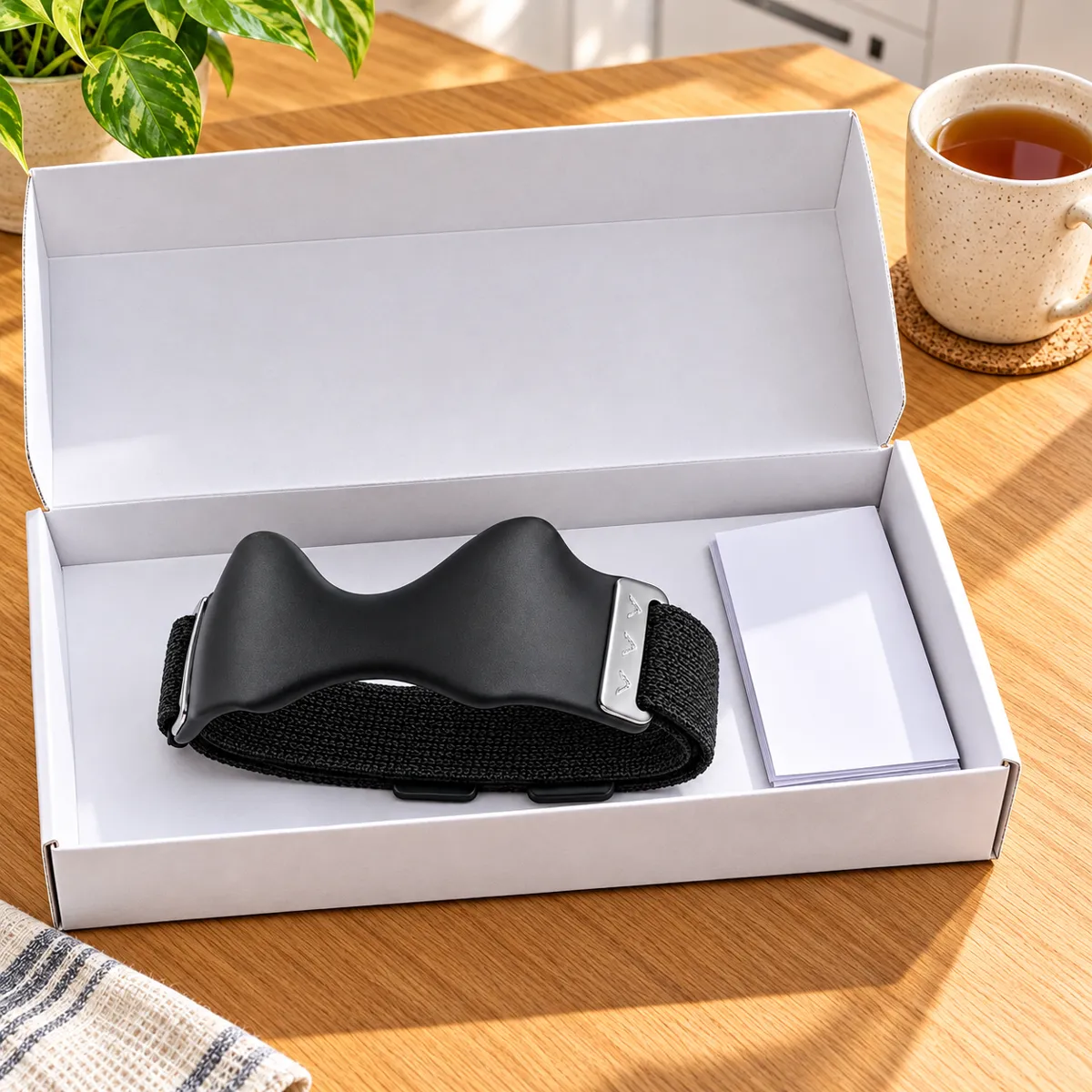
StepBrake has a rigid contoured black pad with two raised lobes, a soft knitted black elastic band and silver end plates. It is adjustable and fits either the left or right knee. Its slim shape fits under trousers, and fitting takes under a minute once you understand the positioning.
It is a one-size product intended for most adult knees, not a made-to-measure brace. No circumference range, material certification or clinical result is supplied here, so none should be assumed. If you need a particular measurement or have a question about skin sensitivity, ask support@stepbrakestrap.co.uk before buying.
StepBrake is a new brand. There are no customer reviews, star ratings or testimonials available to quote, and no StepBrake-specific study results provided. General information about patellar supports cannot honestly be converted into a promise that this particular strap will improve your symptoms.
Care and storage
Hand wash the strap and air dry it. Do not substitute machine washing, tumble drying or direct heat for those instructions. Plan cleaning around when you need the strap so that you are not tempted to wear it damp or use heat to hurry drying.
Check the pad, band and fastening before use. If something appears damaged, ask the seller what to do rather than patching it together and relying on it for a difficult activity. Store it somewhere clean and dry, away from places where it could become a trip hazard.
Buying a knee strap in the UK
One StepBrake costs £29, previously £49. The bundle prices are £44 for two, £59 for three and £89 for four. A lower price per item does not create a need for extra straps; decide how many you actually need and whether each intended user has considered suitability.
StepBrake is sold only through its official website and delivers to UK addresses only. Free Royal Mail Tracked 48 delivery is included, with dispatch within one working day. Orders usually arrive in two to four working days; leave room for delivery variation rather than planning essential mobility around a parcel.
The 30-day money-back guarantee requires an email within 30 days of delivery, followed by posting the product back for a full refund. The optional £4.95 Secure Delivery + Lifetime Warranty provides replacement for items lost, stolen or damaged in the post, plus lifetime cover for manufacturing defects.
Manufacturing cover is not a lifetime promise of comfort, suitability or medical benefit. Read the shipping and returns information and keep your order details. You can order the StepBrake Strap from the official website or email support if a product detail is unclear.
When to see your GP
Seek GP or physiotherapy advice for symptoms lasting more than two weeks, pain after injury, sudden pain or swelling. The Chartered Society of Physiotherapy knee pain resources offer further information. Do not extend a product trial instead of arranging needed care.
Follow NHS urgent advice: contact 111 for very severe pain, inability to move or bear weight, major swelling, a changed shape, locking or giving way. A hot or red knee with fever or shivering also needs urgent attention.
Summary
A patella strap is a small, local support with clear limits. Check suitability, fit it below the kneecap and judge a modest everyday trial honestly. Good buying information matters, but it should support—not replace—appropriate advice about your knee.
Sources and further reading
- NHS – Knee pain
- NHS Borders – Patellar tendinopathy
- NHS inform – Patellofemoral pain syndrome
- Chartered Society of Physiotherapy – Knee pain
This guide is general information, not medical advice. Read our editorial policy. If you are worried about your knee, speak to your GP, a pharmacist or call NHS 111.
Common questions
Are patella strap and patellar tendon strap different products?+
These terms often refer to the same narrow support worn below the kneecap. Patella is the name of the kneecap, while patellar describes something related to it. Names alone do not establish construction or suitability, so compare the actual design and fitting instructions rather than treating the wording as a quality grade.
Does local pressure prove the strap is working?+
No. Feeling a pad press on your knee only confirms contact; it does not establish a medical benefit. Excessive pressure is not a useful target. Judge comfort and practicality during an appropriate trial, and remove the strap if it causes pain, tingling, numbness or skin changes.
Can a patella band replace prescribed rehabilitation?+
No. A strap should not replace a clinician-directed exercise or rehabilitation plan. Ask your physiotherapist whether it has any useful role alongside that plan and what activities are appropriate. Do not stop prescribed exercises or increase activity simply because a band changes how the knee feels.
Does one-size mean StepBrake is guaranteed to fit?+
No. StepBrake is adjustable and intended for most adult knees, but that is not a promise of universal fit. No circumference range is supplied in this guide. If you need a specific measurement or are uncertain about fitting, contact the seller before placing an order.
Is the lifetime warranty a guarantee of pain improvement?+
No. The optional £4.95 add-on covers replacement for loss, theft or damage in the post and lifetime manufacturing defects. It does not guarantee comfort, fit or a medical outcome. The separate 30-day money-back guarantee has its own email deadline and requires returning the product.
Can I use two bands stacked below one kneecap?+
Do not improvise stacked straps to create more pressure. The StepBrake positioning described here is for its intended single-band design, and extra compression is not evidence of better support. If one strap does not fit comfortably or seems unsuitable, stop and seek advice rather than adding another.
What should I ask about materials if my skin is sensitive?+
Tell the seller which material or allergy concern you need clarified and ask for the relevant product information before buying. This brief describes a knitted elastic band but supplies no complete material composition or allergy certification. Do not assume a product is hypoallergenic because it feels soft.